A Shukubo Lets You Sleep Inside a Working Temple
· 13 min read
A shukubo is a night inside a working temple on Mount Koya: a futon on tatami, a vegetarian dinner at half past five, and a chanting service at dawn.
A shukubo is a bed inside a working temple. You sleep on a futon laid on tatami, eat the vegetarian food the monks eat, and wake to chanting at six in the morning. It is the closest thing Japan offers to spending a night inside a religion rather than looking at one from outside.
The best place to try it is Mount Koya, or Koyasan, in the mountains of Wakayama. About fifty of its temples take overnight guests, and the town has been welcoming pilgrims this way for centuries. A night there costs roughly ¥10,000 to ¥40,000 per person, with dinner and breakfast included, and prices have climbed steeply in recent years.
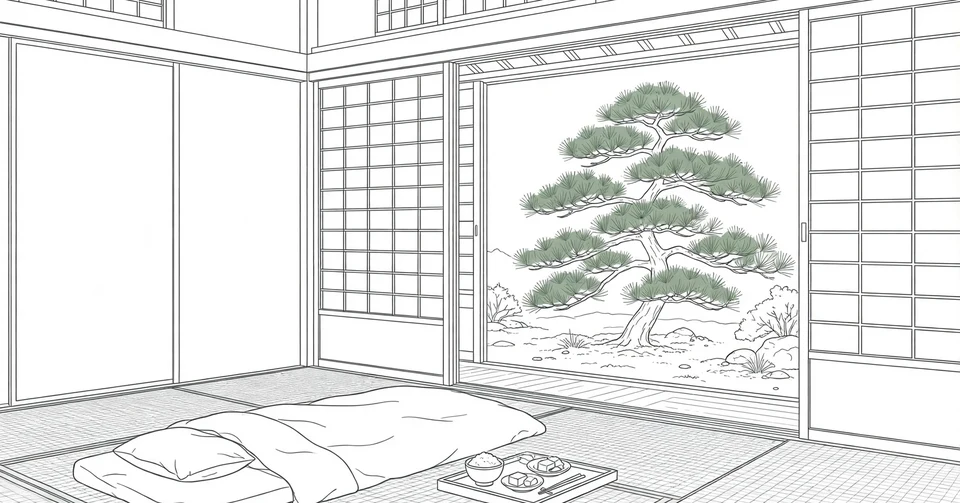
What you get for that is not a hotel room with a temple theme. You get thin walls, a shared bath, dinner at half past five, and a morning service that has run the same way for centuries. Most guests say a shukubo stay is the night they remember best from their trip. I think the reason is simple: a shukubo asks you to live on the temple's clock for one night, and that clock runs slower than yours.
What a shukubo actually is
The word shukubo means temple lodging. The rooms were built for pilgrims who had walked for days to reach a sacred mountain and needed a roof for the night. Today anyone can book one, with no religious background required, and the temples that offer them are real, functioning communities. The monks keep their daily training whether guests join in or not, which is the first thing to understand about a shukubo stay. You are a guest inside someone's home and workplace at once, not a customer at a themed hotel.
A typical shukubo room is Japanese style through and through: tatami mats on the floor, sliding paper doors, a low table, and a futon that is laid out in the evening. Toilets and sinks are usually shared, and the bath is communal and separated by gender. Heating in winter is often a gas heater, and some temples have air conditioning while many do not. A small number of temples now offer rooms with a private bath, so ask specifically if that matters to you.
Koyasan is the place to do this first. The settlement was founded by Kobo Daishi in 816 and sits in a bowl at about 800 meters in the Wakayama mountains. It holds around 117 temples, of which roughly fifty take overnight guests, and 31 are listed in English by the Koyasan Shukubo Association. Mount Koya itself is worth a day on its own, and our guide to the mountain covers Okunoin and the town around the temples, so read On Koyasan the Founder Is Said to Be Still Meditating before you plan the rest of the trip.
A night in a shukubo, hour by hour
The day at a shukubo runs on the temple's timetable, and the timings are the part that catches first timers out. Check in is usually between 15:00 and 17:00, and rarely later, because dinner is early. You are shown to your room, and at many temples you lay out your own futon in the evening from the bedding kept in a large cupboard with sliding doors, then put it away again in the morning. A light blanket is provided in the warm months and a thick cover in winter.
The afternoon is yours. Walk the town, visit the Danjo Garan complex a few minutes from most of the lodgings, or save your energy for Okunoin after dark, when the two kilometre cemetery path runs under cedars past 200,000 graves to the mausoleum of Kobo Daishi, lit the whole way by stone lanterns. Most temples can point you to a guided night walk.
Dinner comes at about 17:30, served in your room or in a dining hall. After dinner, take the bath and settle in early. Most temples set a curfew between 20:00 and 22:00, after which the gates are locked, and quiet hours usually begin around 21:00. The wake up call is a bell, not an alarm, and it goes at around six. The morning service runs for about half an hour, breakfast follows at about 7:00, and check out is usually between 9:00 and 10:00.
I like this schedule more than I expected to. Nothing in it is designed for your comfort, and that is the point. A hotel bends its day around you. A shukubo asks you to bend your day around the temple, and for one night that trade feels like a relief.
The food at a shukubo: shojin ryori, eaten the monks' way
Dinner at a shukubo is one of the highlights of the whole stay. Shojin ryori is the traditional Buddhist vegetarian cuisine served at temples, built on the principle of not taking life. It excludes meat, fish, dairy, eggs, and even strongly flavoured vegetables like garlic and onions, which were traditionally believed to excite the passions. The cooking follows the principle of five flavours, five cooking methods, and five colours, so what arrives is a tray of small, carefully arranged seasonal dishes rather than a single large plate. It is closer to a tasting menu than to a typical dinner.
On Koyasan the cooking leans on local ingredients. Expect goma-dofu, the local sesame tofu, served with koyadofu, the freeze dried tofu named after the mountain, plus yuba and pickles. Breakfast is a lighter version of the same idea: rice porridge, pickles, miso soup, and small vegetable dishes, served after the morning service.
Two warnings belong here. First, shojin ryori is plant based by precept, but some kitchens use bonito stock, so strict vegans and people with allergies should write to the temple when they book and ask whether the meal is fully vegan on their night. Second, alcohol rules vary by temple. Some let you order a drink as a medicinal drink, while others forbid it outright, so check in advance if it matters to you. The Japan Tourism Agency sets out the basic etiquette for temple lodgings, including meal times and bath rules, and it is worth reading before you book: Shukubo Temple Lodgings, Japan Tourism Agency.
The morning service is the reason to go
The defining moment of most stays is the morning service, called gongyo or otsutome depending on the temple. It typically begins at 6:00 a.m. and lasts about 30 minutes, though some temples start a little earlier or later and run for 30 to 45 minutes. Guests are invited, never required, to attend. You sit at the back of the main hall while the monks chant sutras by candlelight, with incense in the air, and you do not need to do anything except sit quietly.
At some temples the service is followed by a goma fire ritual, in which a monk burns wooden prayer sticks in a roaring fire while drums beat and the chanting builds. Eko-in, the best known temple among foreign guests, holds its morning service at 7:00 a.m. with the goma at 7:30, and both are free for guests. The fire ritual belongs to Shingon, the esoteric Buddhism Kukai brought to Japan, and our piece on its fire ritual explains what the flames are for, so read Shingon Has Kept Its Fire Ritual Burning for 1,200 Years if the ceremony is the part that draws you.
Nobody makes you get up. You can lie under the futon and listen to the chanting through the paper doors, and the monks will not think less of you. Most guests go anyway, because that is the part they came for. I would put it more strongly: if you sleep through the service, you have paid temple prices for a thin mattress and an early dinner, and missed the one thing no hotel can copy.
How much a shukubo costs and how to book one
On Koyasan, a night costs roughly ¥10,000 to ¥40,000 per person, with dinner and breakfast included. The range is wide because the rooms are not the same: a basic room with shared bath and toilet sits at the lower end, while a room with its own bath, toilet, or garden view climbs toward the top. Other guides quote roughly ¥12,000 to ¥30,000 for the same stay, so treat any single figure with suspicion and check the price for your own dates. Prices have risen sharply in recent years, and the busiest seasons fill months ahead.
Book through the Koyasan Shukubo Association, which runs an English booking system for most temples, or directly with a temple, or through the usual booking platforms. Book early for cherry blossom season, the August Obon period, and fall foliage. Many temples still take cash only on arrival, so bring enough, and note that Koyasan has few ATMs that accept foreign cards. The most useful English guide I found to prices and temple choice is Trip To Japan's shukubo guide, which compares temples side by side: Shukubo Guide: Temple Stays in Japan, Prices and Rules.
When you book, say in writing if you need vegan or allergy safe meals, and ask the questions that matter to you before you arrive. Does the morning service include a goma fire ritual? Is there a private bath? What time does the gate lock? The answers vary from temple to temple, and a temple stay is one of the few bookings where the small print is the whole experience.
How to choose a shukubo
The differences between temples are mostly in the morning and in the facilities, so choose by what matters to you rather than by star ratings, which temples do not really have.
Eko-in suits first timers. It is very popular with international guests, sits near the start of Okunoin, has English speaking staff, runs a daily morning goma fire ritual, and offers free meditation at 16:30 and sutra copying for guests. Its basic rooms are compact, while detached rooms with baths and suites cost considerably more.
Fukuchi-in suits guests who want a bath worth the stay itself. The temple says it has Koyasan's only natural hot spring, and its garden was designed by Mirei Shigemori. It also refuses guests with tattoos, which is worth knowing before you book, since the rule follows the bath.
Shojoshin-in sits right at the entrance to the Okunoin cemetery, behind an Edo period gate, and holds early morning prayers. It suits guests who want the cemetery at their doorstep and do not mind an early start.
My own rule is simple. If the fire ritual is what you came for, confirm that the temple holds one before you book, because not every morning ritual includes it. If a private toilet matters, ask for that room type by name. Everything else about a shukubo stay is more or less the same from temple to temple, and that sameness is part of the charm.
The rules that catch first timers out
A shukubo has few rules, but they are fixed, and they run on the temple's schedule rather than yours. Dinner, the morning service, and lights out all happen at set times for the whole temple, not just for you. Arriving late disrupts everyone, not only your own evening.
Keep your voice down, always. Temples are quiet places by design, and loud conversation in the halls or garden stands out immediately and disturbs monks going about their training. Remove your shoes where the temple asks, dress modestly, and wear something comfortable for sitting cross legged on the floor during meals and prayers. Rooms may not lock, since security is based on trust, which is unusual for travellers used to hotels but normal here.
The bath follows the same rules as a Japanese hot spring. Undress in the changing room and enter with only a small hand towel. Sit in front of one of the low shower heads, wash with soap and shampoo, and rinse thoroughly. Make sure no soap or suds remain when you step into the bathtub, and never put the hand towel in the bath water. The bath is separated by gender.
Tattoo policies vary by temple, and refusals happen, especially where the bath is an onsen. Ask first, before you book, rather than discovering the rule at the bathhouse door. Do not assume Wi-Fi either. Many temples have limited or no Wi-Fi, and front doors may lock early. If you want a drink and a late dinner, this is the wrong kind of accommodation, and an ordinary hotel in town will serve you better.
Shukubo beyond Koyasan
Koyasan is the best known place for a temple stay, but it is not the only one, and the alternatives suit different kinds of traveller.
Zenkoji in Nagano has 39 shukubo attached to one of Japan's most important temples, each with its own priest. Rates start around ¥13,200 per person with two meals, for a minimum of two adults. The draw is the pre-dawn morning service, where the head priest blesses the crowd on the way in.
Eiheiji in Fukui is the strict version. It is the head temple of Soto Zen, founded in 1244, where around 150 monks train under a schedule that starts before dawn. The one night Sanro program costs ¥15,000 and includes two 40 minute zazen sessions, the morning service, a guided tour, and two meals. Check in is 14:00 to 16:00, applications close a month ahead, and you cannot leave the grounds once you arrive.
Tatsue-ji in Tokushima is the cheapest option and the most pilgrim flavoured. It is temple 19 on the Shikoku pilgrimage, and a room costs ¥6,000, or ¥8,000 with two meals. Check in runs 15:00 to 16:30 and check out is 8:00, because pilgrims leave early.
Dewa Sanzan in Yamagata needs a clear warning. Its lodgings are Shugendo and Shinto rather than Buddhist, so the food is not always vegetarian, and rooms are often partitioned areas of a larger hall. The experience is real, but it is not the same as a Buddhist shukubo, so read the details before you book.
Is a shukubo stay worth it
Yes, once, and for the right reason. You are not buying a hotel room with a temple theme. A shukubo gives you a very early night, a simple vegetarian dinner and thin walls, then a 6:00 a.m. chanting service in a hall that has run the same way for centuries. Pair it with the right trip and it becomes the night people remember.
Getting there takes half a day from Osaka. The Nankai line runs from Namba to Gokurakubashi in 80 to 100 minutes, then a five minute cable car climbs to Koyasan Station, and a bus carries you into town. The Koyasan World Heritage Ticket covers the round trip plus two days of local buses. Stay one night, walk Okunoin after dark, and get up for the morning service even if you are not a morning person. The bell will do the rest.
More in Life & Style
Latest posts
- Desa Pakraman Is the Name the Law Gave the Old Village
- A Primbon Reads Your Life From the Day You Were Born
- Pasaran Is the Five-Day Week Java Never Gave Up
- A Ceper Folds a Coconut Leaf Into a Crescent Moon
- Your Neptu Is the Number Hidden Inside Your Birthday
- Tilem Is the Dark Moon Bali Counts Its Year By
- The Saka Calendar Sets Nyepi on a Different Date Every Year
- On Tumpek Kuningan Bali Feeds Its Ancestors
- Garuda Carried a Mountain to the Middle of the Ocean
- Vasuki Was the Rope That Churned the Ocean of Milk
- En No Gyoja, the Mystic Shugendo Calls Its Patriarch
- A Saito Goma Burns Its Prayers Outdoors
- Kongobuji Still Governs the Mountain Kukai Left Behind
- Okunoin Is Japan's Largest Cemetery and Its Quietest Forest
- Suka Duka Means the Banjar Shows Up for Joy and Grief Alike