Akiya, Japan's Free Houses That Are Not Really Free
· 8 min read
Akiya Japan listings promise a house for ¥0, and the houses are real. The catch is everything after the price tag: taxes, fees, renovation, and a village that expects you to stay.
Every few months a headline goes viral: Japan is giving away houses for free. The photos show a wooden house in the hills, a garden gone wild, a price tag that reads ¥0. The story is real, the houses are real, and the first thing to know about the akiya Japan trend is that the free part is the smallest part of it.
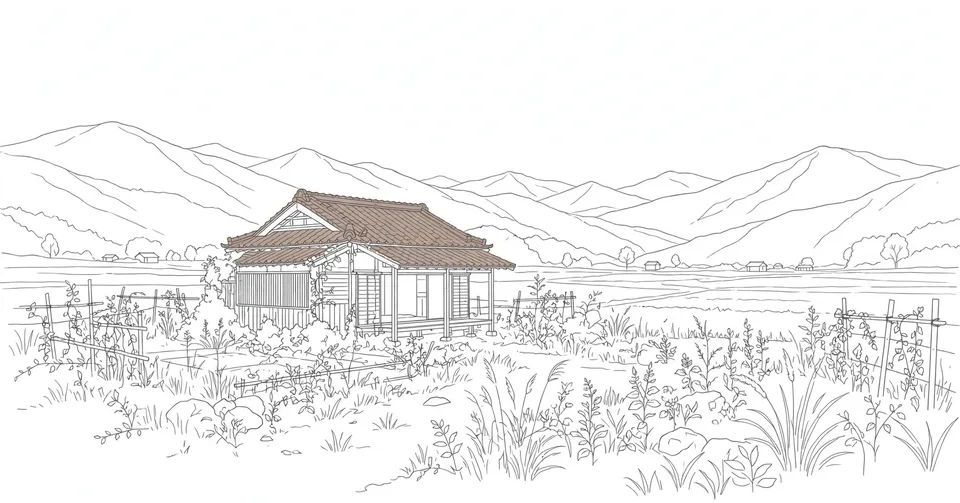
A house can genuinely change hands for ¥0 in Japan. What it cannot do is become a home for ¥0. Between taxes, fees, and renovation, a realistic all-in cost for a habitable rural house is often ¥4 million to ¥15 million, and that is before you have bought a plane ticket. The house is free. Everything around the house is not. That is the honest answer to the akiya Japan question, and everything else in this article is the detail behind it.
Why Japan has 9 million empty houses
Japan counted 9.0 million vacant homes in its 2023 Housing and Land Survey, published in April 2024. That is 13.8 percent of all housing in the country, the highest vacancy rate the Statistics Bureau has ever recorded, and 510,000 more empty houses than in 2018. The number has doubled since 1993, and nothing in the demographics suggests it will stop climbing.
The cause is simple arithmetic. Japan's population peaked at 128 million in 2008 and has already fallen to about 123 million. Government projections put it at 107 million by 2040 and below 100 million by 2056. Every year, more houses lose their occupants than gain new ones, and the houses outlive the people who built them.
About 58 percent of vacant homes were inherited. A parent dies in the village, the children live in Tokyo or Osaka, and the house sits empty because nobody wants to move back and nobody wants to pay to knock it down. About 3.85 million of the 9 million are long-term idle: not for rent, not for sale, not anyone's second home. Those are the houses at the centre of the akiya Japan market: not rentals waiting for tenants, but homes nobody has claimed.
There is also a tax reason the houses stay standing. Land with a home on it qualifies for a residential land tax break that cuts the fixed asset tax base to one sixth. Demolish the building and the break disappears, so leaving a derelict house standing is often the rational choice for an owner who lives far away. The akiya Japan story starts here, in that gap between a house nobody wants and a tax rule that rewards doing nothing.
What the akiya Japan listings actually offer
The houses in the akiya Japan market are sold through akiya banks, public listing services run by municipalities. More than 1,000 municipalities now operate one, and the national aggregator collects listings from hundreds of them into a single searchable platform. Prices typically run from ¥0 to about ¥5 million for houses that might cost ¥20 million to ¥50 million in Tokyo.
A ¥0 listing in the akiya Japan market is a transfer of liability dressed up as a gift. The owner gives the house away because keeping it has become expensive, not because they are feeling generous. A ¥0 transfer is still a taxable event: gift tax applies to the assessed value above the ¥1,100,000 annual exclusion, and the tax is calculated on the municipality's assessed value, not on what you paid. Zero yen paid does not mean zero yen taxed.
Then come the fixed costs. Closing costs, registration, and the agent fee fall hardest on cheap houses, because most of them are fixed amounts. On a ¥1,000,000 house, transaction fees can run to about half the price. And then there is the renovation, which is where the real money goes. A full renovation of an old rural house in the akiya Japan market commonly costs ¥5 million to ¥15 million, often far more than the purchase price. Roofs leak, plumbing is forty years old, insulation barely exists, and seismic standards have moved on since the house was built.
| What you pay for | Typical cost |
|---|---|
| Purchase price | ¥0 to ¥5,000,000 |
| Gift tax and registration | Assessed value above ¥1,100,000, plus fees |
| Agent and closing costs | Several hundred thousand yen |
| Renovation | ¥5,000,000 to ¥15,000,000 |
| Realistic all-in total | ¥4,000,000 to ¥15,000,000 |
Those totals are why the honest guides put a "free" house at roughly ¥8 million to ¥15 million all in, before flights and furniture, as detailed in this breakdown of what an akiya actually costs. The akiya Japan dream is not a trick, but it is not a bargain either. It is a cheap house with an expensive project attached, and the project is the part that decides whether the story ends well.
The rules changed in 2023 and 2024
For years the government mostly watched the empty houses pile up. That changed with the amended Vacant House Special Measures Act. Since December 2023, a poorly managed vacant house can lose the residential land tax break that made holding it cheap, and the owner's tax can rise to as much as six times the normal amount. Suddenly doing nothing has a price, and owners who spent years ignoring an inherited house have a reason to sell it, give it away, or fix it.
A second change arrived in April 2024, when inheritance registration became mandatory. Until then, Japan did not require heirs to register an inherited property, which is one reason so many houses drifted into limbo with no clear owner on paper. Registration is now required, with fines for failing to do it, and inheritances from before 2024 must be registered by March 2027.
Both changes point the same way, and together they explain why akiya Japan searches keep climbing even as the houses themselves stay empty. The government would rather see these houses lived in than left to rot, and it is slowly making it more expensive to leave them empty. That is good news for anyone shopping the akiya Japan listings who genuinely wants to live in one, and it is also why the listings keep growing. More owners are deciding that giving a house away is cheaper than holding it.
Who should even consider one
The people who do well with an akiya tend to share a few things. They want to live in rural Japan for years, not months. They have remote income or a local livelihood, because a village house does not come with a city salary. They have a renovation budget set aside before they buy, and they speak at least some Japanese, because the neighbours, the builders, and the town office will not conduct the whole process in English. And they understand that a village house comes with a village: festivals to help with, snow to clear, neighbours who notice whether your lights are on.
It is worth comparing the numbers with the city. What it really costs to live in Tokyo runs to ¥170,000 to ¥250,000 a month for a single person, and moving in costs four to five months of rent up front. A renovated akiya can cost less in total than two years of Tokyo rent. That comparison is the real appeal, and it is honest as far as it goes. That is the calculation behind most akiya Japan searches: a cheap house measured against an expensive city. What it leaves out is that Tokyo rent buys you a train, a hospital, and a job market, while a village house buys you quiet, space, and a long drive to all three.
There is also a quieter reason many buyers give, and it is worth naming. Some are not really buying a house. They are buying an exit from a life that wore them out, and the fantasy of a free house in the hills is the shape that exit takes. Japan even has a word for the extreme end of that exhaustion, karoshi, death from overwork, and the people who dream of an akiya are often people who have spent too many years in offices that never switched off. A house will not fix that by itself. A slower life might, but only if the renovation, the isolation, and the winter do not become a second job just as punishing as the first.
So no, an akiya Japan purchase is not for flippers, and it is not for tourists who want a cheap holiday home they visit twice a year. Villages have seen enough of those, and many akiya banks now ask buyers about their plans precisely because an empty house that changes hands and stays empty solves nothing. The best akiya Japan buyers are the boring ones: people with a plan, a budget, and an intention to stay.
The honest maths
The free house in Japan is real, and that is exactly why it deserves a careful look instead of a click. Nine million empty houses is a demographic fact, not a marketing slogan, and the akiya Japan headlines are only the visible tip of it. If you go in with ¥10 million set aside, a remote income, some Japanese, and a willingness to become part of a village rather than a visitor to one, an akiya Japan move can be the start of a good life at a price no city can match. If you go in with only the headline, the house will still be there in a year, a little more worn, waiting for someone who read past the price tag.
More in Money & Work
- The E33G Remote Worker Visa and How to Legally Work from Bali
- The Salaryman and Japan's Loyal Office Culture
- Key Money in Japan and Why Renting Costs Four Months Up Front
- Why Bali Became the World's Remote Work Capital
- Karoshi, the Japanese Word for Death by Overwork
- What It Really Costs to Live in Tokyo
Latest posts
- Love Live Sunshine and How Anime Changed Numazu
- Numazu Deep Sea Aquarium and the Creatures of Suruga Bay
- Numazu Himono and the Art of Dried Fish
- Numazu Imperial Villa and Japan's Seaside Imperial Retreat
- Numazu Port and the Freshest Seafood in Shizuoka
- Disaster Vending Machines in Japan That Give Their Drinks Away
- Wabi-Sabi and the Japanese Beauty of Imperfect Things
- Bullet Climbing Mount Fuji, the Overnight Ascent Japan Is Trying to Stop
- Women Only Train Cars in Japan and the Problem They Answer
- Climbing Mount Semeru, Java's Highest Volcano
- Maneki Neko and Japan's Beckoning Lucky Cat
- Tamago Sando and Japan's Konbini Egg Sandwich
- The Baduy People and Life Without Modern Technology
- Onsen Tattoo Rules in Japan and How They Are Slowly Changing
- Sento, Japan's Everyday Public Bathhouse