Climbing Mount Semeru, Java's Highest Volcano
· 10 min read
Mount Semeru is the highest peak on Java and one of its most active volcanoes. This guide covers the classic trek from Ranu Pani to Mahameru, the current closure, and how to climb it safely when the trail reopens.
Mount Semeru does not ask for attention. It takes it. At 3,676 metres, it is the highest peak on the island of Java, a steep cone rising out of Bromo Tengger Semeru National Park in East Java, visible for miles in every direction. On a clear morning, the summit, known as Mahameru, stands above a thin ring of cloud while smoke curls from the crater called Jonggring Saloko. It is beautiful in the way only an active volcano can be beautiful, which is to say, beautiful and not entirely safe.
That combination is exactly why people keep coming. Mount Semeru is the hardest of the famous volcano climbs in Indonesia, harder than its neighbour Bromo, where visitors can walk into the crater, and harder in a different way than Mount Fuji, where the path is crowded and well marked. The trail is long, the air is thin, and the reward is a sunrise from the highest point on Java. The price is respect for the mountain and its rules.
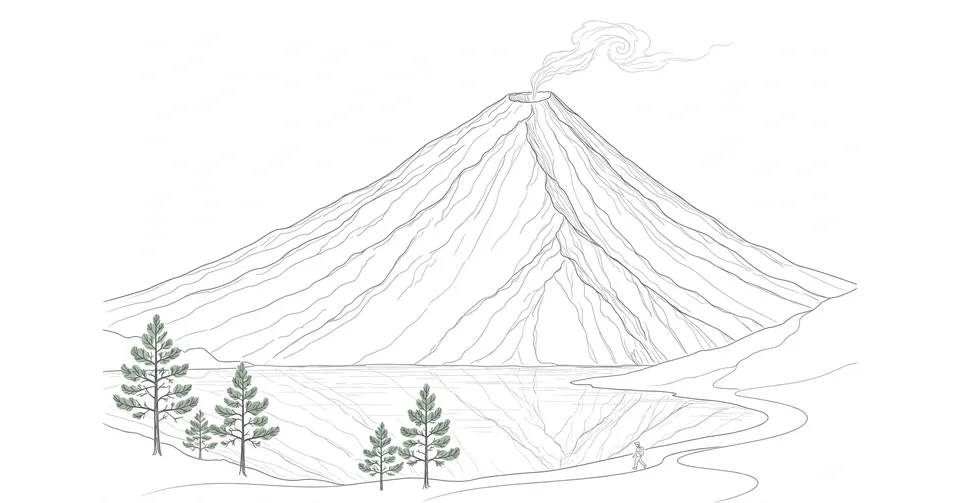
Before any of that, a warning that belongs at the top of this article, not the bottom. As of late 2026, every trail on Mount Semeru is closed. The national park shut the routes on 26 August 2026 after a forest fire broke out near the path to Ranu Kumbolo, and no reopening date had been announced by mid October. The volcano has sat at Alert Level 3, known as Siaga, since 29 November 2025. This article describes the classic route as it has been climbed for years, but the route is not open today, and the summit has been off limits since November 2025. Check the alert level on MAGMA Indonesia and with the national park before you plan anything.
Why Mount Semeru Stands Apart
The name itself gives away how old the mountain is in the local imagination. Semeru comes from Sumeru, the sacred mountain at the centre of the universe in Hindu and Buddhist tradition, and for the Tengger people who live on its slopes, the peak is holy as well as physical. The summit is called Mahameru, the Great Mountain, and it has earned the name. Mount Semeru is not only the tallest mountain on Java, it is also one of the most active volcanoes in Indonesia, erupting in small bursts so often that smoke above the crater is a normal sight.
That constant activity is what makes Mount Semeru dangerous in a way that a dormant peak never is. The most recent disaster came on 4 December 2021, when a dome collapse sent pyroclastic flows down the southeast flank and killed more than 60 people in the villages below.
The Classic Route From Ranu Pani to Mahameru
Every climb of Mount Semeru starts in the Tengger village of Ranu Pani at about 2,100 metres, where climbers register and attend a safety briefing. From here the standard route runs about 14 kilometres to Kalimati, the old base camp, and the usual plan takes two to three days: a walk through pine forest to the lake, a summit push and walk back, and, for those who take it, a slower third day.
The Mount Semeru trail is well marked but not easy. The first stretch climbs gently through forest and grassland, then steepens toward the lake. There is no shortcut, so climbers carry their own food, water, and gear, and that weight plus the altitude makes the first day feel longer than it looks.
Ranu Kumbolo, the Lake That Slows Everyone Down
Ranu Kumbolo sits at about 2,400 metres, a cold, still lake in a bowl of green hills, and it is the emotional centre of the whole trek. In Javanese, ranu means lake. The water is clear and freezing, the mornings are often wrapped in mist, and the slopes turn gold in the late afternoon light. It is also the only designated campsite on the permitted trail.
It is the best place to rest and adjust to the altitude, and the park has treated it as the turnaround point in recent years, which makes it the destination rather than a stop on the way. A night at Ranu Kumbolo, with Mount Semeru reflected in the water at dawn, is a complete experience on its own. The high lakes of the Fuji Five Lakes play a similar role in Japan, but Ranu Kumbolo is wilder and lonelier, and the mountain above it is still erupting.
The Midnight Push to Mahameru
From Kalimati, the old base camp at about 2,700 metres, the push starts around midnight. Climbers leave in the dark with headlamps and warm layers, and climb for four to five hours up a slope of loose sand and gravel as steep as 60 degrees. The surface gives way under every step, so the climb feels like two steps forward and one step back. The goal is to reach Mahameru before sunrise.
The top is not a place to linger. The crater, Jonggring Saloko, sits close to the summit, and the ground near it is unstable and full of toxic gas, so climbers leave before 10 in the morning and never approach the rim. The descent, on tired legs and sliding sand, is where most injuries happen.
Why the Summit Is Dangerous
It is worth being direct about this, because Mount Semeru has a way of looking harmless in photographs. The volcano erupts almost every day in small events, and the larger ones come without a reliable warning. An eruption in April 2026 sent an ash plume two kilometres above the summit on 7 April, and a week later pyroclastic flows ran three kilometres from the crater. On 19 April, another flow ran four kilometres down the Kobokan drainage. None of those events reached the villages, but they all happened while the alert level was already at 3, the level that closes the summit.
The danger is not only the eruptions. Loose sand can send rocks tumbling without warning, the gas near the crater can overwhelm a person in minutes, and the weather changes fast. The exclusion zone around Mount Semeru reflects that: five kilometres from the summit in all directions, 13 kilometres on the southeast flank along the Besuk Kobokan drainage, and 500 metres from its banks as far as 17 kilometres away. Those distances exist because pyroclastic flows have travelled that far before.
Is Mount Semeru Open Right Now
No, and anyone planning a trip needs to hear that clearly. The climbing route closed on 19 November 2025 when pyroclastic flows ran 13 kilometres down the flanks and the alert level rose to 4, the highest level. It was lowered back to 3 on 29 November 2025, and the trail reopened on 24 April 2026, but only as far as Ranu Kumbolo. Then, on 26 August 2026, a forest fire broke out near the route to the lake, and the national park shut every trail. On 31 August, the Ministry of Forestry added the Mount Semeru route to a list of nine national parks closed to hiking because of fire risk. As of mid October 2026, no reopening had been announced.
The status of Mount Semeru changes at short notice, so do not plan around a date you read in a blog post. The only reliable sources are the park itself and the volcanology agency. The Smithsonian Global Volcanism Program publishes weekly reports on the volcano, and the Discover Indonesia guide to the Semeru trek tracks the closure and the rules in detail. Check both, then check MAGMA Indonesia on the day you travel. If the trail is closed, no guide or operator can legally take you up.
Permits, Quotas, and the Rules When It Reopens
When the Mount Semeru trail was open in 2026, the rules were strict and entirely online. Bookings went through the national park website, and tickets went on sale between 30 and two days before the hike. The daily quota was 200 hikers, trips were limited to two days and one night, groups had to number between two and ten people, and every group had to hire a local guide. Each climber needed an identity document, a passport for foreigners, and a health certificate, and everyone attended a briefing at Ranu Pani.
Those rules are likely to be reviewed before any reopening, so treat them as a guide rather than a promise. Permit prices change often and differ for Indonesian and foreign visitors, so this article does not quote them. Check the park office for the current price. The seasonal closure rarely changes. The trail normally closes from January to March, and for the whole of December, for ecosystem recovery and bad weather, and for Tengger ceremonies. In 2026 it was shut from 7 to 18 August for ceremonies, only a week before the fire.
The Best Season to Climb Mount Semeru
The best season is the dry season, from May to September, when the trails are drier and the summit mornings are most likely to be clear. That is also when Mount Semeru is busiest, and the 200 person daily quota can fill up, so booking early matters. The wet season, from November to April, brings slippery paths and storms, and the park usually keeps the trail closed for much of it. Even in the dry season, Mount Semeru is cold, with night temperatures at Kalimati near freezing, so pack layers and a sleeping bag rated for the cold.
What to Pack for Mount Semeru
Fitness matters more than gear. The climb is long, the pack is heavy, and the altitude is real, so train on smaller hikes with a loaded pack. The essentials are simple: a headlamp with spare batteries, warm gloves and a hat, trekking poles, gaiters, sun protection, and enough water.
A short packing list covers most of it:
- Warm layers and a waterproof shell
- A sleeping bag rated for cold nights, plus a mat
- A headlamp, gloves, poles, and gaiters
- Sunscreen and a first aid kit
Food should be simple and high in energy, and all rubbish must be carried back down. The park is strict about litter, and rightly so.
The Mountain Will Still Be There
Mount Semeru is the kind of place that teaches patience, and I think that is the most honest thing to say about it. It is easy to treat a famous peak as a prize to be collected and then to be annoyed when a closed trail gets in the way. But a volcano that erupts almost every day, that has buried villages in living memory, and that closes its trails for fire and for ceremony is not a prize. It is a living place with its own timing, and the wise response is to wait for it. A night at Ranu Kumbolo and a view of the smoking cone is already a full journey, and the summit will still be there when the mountain and the park both say yes. Climbing Mount Semeru is worth doing properly, or not at all.
More in Food & Travel
Latest posts
- The Dalang, the Single Voice Behind Every Wayang Puppet
- Yadnya Kasada, the Festival That Feeds the Crater of Mount Bromo
- The 8050 Problem, When Retired Parents Still Carry Their Adult Children
- Moai, Okinawa's Lifelong Circles of Friends
- Anak Krakatau, the Child of Krakatoa That Keeps Growing
- Otohime, the Small Sound That Protects Privacy in Japanese Toilets
- Nomikai, the After-Work Drinks That Are Part of the Job in Japan
- Coelacanth and the Living Fossil of the Deep Sea
- Uchiura and the Quiet Fishing Village Behind Love Live Sunshine
- Love Live Sunshine and How Anime Changed Numazu
- Numazu Deep Sea Aquarium and the Creatures of Suruga Bay
- Numazu Himono and the Art of Dried Fish
- Numazu Imperial Villa and Japan's Seaside Imperial Retreat
- Numazu Port and the Freshest Seafood in Shizuoka
- Disaster Vending Machines in Japan That Give Their Drinks Away