Numazu Himono and the Art of Dried Fish
· 9 min read
Numazu himono is Japan's most famous dried fish, horse mackerel lightly salted and dried in the sea breeze of Suruga Bay, then grilled to order at Numazu Port. Here is how it is made, where to eat it, and what to bring home.
Walk through Numazu Port on a clear morning and the smell finds you before the sea does. It is smoke and salt and something faintly sweet, the smell of fish grilling over charcoal in a dozen small restaurants at once. The fish is horse mackerel, split open, lightly salted, and dried in the wind off Suruga Bay, and the dish is Numazu himono, the food this port city is most famous for. It looks plain on the plate, one flat golden fish beside rice and miso soup, but it carries a thousand years of Japanese kitchen wisdom and the whole working life of a port.
Himono, written with the characters for dried thing, is fish preserved the oldest way there is. The catch is split open and cleaned, soaked briefly in salt water, then laid out to dry in the sun and the sea breeze. Drying pulls water from the flesh, and as the water leaves, the flavour stays and grows stronger. Salt slows the enzymes that would break the fish down, and the drying itself creates amino acids that deepen the umami. A piece of Numazu himono tastes bigger than the fresh fish it started as, because drying does not take flavour away, it concentrates what was already there.
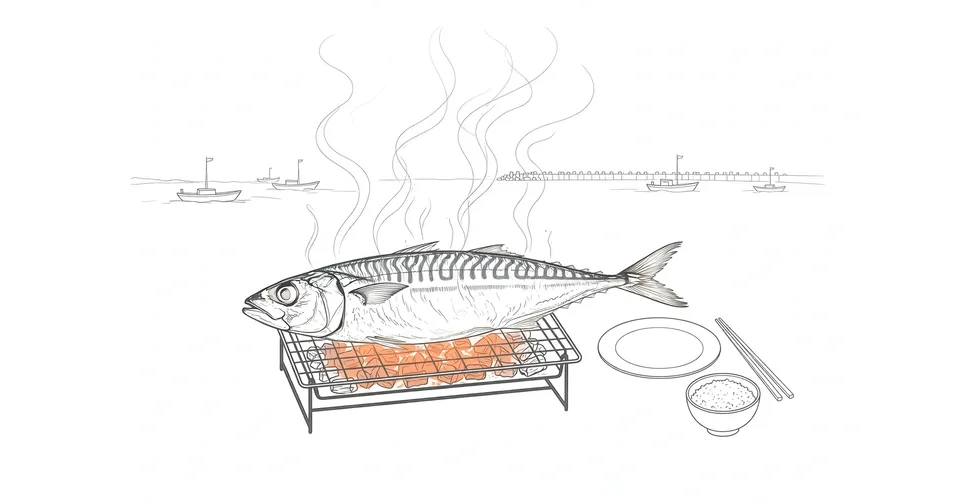
The version of Numazu himono you meet at the port today is the modern one, a style called ichiya-boshi, dried for one night. It appeared around the middle of the twentieth century, and it changed himono from a hard preserved ration into something soft and plump. The fish is dried just long enough to concentrate the flavour, then frozen, so it stays moist inside and crisps on the grill. The first bite is the contrast: skin that crackles, flesh that flakes, and a saltiness that makes plain rice taste like a feast. It is the opposite of kaiseki, the multi-course art of dining Japan is famous for, and that is the point. One fish, done well, can be a whole meal.
How Numazu Himono Is Made
The process behind Numazu himono has only four steps, and each one is simple. The fish is cut open along the belly, the guts are removed, and the blood is washed away. Then it is soaked in brine, a salt solution the makers call tatejio, usually mixed to about 10 to 20 percent salt. The salt does the seasoning and the preserving at the same time. Finally, the fish is laid on racks to dry, in the sun when the weather allows, or in a warm drying room kept near 25 degrees. The whole job can be done in a day, and a good maker judges the drying by touch and by smell, not by the clock.
The details are where the craft lives. Some shops keep a brine that has been topped up and reused for years, seasoned with shiitake mushroom and other sources of umami, so every batch carries a little of the last one. The salt matters too, and makers choose sea salt with a gentle sweetness rather than the sharpest salt they can find. At Maruya Fishery, a shop that has stood at the port for about 130 years, the daily output of Numazu himono once reached 30,000 to 50,000 pieces in the busy years of the 1950s and 1960s. Today the same shop makes around 20,000 to 25,000 pieces a day, and horse mackerel is no longer the only fish on the racks.
Why Numazu Became the Himono Capital
The rise of Numazu himono was no accident. Suruga Bay, at 2,500 metres at its deepest, is the deepest bay in Japan, and it holds about 1,000 species of fish. The port sits almost in the centre of the country, with spring water from Mount Fuji nearby and roads and railways running in every direction, so fish landed here could be dried, packed, and shipped anywhere. The trade is old. Dried bonito and dried sardines were the leading products for generations, and in 1960 the city's dried mackerel passed dried bonito for the first time. By 1967 Numazu was producing more dried mackerel than anywhere else in Japan, and by 1972 it held more than half of the domestic market.
The scale is still striking. In 2024, Shizuoka Prefecture produced 8,131 of Japan's 16,659 tonnes of dried horse mackerel, almost half of the national total, according to the agriculture ministry's processing statistics. The fish itself has changed, though. Warmer seas have left the horse mackerel caught close to shore leaner than the makers want, so the bigger firms now buy suitable fish from around the world and dry them in Numazu, which means a pack of Numazu himono can hold fish that never swam in Suruga Bay. The craft of Numazu himono stays in the city even when the catch comes from further away, and that is worth knowing before you romanticise the plate. The skill is the product now, not only the fish.
Where to Eat Numazu Himono
The best way to meet Numazu himono is to eat it where it is made. The restaurants around Numazu Port grill it to order, and the classic serving is a set meal: one whole grilled horse mackerel, a bowl of rice, miso soup, and pickles. The fish arrives on a small grill or a hot plate, skin crisped and lightly charred, and you pick the flesh from the bones with chopsticks while it is still hot. At Uogashi Maruten, a local favourite in the port, the himono set is the dish regulars order without looking at the menu, and at Yondaime Yahei the horse mackerel is heated in the oven and finished with a burner so the surface crackles. A set meal like this is a working lunch, not a ceremony, and that is part of its charm.
The port shops sell the same fish to take home, packed flat and frozen, and it travels well, which is why Numazu himono is the souvenir people actually eat instead of the one that sits on a shelf. The port even has a mascot for it, a cheerful dried fish character called Himono-ra who appears on set meals and stickers. At home, the makers say, pan-frying beats the microwave, and grilling beats both if you have the patience. Cook it from frozen on medium heat, skin side down first, and take it off the heat when the surface starts to char. The bones and head are not waste either. Simmered in hot water with a little soy sauce and spring onion, they make a clear soup, and nothing is thrown away.
Numazu Himono Beyond Horse Mackerel
Horse mackerel is the signature, but the racks at the port hold much more. Mackerel is richer and oilier, saury is the autumn fish with a stronger flavour, and sea bream is the delicate one, saved for a better meal. Some shops also make soy sauce versions, cured with soy sauce and mirin instead of plain brine, which turn darker and sweeter on the grill. The range is the point. Numazu himono is not one fish but a method, and the method works on almost anything the bay provides.
| Fish | What it tastes like |
|---|---|
| Horse mackerel (aji) | The classic, meaty and mild, the first one to try |
| Mackerel (saba) | Richer and oilier, the old Numazu staple |
| Saury (sanma) | Autumn fish, stronger flavour, best in season |
| Sea bream (tai) | Delicate and light, saved for a better meal |
If you are choosing for the first time, start with horse mackerel, the heart of Numazu himono. It is the fish the city built its name on, and it is the easiest to love. Then work through the rest, because the differences are real, and tasting them side by side is the quickest way to understand what drying does to a fish. A visitor who tries only one kind leaves knowing the name, but a visitor who tries three leaves knowing the craft.
There is something quietly hopeful about a food like this. In a country where so much eating has become fast and packaged, Numazu still dries fish in the wind and grills it over a flame, and people still travel an hour from Tokyo to eat it. Japan has a gift for taking one plain thing and refining it for centuries, whether it is a bowl of ramen or a single grilled fish, and Numazu himono is that gift at its simplest. The work is slow, the result is simple, and the pleasure is out of proportion to the effort on the plate. It is a reminder that preservation was once a form of respect for the catch, not a way to hide it, and that a city can build its name on doing one plain thing better than anyone else.
If you go, go hungry and go early, while the market is still loud and the grills are lit. Eat one fish at the port, buy a pack for home, and stand on the seawall afterwards with the smell of smoke still on your clothes. Mount Fuji stands behind the bay on a clear day, and the view is the one the port has offered for centuries, a working harbour, a deep bay, and a table set with what the sea gave that morning. The best views of the mountain are a short trip away, but Numazu himono is the reason to come to Numazu itself.
More in Food & Travel
Latest posts
- The Dalang, the Single Voice Behind Every Wayang Puppet
- Yadnya Kasada, the Festival That Feeds the Crater of Mount Bromo
- The 8050 Problem, When Retired Parents Still Carry Their Adult Children
- Moai, Okinawa's Lifelong Circles of Friends
- Anak Krakatau, the Child of Krakatoa That Keeps Growing
- Otohime, the Small Sound That Protects Privacy in Japanese Toilets
- Nomikai, the After-Work Drinks That Are Part of the Job in Japan
- Coelacanth and the Living Fossil of the Deep Sea
- Uchiura and the Quiet Fishing Village Behind Love Live Sunshine
- Love Live Sunshine and How Anime Changed Numazu
- Numazu Deep Sea Aquarium and the Creatures of Suruga Bay
- Numazu Imperial Villa and Japan's Seaside Imperial Retreat
- Numazu Port and the Freshest Seafood in Shizuoka
- Disaster Vending Machines in Japan That Give Their Drinks Away
- The E33G Remote Worker Visa and How to Legally Work from Bali