Numazu Imperial Villa and Japan's Seaside Imperial Retreat
· 8 min read
The Numazu Imperial Villa is a former imperial retreat on the shore of Suruga Bay in Shizuoka, built in 1893 and open to the public as a quiet memorial park since 1970.
On a quiet stretch of the Suruga Bay coast, a short ride from Numazu Station, a low wooden villa stands among the pines. It has no grand gate and no crowds, yet three generations of Japan's emperors spent their summers here. The Numazu Imperial Villa began in 1893 as a seaside retreat for the imperial family, and since 1970 it has belonged to everyone, kept as a public memorial park where the garden, the sea, and the view of Mount Fuji are the main attractions.
Numazu is a working port city in eastern Shizuoka, about an hour from Tokyo by Shinkansen and a short local train, and the villa sits on its southern edge, where the Kano River meets the bay. The Numazu Imperial Villa is not a palace in the usual sense. It was built of wood, one story high, and designed for rest rather than ceremony, which is exactly what makes it worth a visit today.
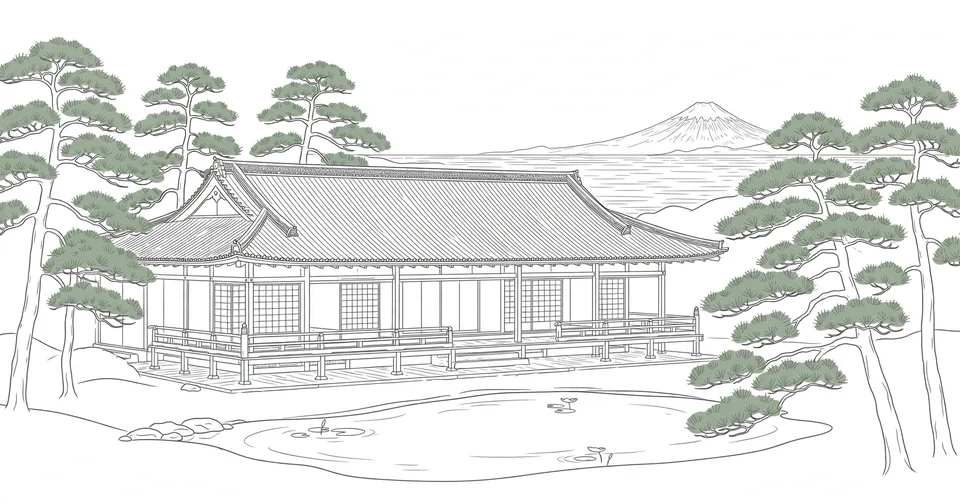
The grounds of the Numazu Imperial Villa cover about 104,000 square meters, and most of that space is garden and pine forest rather than buildings. What follows is the story of that villa: why it was built, what survived a war, and how a private retreat became one of the calmest public gardens on the Shizuoka coast.
A Villa Built for a Crown Prince
The Numazu Imperial Villa was built in July 1893, in the 26th year of the Meiji era, on land that had been an imperial forest at Shimogo, on the innermost shore of Suruga Bay. Emperor Meiji ordered its construction, and it quickly became the favorite retreat of his son, Crown Prince Yoshihito, the future Emperor Taisho. Yoshihito had been frail since childhood, and the mild sea air of Numazu suited him better than the summers of Tokyo.
The first building was a single story wooden house of about 1,200 square meters, with a living room, a bedroom, a dining room, a bath, and rooms for attendants. It was not built to impress. It was built to be lived in, and over the following years it grew. An east annex arrived in 1903, a west annex in 1905, and at its peak the Numazu Imperial Villa counted about 100 rooms in total. The west annex had begun life as the villa of Count Kawamura Sumiyoshi, an admiral of the Imperial Japanese Navy, and was moved here piece by piece. The east annex came from the Akasaka Palace estate in Tokyo. A billiard room added to the west annex in 1922 finished the main work. The villa's history, from the 1893 construction to the two annexes, is documented in detail on Wikipedia.
The name says something about how Japan treats its imperial houses. The villa is called Numazu Goyotei in Japanese, and goyotei means an imperial villa, a house kept for the use of the emperor and his family. The park that stands there now is the Numazu Goyotei Kinen Koen, the Numazu Imperial Villa Memorial Park, and locals still call the place simply the Goyotei.
War, Loss, and a New Life as a Public Park
The imperial life of the Numazu Imperial Villa ended in stages. In July 1945, during the bombing of Numazu in the Second World War, the main building was hit and burned down. The two annexes survived, and the imperial family kept using the villa for another quarter century. In December 1969 the villa was abolished as an imperial property and handed to the city of Numazu, which opened the grounds to the public in July 1970 as the Numazu Imperial Villa Memorial Park. The Numazu Imperial Villa had served the imperial family for 77 years.
There is something quietly generous about that handover. A retreat built for one family, in a forest that once belonged to the throne, became a park where anyone can sit under the same pines. Japan keeps many grand castles and shrines, but places like the Numazu Imperial Villa show a different kind of care: not the preservation of power, but the sharing of a beautiful spot once the need for privacy has passed.
What Remains Inside the Numazu Imperial Villa
The two annexes are the heart of a visit to the Numazu Imperial Villa today. Both are wooden, single story buildings from the Meiji period, and both have been restored as a museum. Inside the Numazu Imperial Villa are the rooms the imperial family used, with furniture and fittings from the period, and small exhibits that show how the villa worked day to day. One of the more touching objects is a small three wheeled bicycle that a young Emperor Showa rode here as a child.
The grounds are as much the point as the buildings. A Japanese garden with a pond sits beside the annexes, and the whole site is wrapped in pine trees, part of the same coastal forest that once sheltered the villa from the sea wind. A small museum of local history stands on the eastern side of the grounds. Visitors take off their shoes before stepping inside the historic buildings, which is a small act of respect that also slows the visit down, and that suits the place. The quiet of the Numazu Imperial Villa rewards the same unhurried attention as the Japanese tea ceremony, where the point is not to finish quickly but to notice what is in front of you.
The Pine Grove and the View Across Suruga Bay
Step outside the garden and the Numazu Imperial Villa opens onto one of the finest coastal walks in Shizuoka. The villa stands beside Senbon Matsubara, the Thousand Pine Grove, a long belt of black pines along the shore whose name means a thousand pines, senbon matsubara. On a clear day Mount Fuji rises across Suruga Bay, and the combination of pine trees, sea, and the mountain is the reason painters and photographers have loved this coast for centuries.
Suruga Bay is the deepest bay in Japan, reaching about 2,500 meters, and its cold deep water is the reason Numazu became a fishing port as well as a resort. The villa faces that bay, and the view from the grounds is the same one the emperors saw from the veranda: water first, then the far shore, then Fuji. For more places to see the mountain, the Fuji Five Lakes offer the classic views from the north side, but the view from Numazu has something the lakes do not, which is the sea in the foreground.
The park changes with the seasons. In June hydrangeas bloom around the grounds of the Numazu Imperial Villa, and in autumn the pines stand dark against a sharper sky. Winter brings the clearest views of Fuji, when the air over the bay turns cold and dry. There is no single best season, which is part of the appeal: the villa is a place to return to, not a sight to tick off once.
Numazu on the Old Tokaido Road
Long before the villa, Numazu was a post station on the Tokaido, the old highway between Edo and Kyoto. Numazu-juku was one of the larger stations, with close to 1,200 buildings, and a place where travelers rested before the steep climb toward Hakone. The Numazu Imperial Villa came much later, but it stands on the same logic: Numazu has always been a place to stop, breathe, and look at the sea. Explore Shizuoka has a good guide to Numazu-juku and the old highway if you want to walk the town after the villa.
That history is worth keeping in mind while walking the grounds. The emperors were only the latest travelers to find rest in Numazu. Merchants, pilgrims, and messengers had been stopping here for centuries before the first imperial roof went up, and the town's habit of welcoming tired people is older than the villa itself.
How to Visit the Numazu Imperial Villa
Getting there is simple. From Tokyo, take the Shinkansen to Mishima and change to a local train for the short ride to Numazu, a trip of about an hour in total. From Numazu Station the Numazu Imperial Villa is a short bus or taxi ride toward the coast, about ten minutes by taxi. The park opens in the morning and closes in the late afternoon, and it is closed from December 28 to January 3 for the New Year holidays, so it is worth checking the hours before a winter visit.
A small fee covers entry to the historic buildings of the Numazu Imperial Villa, and a visit takes an hour or two at a gentle pace. The villa is also an easy stop on a wider day in Numazu, with the port and its seafood market a short ride away. Come in the morning, when the light over the bay is at its best, and leave the afternoon for the town.
The Numazu Imperial Villa will never draw the crowds of Kyoto or the Fuji lakes, and that is its charm. It is a place built for rest, kept for rest, and now shared as rest. If you go, go slowly, sit under the pines for a while, and look at the bay the way three emperors did. Some places in Japan ask to be admired. This one asks only to be enjoyed, and it is better for it.
More in Culture & Society
- The Dalang, the Single Voice Behind Every Wayang Puppet
- Yadnya Kasada, the Festival That Feeds the Crater of Mount Bromo
- The 8050 Problem, When Retired Parents Still Carry Their Adult Children
- Anak Krakatau, the Child of Krakatoa That Keeps Growing
- Coelacanth and the Living Fossil of the Deep Sea
- Wabi-Sabi and the Japanese Beauty of Imperfect Things
Latest posts
- Chankonabe, the Hot Pot That Feeds a Sumo Stable
- Koji Mold, the Quiet Engine Behind Japanese Food
- Moai, Okinawa's Lifelong Circles of Friends
- Otohime, the Small Sound That Protects Privacy in Japanese Toilets
- Yozakura, Japan's Cherry Blossoms After Dark
- Nomikai, the After-Work Drinks That Are Part of the Job in Japan
- Sakura Ebi and the Tiny Shrimp Only Suruga Bay Catches
- Senbon Matsubara and the Pine Grove of Numazu
- Shirasu and the Whitebait Bowls of Shizuoka
- Uchiura and the Quiet Fishing Village Behind Love Live Sunshine
- Love Live Sunshine and How Anime Changed Numazu
- Numazu Deep Sea Aquarium and the Creatures of Suruga Bay
- Numazu Himono and the Art of Dried Fish
- Numazu Port and the Freshest Seafood in Shizuoka
- Disaster Vending Machines in Japan That Give Their Drinks Away