Numazu Port and the Freshest Seafood in Shizuoka
· 9 min read
Numazu Port sits on Suruga Bay, the deepest bay in Japan, and serves the freshest seafood in Shizuoka straight from the morning auction to your bowl.
Numazu Port is the reason to visit Numazu. The port sits on the edge of Suruga Bay, the deepest bay in Japan, and every morning the boats come in with fish that were swimming only a few hours earlier. By lunch, that same catch is on your plate as sashimi, in a seafood bowl, or grilled as himono. Few places in Japan close the gap between the sea and the table as tightly as this one.
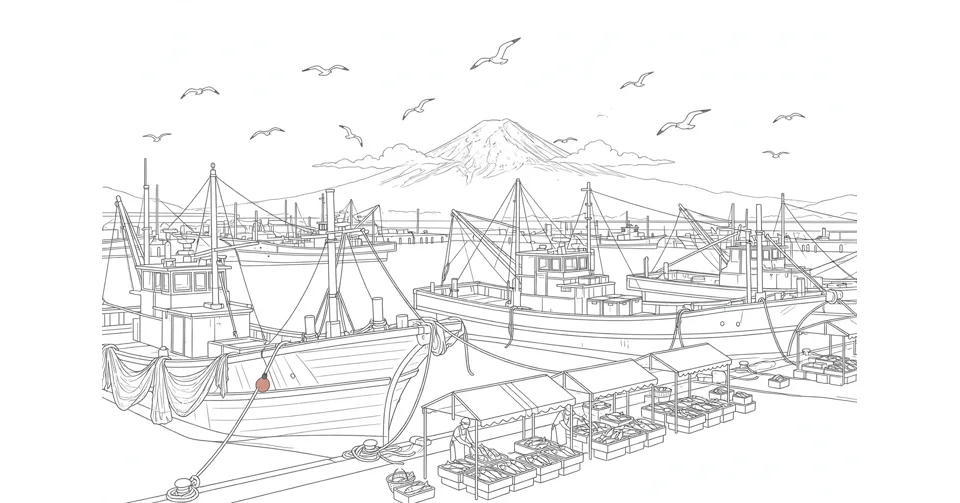
Numazu is a port city in eastern Shizuoka Prefecture, about an hour from Tokyo by Shinkansen and local train. It is the third largest city in the prefecture and the gateway to the Izu Peninsula, but most visitors come for one thing, the food. More than 1.6 million people visit Numazu Port every year. The draw is simple. This is a working fishing port first and a tourist stop second, and you can taste the difference.
Come hungry and come early. The market opens with the auctions, the restaurants fill up by noon, and the best fish sells out first. This guide covers what to eat, what to see, and how to plan a day at Numazu Port without missing the good parts.
Why Suruga Bay Makes Numazu Port Special
Suruga Bay is the reason Numazu Port exists. The bay reaches a maximum depth of 2,500 metres, which makes it the deepest bay in Japan, and its cold deep water is home to around 1,000 species of fish. That depth is not a piece of trivia. It shapes everything on the menu. Deep-sea fish that almost never reach a Tokyo fish counter are a normal catch here, and the local restaurants have spent generations learning how to cook them.
Numazu Port is where that depth meets dry land. The port faces the open bay, so the boats do not travel far, and the fish do not spend long on ice. A fish caught at dawn can be sliced for sashimi by noon. That short journey is the whole secret of the place. Freshness here is not a slogan on a menu. It is a matter of geography.
The bay also gives the port its backdrop. On a clear day, Mount Fuji rises across the water, and Numazu Port frames the mountain the way a postcard would. If you want to compare viewpoints, our guide to the Fuji Five Lakes and the best views of Mount Fuji covers the classic spots inland, but the view from the water has a character all of its own.
What to Eat at Numazu Port
Start with a kaisendon, a bowl of rice topped with the morning's sashimi. Every restaurant at Numazu Port has its own version, and the topping changes with the catch, so the bowl you eat in spring will not be the bowl you eat in autumn. That is the point. Order the house special, sit at the counter if you can, and let the season decide.
The second thing to try is himono, the dried fish that Numazu is famous for. Himono is fish that has been lightly salted and semi-dried, usually horse mackerel, then grilled until the skin crisps. It sounds plain next to a tower of sashimi, but it is the dish the locals eat at home, and it carries the flavour of the port in a way raw fish does not. The shops along the Minato shopping street and in the Shinsen-kan food hall sell himono to take home, packed for the train ride back to Tokyo.
Look out for deep-sea fish too. Because Suruga Bay is so deep, the boats bring in species that most Japanese restaurants never see, and the port kitchens turn them into sashimi, fried dishes, and soups. If a menu lists a fish you have never heard of, that is usually a good sign. Ask the staff what is best today. At Numazu Port, that question is not small talk. It is how you order.
Japan takes food seriously everywhere, and if you want to see that care taken to its highest form, read our guide to kaiseki, the multi-course art of dining. Numazu Port is the other end of the same idea, the same care, pointed at a bowl of rice and raw fish instead of a formal dinner. Both are worth your time, but only one of them costs less than a train ticket.
There is something honest about a port that still works for a living. The restaurants here do not need to dress up the fish, because the fish arrived that morning. In a country where so much food is polished, packaged, and presented, Numazu Port is a reminder that the best meals often come from the least polished places. Eat where the fishermen eat, and you will rarely eat badly.
The Morning Auction at Numazu Fish Market
The day at Numazu Port starts before most visitors wake up. The boats unload at the fish market, buyers gather, and the auction sets the price of the day's catch. Visitors can watch the auction from the second floor, looking down on a floor that is busy, loud, and entirely serious about fish.
The restaurants around the market buy at that same auction, which is why the sashimi at lunch tastes like the sea and not like a refrigerator. If you want to see the auction, arrive early in the morning and keep to the viewing area. This is a workplace, not a show, and the people below are buying the stock their businesses depend on. Watch quietly, stay out of the way, and you will be welcome.
The market area stays lively through the morning, with stalls selling fresh fish, dried fish, and local snacks. It is the best time to walk the port, before the lunch crowds arrive and while the stalls still have their full range.
View-O, the Water Gate with the Best View in Town
At the entrance to Numazu Port stands View-O, the largest water gate in Japan. It was built to hold back a tsunami from a major earthquake in the Tokai region, and it is a serious piece of engineering. It is also, by happy accident, the best viewpoint in town.
A lift takes you to an observation deck 30 metres up, and from there you can see the whole port, Suruga Bay, the Hakone mountains, and on a clear day, Mount Fuji. Admission is 100 yen for adults and 50 yen for children, which makes it one of the cheapest viewpoints in Japan. The gate is open from 10:00 to 20:00, except on Thursdays, when it closes at 14:00. It is also lit up at night. More than a million people have ridden the lift, and the view explains why. Check the official View-O website before you go, in case hours change.
A Short Cruise out into Suruga Bay
The best way to understand Numazu Port is to leave it for half an hour. The Chidori sightseeing cruise departs from the port, sails under the View-O water gate, and heads out into Suruga Bay. From the water, the port looks the way it should, a working harbour with Fuji behind it.
A ticket costs roughly 1,200 yen for an adult, and the cruise lasts around half an hour. On a clear day the view of Mount Fuji from the bay is the reward, and on any day the sea air and the gulls are worth the price on their own. Boats can be cancelled in bad weather, so check the forecast and the Chidori cruise website before planning your day around it.
Getting to Numazu Port from Tokyo
Getting to Numazu Port is easy enough for a day trip. Take the Shinkansen from Tokyo to Mishima, then change to the JR Tokaido Line for the short ride to Numazu Station. The whole journey takes about an hour. From Numazu Station, a bus reaches the port in 10 to 15 minutes, and a taxi is only a little faster.
Pay with an IC card if you have one. Our guide to how to use a Suica card in Japan covers the card that works on the trains and the buses here, and it saves you from buying paper tickets at every step.
Numazu also works as a base for the wider area. The Mishima Skywalk, the longest pedestrian suspension bridge in Japan, is a short trip away, and the Izu Peninsula starts just south of the city. But if you only have one day, spend it at the port. It is the part of Numazu that no other city in Japan can copy.
Numazu Port at a Glance
| What | Details |
|---|---|
| Getting there | Shinkansen to Mishima, then JR Tokaido Line to Numazu Station, then a 10 to 15 minute bus to the port |
| Best time to visit | Early morning for the auction, late morning for the full range of stalls, clear winter days for Fuji |
| View-O | Observation deck 30 metres up, 100 yen for adults, 50 yen for children, open 10:00 to 20:00 |
| Cruise | Chidori sightseeing cruise, roughly 1,200 yen for an adult, around half an hour |
| Deep Sea Aquarium | Next to the port, devoted to the creatures of Suruga Bay, including the coelacanth |
The details change with the season, and prices drift from year to year, so treat the numbers above as a starting point and check the official sites on the day. The one thing that does not change is the order of the day. Morning belongs to the market, midday belongs to lunch, and the afternoon belongs to the view from View-O or the deck of the cruise boat.
Numazu Port is not the prettiest port in Japan, and it does not try to be. It is a working port that happens to serve some of the freshest seafood in the country, with the deepest bay in Japan on one side and Mount Fuji on the other. Come for the fish, stay for the view, and leave with a full stomach and a reason to come back.
More in Food & Travel
Latest posts
- The Dalang, the Single Voice Behind Every Wayang Puppet
- Yadnya Kasada, the Festival That Feeds the Crater of Mount Bromo
- The 8050 Problem, When Retired Parents Still Carry Their Adult Children
- Moai, Okinawa's Lifelong Circles of Friends
- Anak Krakatau, the Child of Krakatoa That Keeps Growing
- Otohime, the Small Sound That Protects Privacy in Japanese Toilets
- Nomikai, the After-Work Drinks That Are Part of the Job in Japan
- Coelacanth and the Living Fossil of the Deep Sea
- Uchiura and the Quiet Fishing Village Behind Love Live Sunshine
- Love Live Sunshine and How Anime Changed Numazu
- Numazu Deep Sea Aquarium and the Creatures of Suruga Bay
- Numazu Himono and the Art of Dried Fish
- Numazu Imperial Villa and Japan's Seaside Imperial Retreat
- Disaster Vending Machines in Japan That Give Their Drinks Away
- The E33G Remote Worker Visa and How to Legally Work from Bali