Tamago Sando and Japan's Konbini Egg Sandwich
· 10 min read
A tamago sando is Japan's softest sandwich, made from crustless shokupan, creamy egg salad, and Kewpie mayonnaise, and sold in every konbini for a few hundred yen. Here is what makes it special, and how to make one at home.
There is a sandwich in Japan that travellers plan their mornings around, made from nothing more exotic than egg, mayonnaise, and white bread. The tamago sando is the egg salad sandwich sold in every konbini in the country, and it has become one of the most talked about convenience store foods in the world. It costs about the same as a coffee, it is eaten cold, and it is made with a care that seems out of proportion to something bought from a chilled shelf at midnight. The first bite explains the fuss. The bread is soft enough to dent under a thumb, the filling is cool and creamy, and the whole thing disappears in about four bites.
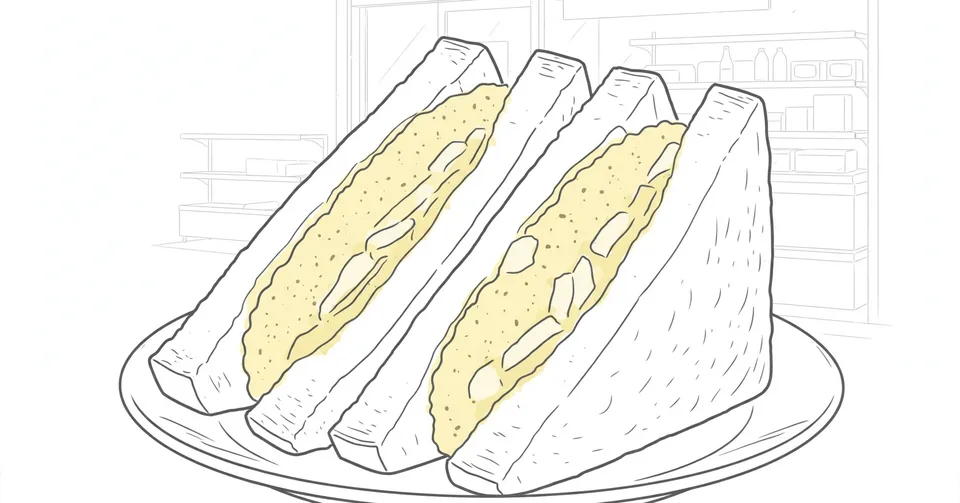
The name is simple enough. Tamago means egg, and sando is short for sandwich, so a tamago sando is literally an egg sandwich. But the Japanese version is a different object from the egg sandwiches most visitors grew up with. The bread is shokupan, Japanese milk bread, sliced thick with the crusts cut off. The filling is chopped hard boiled egg bound with Kewpie mayonnaise, which is made from egg yolks only and tastes richer and tangier than Western mayonnaise. Nothing is toasted, nothing is warm, and nothing is fancy. The sandwich works because every part of it is made to be soft.
What a Tamago Sando Actually Is
A tamago sando is built from four things, and each one matters. The bread is shokupan, tall and square, with a fine crumb and a faint sweetness from the milk in the dough. The crusts are cut off, not because the crust is bad, but because a crust would break the texture. The filling is hard boiled egg, chopped fine, mixed with Kewpie mayonnaise, a little salt, and sometimes a pinch of sugar. The sandwich is pressed gently, wrapped in plastic, chilled, and sold within hours. That is the whole recipe for a tamago sando, and that is why it is so hard to copy well. There is nowhere to hide a mistake, and if any part is wrong, you notice at the first bite.
Nobody invented the tamago sando on a particular day, and no single shop can claim it. It grew out of Japan's sando culture in the decades after Western bread took hold, and the convenience store chains standardised it into the version most people know today. It is cheap, it is everywhere, and it is consistent. A tamago sando bought at a station in Tokyo tastes close to one bought in a small town in Kyushu, and that consistency is part of the appeal.
The Bread and the Mayo
The bread is the part most people underestimate. Shokupan (食パン) literally means eating bread, and it is a white loaf made with milk, which gives it a pillowy crumb and a slight sweetness. The Japanese word for bread, pan, comes from the Portuguese pao, and Western style bread only became common in Japan in the Meiji era, with the first shokupan believed to have come from a British bakery in Yokohama in the 1880s. Today the loaf is a staple of bakeries, supermarkets, and konbini across the country, sold sliced thick.
For a tamago sando, the bread is never toasted. It is used soft and fresh, sliced thick enough to hold the filling without tearing, and trimmed of its crusts so that every bite is the same soft texture from edge to edge. Good shokupan dents when you press it and springs back, and that softness is most of the reason the sandwich feels so gentle to eat.
The mayonnaise matters just as much. Kewpie mayonnaise was first produced in Japan in 1925, and it is made with egg yolks only, no egg whites, which makes it richer, creamier, and more yellow than American mayonnaise. It uses rice vinegar instead of distilled vinegar, which gives it a sharper, slightly sweet tang. The red capped bottle is the Japan market version, and it is the one used in a proper tamago sando. Regular mayonnaise can work in a pinch, but the filling will be looser and less cohesive, and in a sandwich with only three ingredients, the mayonnaise is doing a lot of the work.
The Konbini Version
Japan has about 56,000 convenience stores, and the three big chains, 7-Eleven, Lawson, and FamilyMart, dominate the market. All three sell a tamago sando, and regular customers have firm opinions about which one is best. The sandwiches sit in the chilled section, usually near the onigiri, in a sealed triangle pack with a time of manufacture stamp. Konbini restock fresh sandwiches several times a day, so one bought just after a delivery is noticeably fresher.
Prices are modest. A konbini tamago sando usually costs around 220 to 270 yen depending on the chain, the store, and the season, with Lawson generally at the higher end and 7-Eleven and FamilyMart a little lower. A guide to the three chains' versions compares them side by side, and the differences are small but real.
The sandwich became famous outside Japan in part because of Anthony Bourdain. In the summer of 2017, filming his show Parts Unknown, Bourdain stood outside a 7-Eleven in Tokyo eating an egg salad sandwich from its plastic wrapper and praised it on camera. The moment turned the 7-Eleven tamago sando into a small pilgrimage for food loving travellers, and a 2019 piece in the New York Times about Japan's 7-Eleven gave it another push. None of that changed the sandwich itself. It is still the same soft bread and creamy egg, sold for a few hundred yen. What changed is that visitors started treating a convenience store stop as part of the trip rather than a break from it.
A tamago sando is meant to be eaten chilled and soon after purchase. Do not let it sit in a hot bag for hours, because the mayonnaise based filling does not hold up well in summer heat. Buy it, find a bench, and eat it within the hour. That is how it is designed to be eaten, and the best way to understand why people care about it.
Two Styles of Tamago Sando
Most visitors meet the Kanto style first. That is the egg salad version, finely chopped hard boiled egg mixed with Kewpie mayonnaise, spread thick between two slices of crustless shokupan and cut on the diagonal. It is the version sold in konbini across the country, and the version Bourdain ate.
In Kansai and Kyoto, the same name can mean something different. There the filling is often a thick slab of tamagoyaki (卵焼き), Japanese rolled omelette, sometimes called dashimaki when it is made with dashi stock. It is a different object under the same name, with the gentle sweetness of cooked egg rather than the tang of mayonnaise. If you order a tamago sando in Kyoto and get a slab of omelette instead of egg salad, nothing has gone wrong. You have simply met the other tradition.
There is a third version worth knowing about. In a kissaten (喫茶店), an old school Japanese coffee shop, the tamago sando is often made to order, sometimes with whole boiled eggs inside, and served with coffee in a room that has barely changed since the 1970s. It is usually thicker, richer, and more expensive than the konbini version, and the atmosphere of the shop comes with the meal. The konbini version is the everyday one. The kissaten version is the slow one.
How to Make a Konbini Style Tamago Sando at Home
A tamago sando is easy to make at home, but the details are what make it taste like the real thing rather than an ordinary egg sandwich.
- Boil the eggs for about 10 minutes, then cool them in cold water so the yolks stay yellow and do not turn grey.
- Separate the yolks from the whites. Mash the yolks smooth with Kewpie mayonnaise, a pinch of salt, and a pinch of sugar, then fold in the whites chopped small.
- Spread a thin layer of softened butter on both slices of shokupan. The butter keeps the bread from going soggy.
- Spread the filling thick, press the sandwich together gently, and trim the crusts.
- Cut on the diagonal, wrap tightly, and chill for at least 30 minutes before eating.
The egg timing is the single most under discussed part of a homemade tamago sando. Ten minutes gives a yolk that is fully set but still yellow and creamy when mashed. Much longer and the filling turns dry and chalky. Much shorter and it will not hold together. The butter matters too, and so does the chill. A tamago sando eaten warm is a different sandwich, and not a better one. The chill firms the filling and lets the flavours settle together. For exact amounts, this konbini style recipe is a good reference.
Some home cooks add a finishing touch borrowed from the viral versions of the sandwich. A soft boiled egg with a jammy yolk, placed whole in the centre of the filling before the sandwich is pressed, gives a dramatic cross section when the sandwich is cut and a creamy centre to every bite. The original konbini version has no jammy egg, and it does not need one, but the trick shows how much attention this simple sandwich now gets from cooks around the world.
Why Such a Simple Sandwich Matters
There is something quietly admirable about a country that puts this much care into a sandwich that costs a few hundred yen and is eaten in four bites. The tamago sando is not trying to impress anyone, and that is the point. It is a small, daily object made properly, and it shows the same instinct that runs through Japanese food culture, from the care that turned ramen from a quick meal into a craft to the patience of the tea ceremony. A culture that respects a two dollar sandwich is a culture that respects the people who eat it, from workers buying lunch between shifts to travellers eating on a bench at midnight.
That is also why the sandwich travels so well as an idea. You do not need rare ingredients or special equipment to make a tamago sando. You need good bread, good eggs, the right mayonnaise, and the patience to chill it before eating. The lesson is not that Japan has a secret ingredient. The lesson is that ordinary food deserves the same attention as special food, and that a small thing done well can outlast a grand thing done carelessly.
On your first morning in Japan, skip the hotel breakfast and walk to the nearest konbini instead. Buy a tamago sando and a bottle of tea, and eat it on a bench outside while the city wakes up around you. It will cost less than a coffee back home, it will take five minutes, and it will probably be one of the meals you remember best from the whole trip. That is a lot to ask of an egg sandwich, and the tamago sando manages it without ever trying to be more than it is.
More in Food & Travel
Latest posts
- The Dalang, the Single Voice Behind Every Wayang Puppet
- Yadnya Kasada, the Festival That Feeds the Crater of Mount Bromo
- The 8050 Problem, When Retired Parents Still Carry Their Adult Children
- Moai, Okinawa's Lifelong Circles of Friends
- Anak Krakatau, the Child of Krakatoa That Keeps Growing
- Otohime, the Small Sound That Protects Privacy in Japanese Toilets
- Nomikai, the After-Work Drinks That Are Part of the Job in Japan
- Coelacanth and the Living Fossil of the Deep Sea
- Uchiura and the Quiet Fishing Village Behind Love Live Sunshine
- Love Live Sunshine and How Anime Changed Numazu
- Numazu Deep Sea Aquarium and the Creatures of Suruga Bay
- Numazu Himono and the Art of Dried Fish
- Numazu Imperial Villa and Japan's Seaside Imperial Retreat
- Numazu Port and the Freshest Seafood in Shizuoka
- Disaster Vending Machines in Japan That Give Their Drinks Away