Sento, Japan's Everyday Public Bathhouse
· 9 min read
A sento is Japan's everyday public bathhouse, a neighbourhood bath that runs on heated tap water, not hot spring water. Here is what it costs, how it works, and why it is worth a visit.
A sento is the most ordinary, and most overlooked, bath in Japan. It is not a hot spring, it has no mountain view, and no one writes poems about it. It is the bath at the end of the street, where neighbours go after work to wash, soak, and talk. If you want to understand how Japan bathes, start here, not at a resort onsen.
In Tokyo, a sento costs 600 yen for an adult. That price is set by the city, not by the owner, and it has been 600 yen since 1 August 2026. Children aged 6 to 11 pay 200 yen, and children under 6 pay 100 yen. For that you get as long as you like in the baths, a wall painted with Mount Fuji, and a glimpse of a Japan that tourists rarely see.
The confusion is understandable. It looks like an onsen, it feels like an onsen, and the rules are almost the same. The difference is the water. An onsen uses natural hot spring water from the ground, and the law says it must be at least 25 degrees or contain certain minerals. A sento heats ordinary tap water. Everything else, the washing, the soaking, the nakedness, the quiet, is shared. Once you know that, the two make sense as siblings: one is geology, the other is the neighbourhood.
Sento and onsen, what is the difference
The simplest way to tell a sento from an onsen is the water source. An onsen is fed by a spring, and its water carries minerals from deep underground. It is fed by the city water supply, heated in a boiler, and poured into tiled tubs. The bathhouse can have many tubs, jet baths, and cold baths, but the water in all of them started life as tap water.
The law draws the same line. Onsen are governed by the Hot Springs Act, which defines what counts as hot spring water. A sento is governed by the Public Bathhouses Act, which treats the bathhouse as public hygiene infrastructure, a place for people to wash when their own homes cannot do the job. That is why the bathhouse price is regulated and the onsen price is not. Every neighbourhood bath in Tokyo charges the same 600 yen, because the governor sets a ceiling. An onsen can charge whatever the market will bear. If you have read about Japan's hot springs, think of the sento as the everyday version of the same idea, without the volcano.
How much a sento costs in 2026
It is one of the cheapest honest pleasures in Japan. In Tokyo the adult fee is 600 yen, in force since 1 August 2026, when it rose from 550 yen. The fee is a ceiling set by the Tokyo governor, so no neighbourhood bath can charge more for a basic soak. Children aged 6 to 11 pay 200 yen, and children under 6 pay 100 yen.
Other prefectures set their own ceilings, usually between 450 and 600 yen, so the price is similar across the country. Extras cost more: a sauna is usually a small additional charge, and towel rental is often around 200 yen. Bring your own small towel and your own soap and shampoo and you pay nothing extra at all. A detailed breakdown of the current Tokyo fees is kept by the Japan Sento Guide, which tracks each rise against the official announcements.
There are ways to pay less. Tokyo sells a common 10 ticket booklet for 5,400 yen, which brings each bath down to 540 yen. And from 4 November 2026 to 28 February 2027, a youth campaign lets anyone aged 29 or under bathe for 300 yen at participating Tokyo baths, half the standard price. A super sento is different, with entry from about 1,500 yen to more than 3,500 yen, and the regulated price does not apply.
| Bath type | Water | Typical adult price | What it is for |
|---|---|---|---|
| Sento | Heated tap water | 600 yen in Tokyo | The neighbourhood bath |
| Onsen | Natural hot spring water | 1,000 to 2,800 yen | A mineral soak |
| Super sento | Heated tap water | 1,500 to 3,500 yen | A large leisure spa |
The table shows the real point. A sento is not a cheap onsen. It is a different institution, priced like a public service, and that is exactly why it has survived.
A short history of the sento
Public baths existed in the Edo period, when most city homes had no bath of their own. Early baths were steam baths. In the Meiji era, from 1868 onward, soaking tubs took over.
The golden age came after the Second World War. Homes were small, bathrooms were rare, and the bathhouse was where a neighbourhood washed. In the late 1960s, Tokyo had more than 2,500 sento, and the whole country had tens of thousands. People exchanged news, and the owner knew every family on the street.
Then homes got their own baths, and the long decline began. Each decade, hundreds closed. Owners grew old, their children chose other work, and the fuel to heat the water grew more expensive. Today the Tokyo Sento Association counts a little over 400 baths in the capital, and the number still falls a little every year. It did not disappear, but it stopped being a necessity and became a choice.
What a sento looks like inside
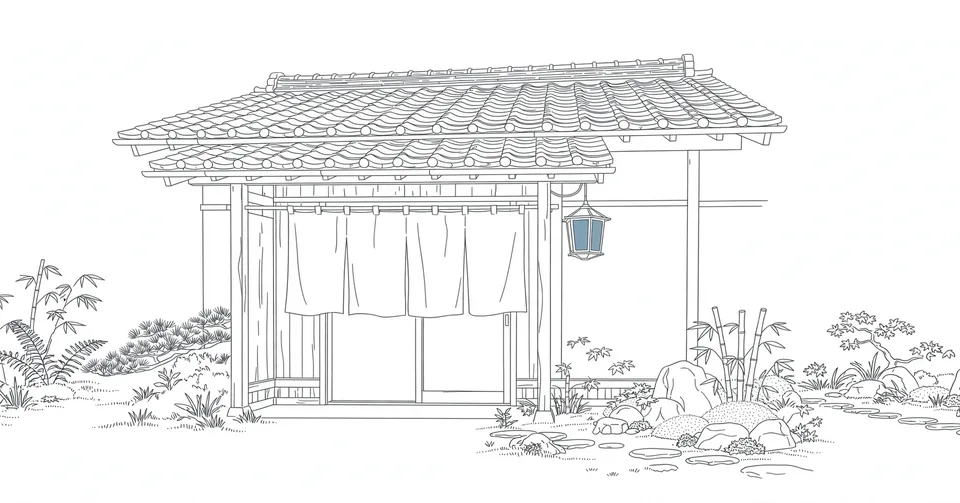
The bathhouse announces itself from the street. The entrance usually has a noren curtain, a sign, and sometimes a small chimney, a reminder of the boiler that heats the water. Inside, you pay at the front desk, the bandai, and step through into the changing room. Men and women separate here, behind the noren or through different doors.
The changing room is simple: baskets or lockers for clothes, a mirror, and a scale. From there you walk naked into the bathing area, carrying only a small towel. The bathing area has a row of low stools and showers along the wall, and one or more tubs in the middle or at the far end. The water sits at about 40 to 42 degrees. You wash first, at the stools, and only then get in.
The Mount Fuji mural on the wall
The most famous feature of the bathhouse is the painting above the baths, and it is usually Mount Fuji. The tradition began in 1912, when a painter decorated a bathhouse in Kanda, Tokyo, with the mountain. Other bathhouses copied the idea, and the Fuji mural became the signature of the bathhouse, the thing that made a plain tiled room feel like a place with a view.
Not every mural is Fuji. Some show lakes, cherry blossoms, or the sea. But Fuji remains the default, painted in blues and whites above the steam, and bathers have been soaking beneath it for more than a century. There are only a handful of painters left who specialise in these murals, and when one retires, a piece of the craft goes with them.
The rules of the bath
Bathhouse etiquette is simple, and it is the same etiquette that governs an onsen. Wash completely before you enter any tub. Sit on the low stool, soap yourself, rinse, and only then step into the water. Do not put your towel in the tub. Keep the small towel on the side of the tub or folded on your head. Do not bring a swimsuit. Do not splash, do not shout, and do not stare. Dry yourself with the towel before you step back into the changing room, so the floor stays dry for the next person.
The rules sound strict, and they are, but they are also what makes the bath work. It is a shared tub, and the washing rule is the contract that lets strangers share hot water in comfort. A visitor who follows it is welcomed without a word.
You do not need to be quiet. People talk, quietly, in the tubs. Leave the phone in the locker.
Tattoos and the modern sento
Tattoos are the question every foreign visitor asks, and the sento has a better answer than the onsen. Many onsen ban tattoos outright, or demand they be covered. They are more lenient. The regulated neighbourhood baths in Tokyo legally welcome bathers with tattoos, and most local baths do not ask about them at all. A large super sento may still refuse, so check before you go, but an ordinary one is usually fine. That openness is part of why the bathhouse is finding new visitors, young Japanese who grew up with a bath at home and foreign residents who come for the same reason.
Why sento are disappearing, and why some are coming back
The numbers are honest and they are not good. Every year, a few dozen baths close across Japan, and the owners who remain are often in their seventies. Fuel is expensive, repairs are expensive, and a bathhouse that serves a neighbourhood of people with their own bathrooms is a hard business to keep alive.
But it is also changing, and some of the changes work. Renovated baths, sometimes called designer sento, keep the old tubs and the Fuji mural and add a sauna, a cold bath, or craft beer in the lobby. Koganeyu in Kinshicho, Tokyo, is a well known example: a renovated neighbourhood bath with a sauna, a 90 minute limit, and a towel set for 200 yen. The baths that survive stopped pretending it is 1965 and started being useful to the neighbourhood they have.
How to visit a sento for the first time
Going for the first time is easier than it looks. Choose a neighbourhood bath rather than a large spa, and go in the late afternoon, when it is busy enough to feel alive but not crowded. Bring a small towel, soap, and shampoo, or buy them at the front desk. Pay at the bandai, undress in the changing room, and carry only the small towel into the bathing area. Wash at the low stools, rinse well, and step into the hottest tub last, after you have tried the cooler ones. Practical guidance for first timers, including which baths welcome visitors, is covered in the Tokyo Sento Guide.
A ryokan stay often includes a bath, and if you have read about Japan's traditional inns, you will recognise the same manners in the sento. The difference is that the sento is not part of a holiday. It is part of a Tuesday. And that is the point. The onsen is where Japan goes to escape. The sento is where Japan goes to wash, and to be a neighbourhood, for 600 yen, beneath a Fuji mural.
More in Life & Style
Latest posts
- The Dalang, the Single Voice Behind Every Wayang Puppet
- Yadnya Kasada, the Festival That Feeds the Crater of Mount Bromo
- Chankonabe, the Hot Pot That Feeds a Sumo Stable
- The 8050 Problem, When Retired Parents Still Carry Their Adult Children
- Koji Mold, the Quiet Engine Behind Japanese Food
- Anak Krakatau, the Child of Krakatoa That Keeps Growing
- Otohime, the Small Sound That Protects Privacy in Japanese Toilets
- Yozakura, Japan's Cherry Blossoms After Dark
- Nomikai, the After-Work Drinks That Are Part of the Job in Japan
- Coelacanth and the Living Fossil of the Deep Sea
- Sakura Ebi and the Tiny Shrimp Only Suruga Bay Catches
- Senbon Matsubara and the Pine Grove of Numazu
- Shirasu and the Whitebait Bowls of Shizuoka
- Uchiura and the Quiet Fishing Village Behind Love Live Sunshine
- Love Live Sunshine and How Anime Changed Numazu