Key Money in Japan and Why Renting Costs Four Months Up Front
· 9 min read
Key money in Japan is the non-refundable gift you pay your landlord when you sign a rental contract, and it is the main reason renting costs four months of rent before you move in.
If you rent an apartment in Japan, the first bill is not one month of rent. It is four or five months of rent, paid before you spend a single night in the place. The biggest surprise inside that bill is key money, a one-off payment to your landlord that you will never get back, and it is the part of the bill that shocks newcomers the most.
Key money is a custom, not a law. It is a gift of thanks to the landlord for letting you live in their property, and once you pay it, it is gone. That is what makes renting in Japan so expensive at the start, and it is the reason the first month in a new apartment costs far more than the monthly rent suggests.
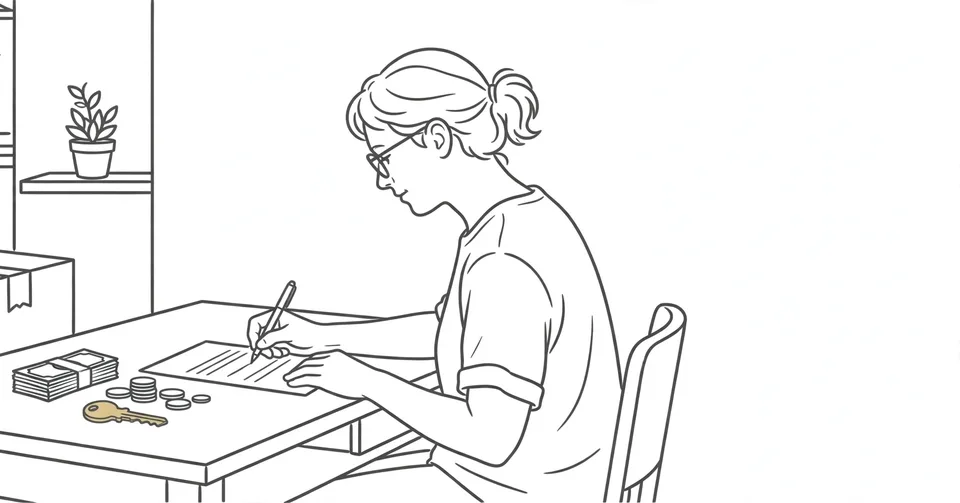
The surprise is not just the amount. It is that the money buys you nothing you can keep. A deposit comes back to you when you move out, minus cleaning costs. Key money does not come back at all, even if you leave after a month. Once you understand that, the whole rental system in Japan starts to make sense, and you can plan around it instead of being caught by it.
What key money actually is
Key money is called reikin in Japanese, which literally means gratitude money. You pay it once, when you sign the rental contract, and it goes straight to the landlord. It is usually one to two months of rent, so on an apartment that costs 100,000 yen a month, key money is usually 100,000 to 200,000 yen.
It is not a deposit, and it is not a fee for a service. It is a gift, and gifts are not returned. If you move out after six months, the landlord keeps it. If you move out after six years, the landlord keeps it. There is no rule that forces a landlord to return key money, because there is no rule that forces a landlord to charge it in the first place. The whole thing runs on custom.
That custom goes back to the years after the Second World War, when housing was scarce and landlords could ask for almost anything. A tenant who wanted a room paid a thank-you fee on top of the rent, and the practice stuck. Japan now has more houses than households, and millions of empty homes sit across the country, yet the custom survives in the busiest rental markets, especially in central Tokyo and other popular cities.
It helps to see key money for what it is: the price of a tradition that has outlived the shortage that created it. Landlords in popular areas can still ask for it because someone will pay it. Landlords in quieter areas often cannot, because tenants have other choices. That difference is the first clue to avoiding it.
What four months up front is made of
The four or five months of rent you pay before moving in are not a single charge. They are a stack of separate charges, and only one of them is the rent itself. Here is what a typical move-in bill looks like for an apartment that costs 100,000 yen a month.
| Cost | Typical amount | Refundable? | | First month of rent | 1 month, 100,000 yen | No, it is rent | | Deposit (shikikin) | 1 to 2 months, 100,000 to 200,000 yen | Yes, minus cleaning and repairs | | Key money (reikin) | 1 to 2 months, 100,000 to 200,000 yen | No, never | | Agency fee | Up to 1 month plus tax, about 110,000 yen | No | | Guarantor company fee | 50 to 100 percent of one month, 50,000 to 100,000 yen | No |
Add the middle of those ranges together and the bill comes to about 460,000 to 560,000 yen before you have spent a night in the apartment. That is four and a half to five and a half months of rent, paid in one go. Even the friendliest version of the bill, with one month of deposit and one month of key money, still comes to about 400,000 yen.
Two items on that list deserve a closer look. The deposit, or shikikin, is the only part that comes back. When you move out, the landlord returns it minus the cost of cleaning and any damage beyond normal wear. Disputes over the deposit are common, so photograph the apartment on the day you move in and keep the pictures. The guarantor company fee is the newest charge on the list. Most landlords now ask tenants to use a guarantor company instead of finding a human guarantor, and the company charges roughly half a month to a full month of rent, usually once, sometimes again at each contract renewal.
For a fuller picture of what a month in Tokyo actually costs once you are settled in, my guide to what it really costs to live in Tokyo breaks down rent, food, transport, and bills for a single person. The move-in bill is a separate shock on top of those monthly costs, and it is the one that catches most newcomers unprepared.
Why landlords still ask for key money
The honest answer is that they ask because they can. In a popular neighbourhood, a landlord with one empty apartment and ten applicants has no reason to drop key money. Each applicant knows that refusing to pay it means losing the apartment to someone who will. The custom survives where demand is strong, and it fades where demand is weak.
There is also a quieter reason. Landlords see key money as compensation for risk. A tenant might leave after a few months, stop paying, or damage the property. The deposit covers some of that risk, but key money covers the rest, and it covers it in the landlord's favour. From the landlord's side, it is a cushion. From the tenant's side, it is money paid for nothing tangible.
What is striking is how uneven the practice has become. Walk through a listing site for central Tokyo and most apartments still ask for one or two months of key money. Look at the same site for a suburb an hour out, or for an older building, and no-key-money listings appear everywhere. The custom is not fading evenly. It is fading from the edges inward, where landlords compete hardest for tenants.
How to avoid or negotiate key money
The simplest way to avoid key money is to look for apartments advertised as reikin nashi, which means no key money. These listings are common now, and they are not only in the countryside. Even in Tokyo, older buildings, apartments a little further from the station, and buildings with several empty rooms often drop key money entirely to attract tenants.
Negotiation is also possible, and more people should try it. If an apartment has been empty for a while, or if you are willing to sign a longer contract, an agent can ask the landlord to reduce or drop the key money. It does not always work, but it costs nothing to ask, and agents expect the question. The worst answer you get is no, and the best answer saves you one or two months of rent.
The strongest way to skip key money altogether is UR Housing, the public housing run by the Urban Renaissance Agency. UR apartments charge no key money, no deposit, no agency fee, and no guarantor fee. The catch is that the buildings are often older and further from the centre, and there is an application process with income conditions. Even so, for anyone planning to stay a few years, the saving is large enough to be worth a look. You can browse the official listings on the UR Housing website and see what is available in the area you want.
It is also worth comparing the move-in cost of renting with the cost of buying one of Japan's cheap empty houses. My article on akiya, Japan's free houses that are not really free explains why a house that looks free can still cost millions of yen to make livable. Renting with key money and buying an akiya are very different commitments, but both hide their real cost behind a small-looking first number.
What to check before you sign
Before you sign anything, ask the agent to put every move-in cost in writing, item by item, with the exact yen amount next to each one. Do not accept a single total. You need to see which parts are refundable and which are not, because that is the difference between money you will see again and money you will not. Japan Guide has a clear overview of the costs of renting in Japan that is worth reading before you start apartment hunting, so you know which charges to expect.
Read the contract for two more charges that surprise tenants later. The first is the renewal fee, or koshinryo, which many contracts charge every two years when the contract renews. It is often one month of rent, and it is not refundable. The second is the cleaning fee charged when you move out, which is deducted from your deposit. Ask in advance how much it is and what it covers, so the deduction does not come as a surprise two years later.
If anything in the contract is unclear, ask the agent to explain it in plain language before you sign. A good agent will do this without being asked twice. If an agent rushes you, or cannot explain a charge, that is useful information about the agent, and you can walk away and find another one. The apartment will still be there tomorrow, and so will other apartments.
The real lesson of key money is a simple one about budgeting. Renting in Japan is not expensive because the monthly rent is high. It is expensive because the first month costs four or five times the monthly rent, and the largest non-refundable part of that bill is a gift to the landlord. Budget for the move-in bill as its own line, not as part of the rent, and the shock disappears. Look for no-key-money listings, ask for a discount when the apartment has been empty, and check UR Housing before you settle. The custom is old, but it is not universal, and a little patience at the start can save you one or two months of rent that you will never get back.
More in Money & Work
- Nomikai, the After-Work Drinks That Are Part of the Job in Japan
- The E33G Remote Worker Visa and How to Legally Work from Bali
- The Salaryman and Japan's Loyal Office Culture
- Akiya, Japan's Free Houses That Are Not Really Free
- Why Bali Became the World's Remote Work Capital
- Karoshi, the Japanese Word for Death by Overwork
Latest posts
- The Dalang, the Single Voice Behind Every Wayang Puppet
- Yadnya Kasada, the Festival That Feeds the Crater of Mount Bromo
- Chankonabe, the Hot Pot That Feeds a Sumo Stable
- The 8050 Problem, When Retired Parents Still Carry Their Adult Children
- Koji Mold, the Quiet Engine Behind Japanese Food
- Moai, Okinawa's Lifelong Circles of Friends
- Anak Krakatau, the Child of Krakatoa That Keeps Growing
- Otohime, the Small Sound That Protects Privacy in Japanese Toilets
- Yozakura, Japan's Cherry Blossoms After Dark
- Coelacanth and the Living Fossil of the Deep Sea
- Sakura Ebi and the Tiny Shrimp Only Suruga Bay Catches
- Senbon Matsubara and the Pine Grove of Numazu
- Shirasu and the Whitebait Bowls of Shizuoka
- Uchiura and the Quiet Fishing Village Behind Love Live Sunshine
- Love Live Sunshine and How Anime Changed Numazu