Onsen Tattoo Rules in Japan and How They Are Slowly Changing
· 9 min read
Onsen tattoo rules in Japan are house rules, not law, and they differ from bath to bath. Here is why the bans began, what the numbers say, and the tattoo friendly towns, cover stickers and private baths that let tattooed guests soak anyway.
If you have a tattoo and want to soak in a Japanese hot spring, the honest answer is that it depends on the bath in front of you. There is no national law behind onsen tattoo rules, and there is no nationwide ban either. Each facility sets its own house rules. Some doors are wide open, some open only under conditions, and some are still firmly closed to anyone with ink.
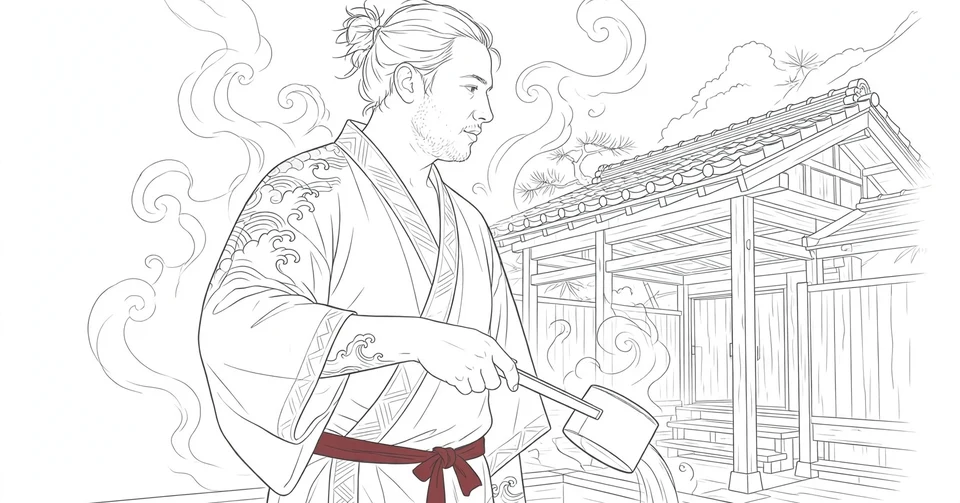
Understanding onsen tattoo rules starts with that simple fact. They are local decisions made by individual baths, inns and bathhouse operators, not legal decisions made in Tokyo. The Japan National Tourism Organization, or JNTO, set this out in its onsen and tattoo guidance in June 2024, and its guide to onsen tattoos and etiquette is the clearest official summary a visitor can read before a trip.
The good news is that the direction is real, even if it is slow. More facilities now declare themselves tattoo friendly than a generation ago, and a few famous hot spring towns welcome tattooed guests openly and in writing. If you are new to soaking itself, it helps to first understand why Japan's hot springs are a way of life, because the tattoo question sits inside a much older bathing culture.
How onsen tattoo rules work in practice
In practice, onsen tattoo rules are house rules. A bathhouse posts its policy at the entrance, on its website, or sometimes only at the front desk, and that policy is the one that counts on the day. There is no national rule you can quote at the door, and no certificate that settles the question for every bath in the country.
This is why two baths on the same street can give opposite answers. One operator may worry about the comfort of regular guests and keep a strict ban. Another may welcome everyone and say so in three languages. Onsen tattoo rules are decided bath by bath, which is frustrating when you are planning, but it also means the map of welcome is growing one decision at a time.
Where the ban came from
The history behind onsen tattoo rules is darker than most visitors expect. JNTO notes that tattooing was once used by the Japanese authorities as a punishment for criminals, so ink carried a stigma long before it carried any fashion. A tattoo marked a person as an outsider, and that association took centuries to fade.
Later, elaborate irezumi tattoos became linked in the public mind with organized crime and gang affiliation. Bathhouses, where guests share water in close quarters, began refusing tattooed bathers as a way to keep organized crime members out and other guests comfortable. It was a shortcut, and a blunt one. The ban was never a hygiene law. It was a social signal, enforced at the door because it was easier than judging each guest by behaviour.
What the numbers actually say
The best nationwide snapshot of onsen tattoo rules is now a decade old. In October 2015, the Japan Tourism Agency surveyed lodging and bathing facilities across the country. About 3,800 facilities were contacted and about 600 replied, a response rate of about 15 percent, so the figures should be read as indicative rather than exact.
Of those respondents, 56 percent refused tattooed guests in their large baths, 31 percent did not refuse them, and 13 percent allowed them under conditions such as covering the tattoo. Read carefully, the survey says two things at once. Refusal was the majority position, but it was never universal. Even in 2015, nearly a third of baths placed no obstacle in front of a tattooed guest, and onsen tattoo rules were already more varied than the famous ban suggests.
The official pushback, and why it is only guidance
The legal ground shifted in February 2017, when the Japanese government answered a written parliamentary question. Its answer was clear: a tattoo alone cannot be treated as a contagious disease or as a threat to public hygiene under the Public Bath Act. Whatever onsen tattoo rules a facility keeps, hygiene law is not a valid excuse for them.
A year before that answer, on 16 March 2016, the Japan Tourism Agency had already issued guidance to industry associations saying that refusing entry solely because of a tattoo is not appropriate. The guidance pointed out that people have tattoos for religious, cultural and fashion reasons, and that tattoos cause no hygiene problem. It suggested practical measures instead: cover stickers, no special handling for small palm sized tattoos, separate time slots, and private baths. The health ministry sent a related notice two days later. But guidance is not law, and facilities remain free to refuse, which many still do.
Four kinds of doors you will meet
Most onsen tattoo rules fall into four types, and naming them makes travel planning much easier.
- Fully tattoo friendly, where tattoos are accepted openly in the shared baths.
- Allowed if covered, where a sticker or cover sheet must hide the tattoo completely.
- Private bath only, where tattooed guests are welcome in a reserved bath but not the shared one.
- Full refusal, where no tattoo of any size is admitted to the baths.
The covered category is where onsen tattoo rules get fiddly. JNTO warns that cover sheets and stickers suit only very small tattoos, and some facilities set a palm sized limit. A large back piece cannot be solved with a sticker, and covering never guarantees entry. A bath that refuses tattoos may refuse covered tattoos too.
The towns that said yes, in writing
JNTO publishes a short list of tattoo friendly onsen, and it is the most useful page in this whole subject. The seven are Dogo in Ehime, where all three bathhouses accept tattoos; Kinosaki in Hyogo, where all seven public baths accept tattoos; Otakinoyu in Gunma; Shibaseki in Oita; Yamato-no-Yu in Chiba, about 40 minutes from Narita Airport; Saki-no-Yu in Wakayama; and Hottarakashi in Yamanashi. Against the background of onsen tattoo rules nationwide, a written yes like this is gold for a tattooed traveller.
Kinosaki is the model case. The Visit Kinosaki tattoo guide, published by the town's own tourism site, confirms that all seven public hot springs in Kinosaki allow tattoos of all sizes, with no need to cover them. The town decided together, and tattooed guests can hop between the public baths in a yukata like everyone else. Two cautions still apply. An accommodation's own in-house bath may follow different rules, so it is worth asking your inn, and individual public baths close for repairs at times. Satono-Yu, one of the seven, has been closed for renovation since April 2024.
Private baths and other quiet workarounds
When shared baths are closed to you, private baths are the classic answer, and onsen tattoo rules usually bend around them. A private bath, called kashikiri, is reserved for a set time and usually costs extra. JNTO describes the simple ritual: you book at the front desk, pay the additional fee, and the desk hands over a key. Behind that locked door, your tattoos are nobody else's business.
The most reliable version of this workaround is a room with its own open air bath. Many traditional ryokan inns offer exactly that, and a bath attached to your room removes the policy question entirely, whatever the local onsen tattoo rules say. It costs more than a shared soak, often considerably more, but for a tattooed guest who wants certainty, I think it is money spent on peace of mind rather than on luxury.
Local sento, the everyday public bathhouses of Japanese neighbourhoods, are often more relaxed about tattoos than onsen are. Plenty of city sento admit tattooed regulars without fuss. JNTO still advises double checking the specific place first, because often is not always, and a neighbourhood bath is the last place you want a misunderstanding at the counter.
Asking politely, and accepting the answer
The practical core of onsen tattoo rules is a single polite question asked before you pay. JNTO offers a useful phrase for the front desk: "Tatu ga haitte iru no desu ga, daijobu deshou ka?" It means, roughly, I do have a tattoo, but am I okay to go in? Asked with a smile, it turns a possible confrontation into a simple request for information.
And if the answer is no, the answer is no. I have some sympathy for small operators caught between old regulars and new expectations, even when I think their rule is outdated. Arguing at the desk helps nobody, and it can make the next tattooed visitor's welcome colder. The towns and baths that want your company are not hard to find, and they deserve the business instead.
Why the rules are slowly changing
The forces softening onsen tattoo rules are not mysterious. International visitors arrive with tattoos as a normal part of life, and turning them all away is bad business as well as bad hospitality. Younger Japanese attitudes are different too, as tattoos spread as fashion among people with no connection to organized crime. JNTO itself notes that more and more facilities are declaring themselves tattoo friendly, year by year.
The change stays uneven because it is made locally. One town coordinates, as Kinosaki did, and transforms its welcome overnight. The next town keeps the old sign for another decade. Onsen tattoo rules are changing the way the baths themselves are run, by individual owners making individual calls, and that is why progress looks patchy on a map even while the direction is unmistakable.
In the end, the story of onsen tattoo rules is a story about a shortcut slowly being retired. The water was never the problem, and neither was hygiene. What remains is a set of house rules catching up with the guests who actually arrive, tattooed and otherwise, all of them looking for the same quiet hour in the same hot water.
More in Life & Style
Latest posts
- The Dalang, the Single Voice Behind Every Wayang Puppet
- Yadnya Kasada, the Festival That Feeds the Crater of Mount Bromo
- Chankonabe, the Hot Pot That Feeds a Sumo Stable
- The 8050 Problem, When Retired Parents Still Carry Their Adult Children
- Koji Mold, the Quiet Engine Behind Japanese Food
- Anak Krakatau, the Child of Krakatoa That Keeps Growing
- Otohime, the Small Sound That Protects Privacy in Japanese Toilets
- Yozakura, Japan's Cherry Blossoms After Dark
- Nomikai, the After-Work Drinks That Are Part of the Job in Japan
- Coelacanth and the Living Fossil of the Deep Sea
- Sakura Ebi and the Tiny Shrimp Only Suruga Bay Catches
- Senbon Matsubara and the Pine Grove of Numazu
- Shirasu and the Whitebait Bowls of Shizuoka
- Uchiura and the Quiet Fishing Village Behind Love Live Sunshine
- Love Live Sunshine and How Anime Changed Numazu