An Ozeki Stands One Step From the Top and Cannot Afford to Slip
· 15 min read
An ozeki is the second-highest rank in professional sumo, one step below yokozuna, and holding it means proving yourself again in every single tournament.
An ozeki is the second-highest rank in professional sumo. Only the yokozuna stands above him, and only the holder of the rank can become the next yokozuna. It is the most exciting rank in the sport, because it combines real power with real danger. He is close enough to the top to touch it, and close enough to the edge to fall off it.
The rank demands consistency that few athletes in any sport are asked to show. Win eight bouts out of fifteen and life goes on. Lose eight and the countdown starts. Do it twice in a row and the rank is gone. That is the whole story of the rank in one sentence, and it is why fans watch these men more closely than anyone else on the ranking sheet.
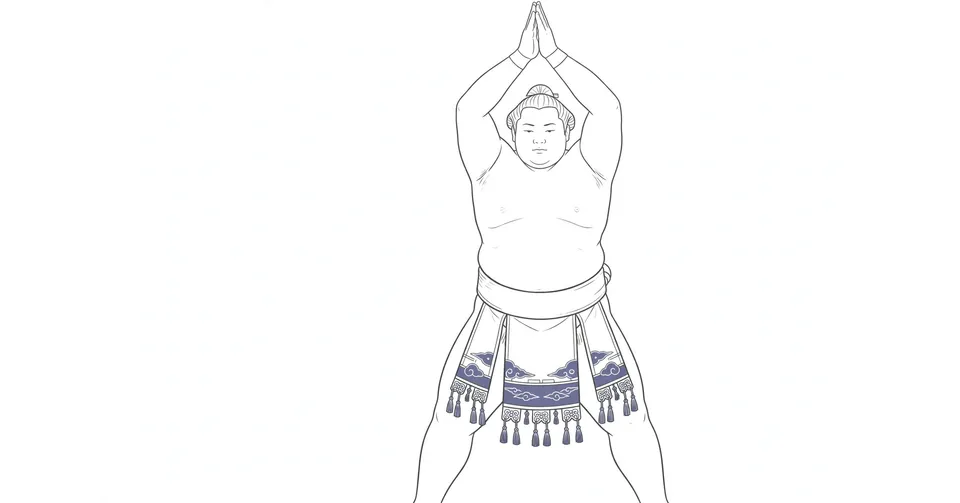
There is something admirable about a rank that refuses to let its holder relax. Most sports give their stars a bad season or two before the questions start. Sumo gives a man at that rank exactly one bad tournament, and then it starts taking notes. I think that is what makes the rank so compelling to follow. It is not a prize you win once. It is a standard you must meet again and again, in public, every two months.
What the rank of ozeki actually means
The word ozeki is written with two characters that mean great barrier. It is a fitting name. He is the barrier between the ordinary wrestlers of the top division and the grand champion at the very top. To pass him, you must beat him. To become him, you must win at a level that very few wrestlers ever reach.
Ozeki is the second rank inside makuuchi, the top division of professional sumo. The division holds about 42 wrestlers, and each of them fights fifteen bouts in a tournament, one per day for fifteen days. There are six tournaments a year. Its holder sits near the top of that small group, alongside the yokozuna and just above the sekiwake and komusubi. Together, the four named ranks are called sanyaku, the titled wrestlers of the top division.
The rank carries privileges that mark its holder out from the rest of the division. He is a sekitori, a salaried professional, with his own attendants and a place in the ceremonial life of the sport. He enters the ring in the makuuchi ring-entering ceremony wearing a richly decorated ceremonial apron, the kesho-mawashi, and the crowd knows his name before the announcer finishes saying it. But the privileges come with a condition that never goes away. He must keep winning, or the sport takes the rank back.
That combination of honor and insecurity is what defines the rank. A yokozuna can never be demoted, and a sekiwake who has a bad tournament simply slides down a few places. He lives between those two fates. He is too important to slide quietly, and too human to be untouchable.
How a wrestler becomes an ozeki
Promotion to ozeki is not automatic, and there is no single result that guarantees it. The guideline most often quoted is 33 wins over three consecutive tournaments while ranked at sekiwake or komusubi, usually with at least ten wins in the final tournament of the three. It is a guideline, not a written rule. The Japan Sumo Association decides each promotion on its own merits, weighing the quality of the wins, the strength of the opposition, and the wrestler's overall record. A championship along the way helps. A string of wins against yokozuna helps. But the number 33 has become the figure every fan counts, because it is the clearest sign that a sekiwake is ready.
The process is deliberately slow. A wrestler must first climb to sekiwake, the rank directly below ozeki, and then prove himself there across three tournaments, which takes half a year. One brilliant tournament is not enough. Two good ones are not enough. The sport wants to see that the wrestler can sustain the standard, not just touch it once. That is the point. A man who cannot sustain the standard will lose the rank quickly anyway, so the promotion process filters for exactly that quality.
When the promotion is confirmed, the newly promoted wrestler's name moves up the banzuke, the official ranking sheet that is redrawn before every tournament. The banzuke is written by hand in calligraphy by specialist referees, and it lists every active wrestler in order, from yokozuna down to the newest recruit. Seeing your name printed at ozeki on that sheet is the moment the promotion becomes real, and it is a moment most wrestlers spend a decade chasing. The sheet itself is worth understanding, because it is the document that records every rise and fall in the sport, and the banzuke remembers every basho in calligraphy in a way no database ever could.
There is no requirement to win a championship before promotion to ozeki. That surprises many new fans. A wrestler can reach the rank purely through steady, high-quality winning. But the absence of a championship requirement makes the standard no easier. Thirty-three wins in three tournaments means averaging eleven wins per tournament against the hardest schedule in the sport, facing yokozuna and fellow sanyaku wrestlers almost every day. It is a test of durability as much as skill, and it explains why so few wrestlers ever pass it. Since the modern era began in 1927, a little over 250 wrestlers have been promoted to ozeki in the entire history of the sport.
Kadoban, the warning that follows every ozeki
The word every ozeki dreads is kadoban. It means, roughly, that the wrestler is on the corner, one step from falling off the rank. A wrestler at the rank who finishes a tournament with a losing record, seven wins and eight losses or worse, becomes kadoban for the next tournament. The word is printed next to his name, and everyone in the arena knows what it means.
The system is merciful in exactly one way. A kadoban wrestler who wins eight bouts in the next tournament clears the status completely and returns to being an ordinary holder of the rank. The slate is wiped clean. But if he loses again, if he posts a second consecutive losing record while kadoban, he is demoted to sekiwake. There is no third chance, no committee discussion, no appeal. Two losing tournaments in a row, and the rank is gone.
This is why the eighth win of a kadoban tournament is one of the most dramatic moments in sumo. By the middle of the second week, a struggling man may sit at six wins and six losses, and every bout becomes a test of nerve. The crowd understands the arithmetic perfectly. They know that the man in the ring is fighting not for a championship but for his rank, and the tension in the arena on those days is unlike anything else in the sport. A full explanation of how the kadoban system works, and how it fits into the wider ranking structure, is laid out in this guide to the sumo ranks, which walks through every division from yokozuna to the entry level.
Demotion is not always the end of the story. A demoted man who wins ten or more bouts as a sekiwake in the very next tournament is restored to ozeki immediately. The sport gives him one fast road back, and several wrestlers have used it. But the road back is narrow, and it must be taken at once. Wait a tournament, and the chance is gone. The wrestler must then climb the long way again, through the same three-tournament test that got him there the first time.
I find the kadoban system quietly fair. It protects a man from a single bad tournament, which can happen to anyone through injury or bad luck. At the same time, it refuses to protect him from a pattern. One bad tournament is an accident. Two in a row is a message, and sumo listens to it.
The gateway to yokozuna
Every yokozuna was once an ozeki. There is no other road to the top. A wrestler cannot jump from sekiwake to yokozuna, and no amount of talent excuses a wrestler from serving time at ozeki first. The rank is the waiting room for the grand championship, and the wait is the test.
The standard for promotion to yokozuna is famously demanding. An ozeki is generally expected to win two consecutive tournament championships, or to post results judged equal to that, while also showing the dignity and character the rank requires. The Yokozuna Deliberation Council, a panel of outside observers, reviews the candidate and makes a recommendation. Winning is necessary but not sufficient. The council also looks at how the wrestler carries himself, how he behaves in victory and defeat, and whether he looks like a man the sport can put at the very top of its ranking sheet.
That is why so many ozeki never make the final step. The list of wrestlers who reached ozeki but never became yokozuna runs to 53 names in the modern era, and it includes some of the most respected wrestlers the sport has ever seen. The gap between ozeki and yokozuna looks small on paper, one line on the banzuke, but it is the hardest gap in sumo. Two consecutive championships against the best wrestlers in the world is a demand that breaks almost everyone who tries.
The difference between the two ranks is also a difference in security. A yokozuna can never be demoted, and the rank is for life, which is why the promotion standard is so strict. An ozeki, by contrast, must defend his position every tournament. The full story of that permanent rank, and why sumo guards it so carefully, is told in the article about how yokozuna is the rank sumo never takes back. Read the two ranks together and the design of the system becomes clear. Ozeki is the rank you must earn and keep. Yokozuna is the rank you must earn and never lose, because the sport will not take it from you.
Ozeki who never became yokozuna
Some of the greatest names in sumo history stopped at ozeki, and the sport remembers them fondly rather than pitying them. The longest-serving ozeki of the modern era are Kaio and Chiyotaikai, who each held the rank for 65 tournaments, more than ten years apiece at the second-highest rank. That kind of longevity at ozeki is a career most wrestlers would trade anything for, and it tells you how hard the rank is to hold, let alone to keep for a decade.
Kaio holds a particular record that says everything about the rank. He won five top-division championships as an ozeki, more than any other wrestler who never reached yokozuna in the modern era. Five championships would be a legendary career in any sport, and Kaio won all of them while standing one step below the top. He came close to promotion more than once, and the promotion never came. Yet nobody who watched him would call his career a failure. He was the barrier itself, the man every challenger had to go through, for more than ten years.
Konishiki is another ozeki whose name still comes up whenever fans talk about the rank. Born in Honolulu, he became the first ozeki born outside Japan when he was promoted in 1987, and he held the rank until 1994, winning three championships along the way. His size and power made him one of the most feared wrestlers of his era, and his popularity helped carry sumo to a wider audience. He never became yokozuna, but his seven years at ozeki changed what the rank could look like.
Go further back and the list reaches Raiden Tameemon, who held the ozeki rank from 1795 to 1811 and won 28 championships under the old system, before the modern championship system was established in 1909. His numbers belong to a different age of the sport, and they are counted as unofficial today, but his name has survived more than two centuries. That is what ozeki can mean. A wrestler can hold the rank, never climb higher, and still be remembered long after the champions of his day are forgotten. The full list of every ozeki in history, with their championships and years at the rank, is kept on Wikipedia's list of ozeki, and it is a humbling document to read from top to bottom.
The ozeki of today
As of the November 2026 tournament, three wrestlers hold the rank of ozeki. Kirishima, from Mongolia, has held it since 2023. Kotozakura, whose grandfather held the same ring name as a yokozuna, has held it since 2024. Aonishiki, born in Ukraine and promoted in 2026, is the newest of the three. Each of them won championships on the way up, and each of them now carries the same burden: defend the rank every tournament, and keep the road to yokozuna open.
Above them stand two yokozuna, Hoshoryu and Onosato. Below them, the sekiwake and komusubi wait for their chance, counting their wins across three tournaments and hoping the committee is watching. The structure is working exactly as designed. The ozeki are the gatekeepers, the yokozuna are the standard, and the challengers below are the pressure that keeps the whole system honest.
The three current ozeki also show how international the rank has become. A generation ago, an ozeki born outside Japan was a novelty. Today, two of the three active ozeki were born abroad, and nobody in the arena treats that as remarkable anymore. The rank is earned on the dohyo, and the dohyo does not ask where a wrestler was born. It asks only whether he can win eight bouts, and then whether he can do it again.
Why fans watch the ozeki so closely
If you are new to sumo and you want to know where the drama is, do not only watch the yokozuna. Watch the ozeki. The yokozuna is expected to win, and his story is usually about whether he can keep winning. The ozeki's story is more complicated, and more human. He might win the championship. He might lose his rank. Sometimes he is fighting for both in the same tournament, and you cannot tell which way it will go until the final days.
The eighth win is the number that matters most to an ozeki, and fans know it. In a normal tournament, the eighth win is a quiet milestone. In a kadoban tournament, it is the moment the whole arena exhales. I have watched crowds rise for an ozeki's eighth win with more noise than they make for a championship bout, because the crowd understands what is at stake. A championship is glory. An eighth win in a kadoban tournament is survival, and survival is something every person in the arena understands in their own life.
There is also a particular kind of respect that grows around a long-serving ozeki. A wrestler who holds the rank for years becomes part of the furniture of the sport. Fans grow up watching him. They learn his techniques, his habits, his good tournaments and his bad ones. When he finally loses the rank or retires, it feels like the end of an era, even if he never became yokozuna. Kaio and Chiyotaikai were like that. They were not the grand champions, but they were the men the grand champions had to beat, and the sport was shaped around them for a decade.
That is the lesson the rank teaches, and it is a useful one outside sumo too. There is honor in holding a high standard for a long time, even if you never reach the very top. The ozeki who defends his rank for ten years has achieved something real, and the fans know it. The ranking sheet may only have one line above him, but the career below that line can still be a great one.
One step from the top
An ozeki stands one step from the top and cannot afford to slip. The rank is the second-highest in sumo, the gateway to yokozuna, and the hardest position in the sport to keep. Earning it takes about 33 wins across three tournaments against the best wrestlers alive. Keeping it takes eight wins every tournament, forever, with only one bad tournament forgiven. Losing it twice in a row takes it away.
The next time you watch a tournament, find the ozeki on the ranking sheet and follow them through the fifteen days. Watch how they handle the eighth win, how they respond to a loss, and how they carry themselves in the ring-entering ceremony. You will be watching athletes who have almost everything, and who know exactly how quickly almost everything can be taken away. That is what makes an ozeki worth watching. Not the rank itself, but the way a human being carries it.
More in Culture & Society
- Komusubi Is the Smallest Chair at Sumo's Top Table
- A Sekiwake Waits One Win From Sumo's Highest Door
- Tanabata Festival and the Star-Crossed Lovers Behind the Bamboo Wishes
- A Maegashira Climbs the Numbered Ladder One Bout at a Time
- An Oyakata Is the Father a Sumo Stable Cannot Replace
- A Tokoyama Spends Ten Years Learning to Dress a Topknot
Latest posts
- Japanese Calligraphy and the Brush That Turns Writing Into Art
- A Tegata Is Sumo's Inked Handprint Autograph
- A Rikishi Is a Man of the Sumo World Before He Wins a Single Bout
- Mawashi Carries a Wrestler's Rank Around His Waist
- Namasu Turns Daikon and Carrot Into a Red and White Wish
- Yokai, the Strange Spirits That Haunt Japanese Folklore
- Ebi Bends Like an Old Back and Wishes You a Long Life
- Yokozuna Is the Rank Sumo Never Takes Back
- Kobumaki Rolls Joy Into a Strip of Kelp
- Kurikinton Is the Golden Mash That Wishes You Wealth
- Japanese Beer and the Dry Wars That Changed How Japan Drinks
- Kamaboko Paints the New Year Red and White
- Datemaki Rolls Sweet Eggs Into a Spiral of Good Luck
- Japanese Bento and the Lunch Box That Became an Art Form
- Tazukuri Turns Tiny Sardines Into a Wish for a Good Harvest