Japan's Cherry Blossoms and When to See Them
· 9 min read
Cherry blossom Japan season runs from late January in Okinawa to mid-May in Hokkaido, and the best window for Tokyo, Kyoto, and Osaka is late March to early April. Here is how the bloom moves, how the forecast works, and where to see it.
If you are planning a cherry blossom Japan trip, the honest answer is that there is no single date to circle. The season is a wave that rolls from the subtropical south to the snowy north over roughly four months, and the peak in any one city lasts about a week. Get the wave right and you walk under pink clouds. Get it wrong by ten days and you get green leaves and a lesson in patience.
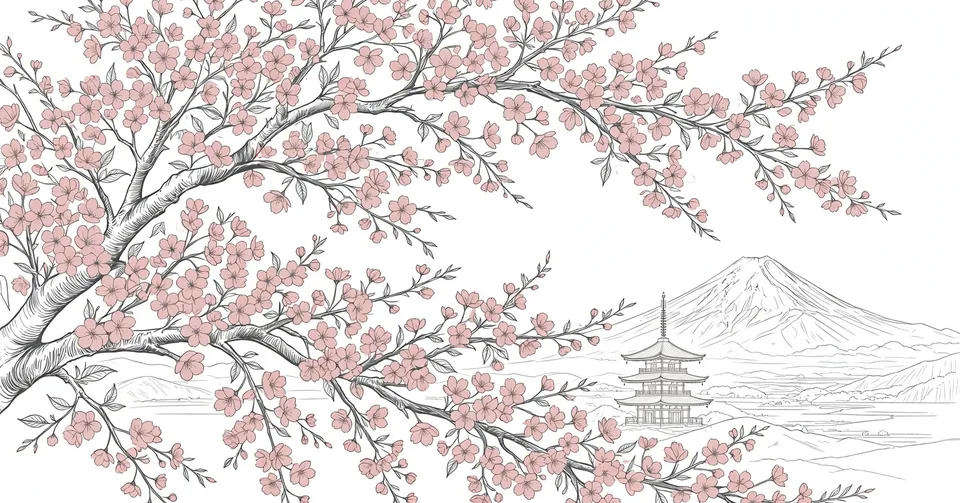
For most travellers, the window that matters is late March to early April, when the Somei Yoshino cherry, the pale pink variety planted all over the country, blooms across Tokyo, Kyoto, and Osaka. The average full bloom in Tokyo falls around March 31, and in Kyoto and Osaka around April 4. That is the heart of the cherry blossom Japan season for most visitors, and it is also the busiest and most expensive time to be in the country.
The trick is to plan a window, not a date. The first official cherry blossom Japan forecasts for 2027 arrive between mid-December 2026 and February 2027, and they get more accurate as spring approaches. Book ten to fourteen days that follow the blossoms north, and you will have a far better trip than someone who books a single weekend and hopes the weather agrees.
When cherry blossom season actually happens
The cherry blossom Japan season opens in Okinawa in late January, where a deep pink early variety blooms far ahead of the mainland. The main front starts in the warm south of Kyushu in late March, reaches Tokyo and Kyoto around the turn of April, moves through Tohoku in mid to late April, and finishes in Hokkaido in late April to early May. In 2026, Tokyo saw its first bloom on March 19 and full bloom on March 28, three days ahead of the long-term average.
Two words matter for reading any forecast. Kaika is the first bloom, the day the first flowers open. Mankai is full bloom, the peak, when the trees are covered and the petals start to fall within days. A forecast that tells you first bloom is coming does not mean the trees are already in full flower. Full bloom usually follows about a week later, and it lasts roughly a week. Rain and wind can cut that window short, which is why a calm week after mankai feels like a gift.
The dates also move. A warm winter pulls the bloom earlier, a cold snap pushes it later, and the peak in any city can shift by up to ten days from year to year. That is why a cherry blossom Japan trip is planned around a window, not a date. The forecasts exist to narrow the window, not to promise a day.
How the forecast works
Every year from around mid-December, the Japan Meteorological Corporation publishes its first bloom forecast, and it updates the dates through February and March as winter temperatures firm up. The Japan Meteorological Agency publishes its own observations, and the Japan National Tourism Organization carries the season dates for travellers. All three agree on the shape of the season and disagree a little on the exact days, which is normal.
The cherry blossom Japan forecast is updated through the season, so the number to trust is the latest one, not the first. Start watching the cherry blossom Japan forecast about six weeks before you travel and keep checking right up to departure. Even in March, the peak can move by several days, so treat any single date as a centre point, not a promise. The forecasters get steadily more accurate as the date approaches, but they cannot fix the weather.
One more thing the forecasts do not tell you: full bloom is not the only beautiful moment. The days just before mankai, when the buds are half open, are quiet and lovely. And the days just after, when the petals fall like snow and cover the paths, are the ones people remember. If you arrive a few days early or a few days late, you have not failed. You have seen a different part of the same season.
Planning a cherry blossom Japan trip
A cherry blossom Japan itinerary works best when it follows the front north instead of standing still. Start in Tokyo or Kyoto in late March, and if the bloom there has already passed, move north to Tohoku in mid-April or Hokkaido in late April. The front gives you second and third chances, which is the most useful fact in this whole article.
Book early. Spring is the most popular season for a cherry blossom Japan trip, and the peak weeks are also the most crowded and the most expensive. Flights and hotels should be booked three to six months ahead, and the famous parks are busiest on weekends. Go on a weekday morning if you can. The light is better, the crowds are thinner, and the parks are quiet enough to hear the petals fall.
Golden Week, from 29 April to 5 May, ends the spring season with the busiest domestic travel week of the year. If your trip overlaps it, expect full trains, full hotels, and prices to match. The quiet sweet spot comes after it, in mid-May, when the fresh green leaves arrive and the crowds go home.
There is one practical warning worth packing for. Cedar and cypress pollen is severe from February to April, and hay fever is common in Japan in spring. If you suffer from it, pack antihistamines and expect to see half the country in masks. It is not a reason to stay home. It is a reason to be prepared.
Where to see them
The places below are the ones cherry blossom Japan guides return to every spring. They are famous for good reason, but they are not the only places. A small neighbourhood park with three old trees and no queue can be a better morning than a famous castle with a two-hour wait.
| Region | Typical full bloom | Places to consider |
|---|---|---|
| Okinawa | Late January to early February | Nakijin Castle |
| Tokyo and Kanto | Late March to early April | Chidorigafuchi, Shinjuku Gyoen, Ueno Park |
| Kyoto and Kansai | Early to mid-April | Philosopher's Path, Maruyama Park, Osaka Castle |
| Nara | Early April | Mount Yoshino |
| Himeji | Early April | Himeji Castle |
| Tohoku | Mid to late April | Hirosaki Castle |
| Hokkaido | Late April to early May | Goryokaku Park, Hakodate |
If the famous spots are full, the cherry blossom Japan experience is often better one street over. The trees are planted along rivers, in schoolyards, and around shrines all over the country, and the local park near your hotel is usually free, open, and half empty at eight in the morning. For a first cherry blossom Japan trip, Tokyo and Kyoto are enough. Add a day trip to Mount Yoshino or Himeji if you want the classic castle view without the Kyoto crowds.
Hanami, the art of looking
Hanami is the quiet heart of cherry blossom Japan. The word means flower viewing, and the practice is simple: spread a sheet under a tree, share food and drink, and stay a while. Office workers do it after work, families do it on weekends, and students do it with cheap snacks and good friends. The food usually comes from a nearby convenience store, which is part of the charm. A cherry blossom Japan picnic needs nothing fancy, just a free patch of ground and time to sit.
The evenings have their own name, yozakura, the blossoms lit up at night. Some parks and temples light the trees after dark, and the petals glow against the black sky. It is worth one evening of your trip, and it is usually less crowded than the daytime peak.
There is an etiquette to hanami, and it is mostly common sense. Do not shake the branches for a shower of petals, do not climb the trees, and do not leave rubbish behind. Some parks ban alcohol or barbecues, and the rules are posted at the entrance. The trees are old and loved, and the people around you are there for the same quiet reason you are.
If spring is not your season
Cherry blossom Japan is the loud season, all pink and crowds and picnics. If that sounds like too much, the other great season is autumn. The maple leaves turn crimson and gold from north to south between September and December, the air is crisp and clear, and the crowds are smaller. Japan's autumn leaves follow the same wave pattern as the blossoms, only in reverse, from Hokkaido down to Kyushu, and the same rule applies: plan a window, not a date.
There is no wrong choice between the two. Spring is brighter and more crowded. Autumn is quieter and colder. Both reward the same habit, which is to slow down and look up.
A week is enough
That is the honest truth about cherry blossom Japan: the bloom is brief on purpose, and the brevity is the point. The Japanese have a word for it, mono no aware, the gentle sadness of things that pass. The blossoms last a week because they are meant to be noticed, not owned.
So plan the window, watch the forecast, book early, and then let the dates be what they are. Go early in the morning, sit under a tree with something simple to eat, and leave the place cleaner than you found it. The petals will fall whether you are there or not. Being there is the whole trip.
More in Food & Travel
- Numazu Deep Sea Aquarium and the Creatures of Suruga Bay
- Numazu Himono and the Art of Dried Fish
- Numazu Port and the Freshest Seafood in Shizuoka
- Bullet Climbing Mount Fuji, the Overnight Ascent Japan Is Trying to Stop
- Climbing Mount Semeru, Java's Highest Volcano
- Tamago Sando and Japan's Konbini Egg Sandwich
Latest posts
- Love Live Sunshine and How Anime Changed Numazu
- Numazu Imperial Villa and Japan's Seaside Imperial Retreat
- Disaster Vending Machines in Japan That Give Their Drinks Away
- The E33G Remote Worker Visa and How to Legally Work from Bali
- Wabi-Sabi and the Japanese Beauty of Imperfect Things
- Women Only Train Cars in Japan and the Problem They Answer
- Maneki Neko and Japan's Beckoning Lucky Cat
- The Baduy People and Life Without Modern Technology
- The Salaryman and Japan's Loyal Office Culture
- Onsen Tattoo Rules in Japan and How They Are Slowly Changing
- Key Money in Japan and Why Renting Costs Four Months Up Front
- Sento, Japan's Everyday Public Bathhouse
- The Fuji Five Lakes and the Best Views of Mount Fuji
- The Obon Festival, Japan's Week for Honouring Ancestors
- Visiting the Ghibli Museum and Ghibli Park in Japan