In Nicoya, Old Age Runs on a Plan de Vida
· 12 min read
On Costa Rica's Nicoya Peninsula, one of the world's blue zones, elders asked why they still get up in the morning answer with a plan de vida, a reason to live rooted in family, land and faith, and demographers have spent two decades measuring the long lives built around it.
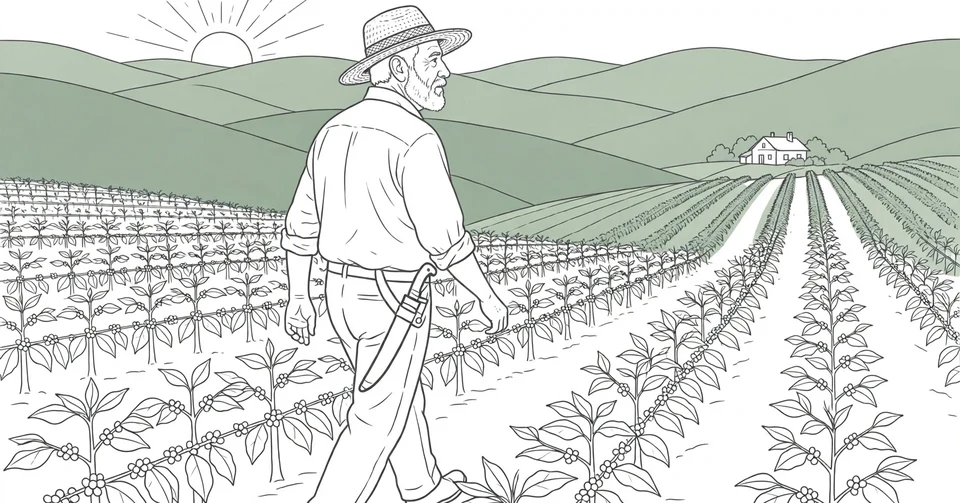
On the Nicoya Peninsula in northwestern Costa Rica, the day of a man in his nineties can still begin the way it began at nineteen: coffee before sunrise, a machete over the shoulder, and a walk out to the fields and pasture he has worked all his life. Ask him why he still bothers, and people who have interviewed the peninsula's oldest residents say the answer tends to come back in a fixed form. He has a plan de vida, and the plan is not finished with him yet.
Nicoya is one of the five blue zones, the short list of places that writer and National Geographic fellow Dan Buettner and his research partners identified as having unusual concentrations of very old, very active people. Buettner's materials describe the peninsula as having some of the lowest middle age mortality rates in the world and the second highest concentration of male centenarians. Behind those numbers sits the phrase the old people themselves use, and this article is about that plan de vida: what it means, and what the science around it actually supports.
A plan de vida is not a retirement plan, a bucket list, or a five year strategy. It is closer to a standing answer to a simple question: what is tomorrow for? In Nicoya the answer is rarely abstract, and it rarely involves the self at all.
What a plan de vida actually is
The Spanish translates plainly as a life plan, and Buettner glosses it as "why I wake up in the morning." In the Power 9, the list of nine shared habits his team distilled from the blue zones, purpose is one of the nine, and the Nicoyan version of it is the plan de vida. His materials suggest that holding a clear plan de vida, a settled sense of purpose, can be worth up to seven years of extra life expectancy, a figure drawn from purpose research generally rather than from Nicoya alone, but it shows how central the idea is to his account.
What makes this plan de vida distinctive is how concrete it is. Ask after someone's plan de vida in Nicoya and you will not be handed a document or a dream. When researchers and journalists ask the peninsula's elders about their plan de vida, the answers reportedly name people and duties rather than dreams. There are grandchildren and great grandchildren to keep an eye on. There is a small farm, a milpa of corn and beans, cattle to check, a fence that will not mend itself. There is God, and a parish, and the standing obligation to show up for both. A plan de vida, stated this way, is less a personal philosophy than a roster of who would notice if you stayed in bed.
It also has no finishing line. Retirement, in the sense of a formal stop after which life is reorganized around leisure, barely exists in the traditional Nicoyan countryside. Work shrinks as strength shrinks, an old man takes the lighter tasks and leaves the heavy clearing to his sons, but the structure of the day survives. The plan de vida survives with it, because it was never a job description. It was the reason the day had a shape.
Reading these accounts from Japan, what strikes me is how unambitious the answers sound, and how durable that makes them. A purpose built on being needed by specific people, in a specific place, does not expire when a project ends or a market turns. It renews itself every morning at roughly the moment the coffee is ready.
The peninsula behind the phrase
Nicoya is a dry peninsula in Guanacaste province, on Costa Rica's Pacific side, a landscape of cattle pasture, small farms, and dusty towns that gets most of its rain in one green season. Local researchers usually draw the blue zone around five cantons, Nicoya, Santa Cruz, Carrillo, Hojancha, and Nandayure. It is not a wealthy region. For most of the twentieth century its people were small farmers and sabaneros, the cowboys of the dry plains, living on what their land produced. It is poor, dry, devout country, and it grew the plan de vida as naturally as it grew cattle.
The peninsula keeps famous company. I have written about the full set in Blue Zones, the Five Places Where People Live the Longest: Okinawa in Japan, the Barbagia highlands of Sardinia, the Greek island of Ikaria, the Adventist community around Loma Linda in California, and Nicoya, the only one in Latin America. Each place got its label from the same exercise, demographers and researchers hunting for pockets of exceptional, verifiable old age and then asking what daily life there had in common.
That last word, verifiable, matters for Nicoya. Costa Rica keeps unusually good civil records for the region, which is one reason demographers took the peninsula seriously in the first place. The long lives of Nicoya are not only a story journalists tell. They are a pattern that first showed up in the country's own mortality statistics, in the work of Luis Rosero-Bixby, a demographer at the University of Costa Rica who has spent decades on the country's aging data.
What the demographers measured
The key study came in 2013, when Rosero-Bixby and his colleagues William Dow and David Rehkopf published a survival follow-up of some 16,300 elderly Costa Ricans. Older men in Nicoya died at rates about a fifth lower than men in the rest of the country across the years 1990 to 2011. A Nicoyan man who reached 60 had, by their estimate, about seven times the probability of a Japanese man of reaching 100, and could expect roughly 2.2 more years of life. The full paper, published in the Vienna Yearbook of Population Research, is freely readable through the University of Costa Rica's repository.
Three details in that research deserve more attention than they usually get. First, the Nicoya advantage was concentrated in cardiovascular deaths, which were far lower, rather than spread evenly across all causes. Second, Nicoyans in the study were leaner and lived with fewer disabilities, and blood based markers of aging and stress, including telomere length, looked more favorable. Third, and most telling, people who had left Nicoya lost the advantage. Out-migrants aged like other Costa Ricans. Whatever protects the peninsula's old people, it travels poorly, which points away from genes and toward the place and the way of life lived in it.
None of this proves that a plan de vida, specifically, adds the years. Demography can show that a population lives long and where the protection sits. It cannot easily separate purpose from the farm work, the diet, the family structure, and the water that come bundled with it. The honest reading is that the plan de vida is one strand in a braid, noticed by everyone who visits, and much harder to isolate than to observe.
Corn, beans and limestone water
If the plan de vida is the strand everyone quotes, food is the strand everyone eats. The traditional Nicoyan table rests on the old Mesoamerican trio sometimes called the three sisters: corn, beans, and squash, grown together in the same plot for centuries. Corn appears at nearly every meal as tortillas, beans come with the rice, and squash, plantain, and tropical fruit fill out the plate, with eggs, cheese, and small amounts of meat as accents rather than the center of the meal.
The corn hides a trick. In the Chorotega tradition the demographers call nixquezado, the kernels are cooked with lime before grinding, an ancient processing step that loads the tortilla with calcium. The 2013 study points out that this calcium, and the naturally high calcium and magnesium in the peninsula's drinking water, were not fully captured in its diet estimates. Researchers connect that mineral rich intake to one of the peninsula's quieter statistics, the rarity of broken bones among its oldest residents, who can fall at an age when a fracture often starts a final decline and simply get up again.
The same study keeps expectations honest about the rest of the plate. Measured carefully, the everyday Nicoyan diet of rice, beans, and some animal protein, low in glycemic index and high in fiber, differed only modestly from what the rest of Costa Rica ate. There is no superfood in this story. There is a plain, repetitive, home grown diet, eaten for ninety years, plus calcium that arrives disguised as tradition and as tap water.
Work, family and faith, repeated daily
A plan de vida in Nicoya is not carried in the head. It is carried in the calendar, and the calendar is physical. Accounts from the peninsula, including those gathered by Jorge Vindas, a researcher who has worked with the zone's centenarians for years, describe the daily round of the oldest generation: swinging a machete, milking cows, preparing land, cooking, washing clothes in the river, riding out on horseback to check animals. Buettner's reporting made the same point for a global audience. In Nicoya, men past one hundred have still saddled horses and worked their fields, not as a stunt for visitors but because the animals needed feeding that day.
Buettner's team calls this pattern moving naturally, exercise that is never scheduled because it is simply what the day requires. It pairs with two social structures that keep an old person necessary. The first is family. Centenarians in the blue zones typically live with children or grandchildren, or in the next house, and Nicoya is no exception. An elder who minds the great grandchildren, keeps the kitchen fire, and holds the family's memory is not a guest in the household. He or she is load bearing. The second is faith. The peninsula is largely Catholic, and Buettner's team reported that of the 263 centenarians they interviewed across all the blue zones, all but five belonged to some faith based community.
Put those pieces together and the plan de vida stops looking like a mindset that an individual chooses. It looks like the exhaust of a whole arrangement: land that needs working, kin who need watching, a church that expects you on Sunday. The plan de vida is real, but it is manufactured by the life around it, every day, whether the old person feels philosophical or not.
A cousin in Okinawa, not a twin
Buettner's Power 9 pairs the plan de vida with a Japanese idea. The Okinawans, his materials say, call the same thing ikigai, and for both cultures it translates to why I wake up in the morning. Okinawa in fact gave the list two entries, since its other famous habit, hara hachi bu, the practice of stopping a meal at about 80 percent full, appears there as the 80 percent rule.
The pairing is useful, and writers have leaned on it heavily, but it deserves a careful footnote. A plan de vida and ikigai grew up on opposite sides of the Pacific, in different languages, religions, and histories, and neither was coined to describe the other. Ikigai in everyday Japanese use is often quieter and smaller than the grand life purpose of Western self help books, attaching to modest daily pleasures as easily as to callings. The resemblance that Buettner and others noticed is genuine at one level: two long lived cultures both kept a word, ikigai in one place and plan de vida in the other, for the reason to get up, and in both places the reason tends to involve other people. Treating the two as identical, though, flattens both. Cousins, then, raised in different houses, who happen to answer the same question in a similar tone of voice.
The honest footnote, a fading advantage
Any article about Nicoya written now has to end its evidence where Rosero-Bixby himself did. In a 2023 follow-up study, he found that the peninsula's longevity advantage belongs mostly to people born before 1930. Nicoyan men born in 1905 died at rates about a third lower than other Costa Rican men. Men born in 1945, raised as roads, processed food, and wage work reached the peninsula, actually died at slightly higher rates than the national average. The old hotspot has shrunk toward a corridor in the south of the peninsula, around Hojancha and the road to Sámara.
Blue zone claims in general have also drawn sharper scientific scrutiny in recent years, with critics questioning age records and marketing in several of the five regions. Nicoya's case rests on stronger paperwork than most, built from censuses and a national aging study rather than interviews alone, and the biomarker and out-migrant findings are not easily explained away. Still, the fairest summary is that the famous Nicoya was a specific generation living a specific life, plan de vida and all, and that generation is nearly gone. The window for learning from it directly is closing with them.
Which, in a way, is the last thing the plan de vida itself would tell you. The old Nicoyans did not have a longevity strategy. They had work that mattered to people they loved, food their grandparents would have recognized, and a reason, renewed each morning, to be up before the heat. The years were a side effect. For the rest of us, who mostly have to build such a life on purpose rather than inherit one, the peninsula's quiet suggestion is to keep the plan concrete, near, and daily: named people, a piece of ground, a task that would miss you if you stayed in bed. A plan de vida does not need to be large. It needs to be waiting for you tomorrow.
More in Life & Style
Latest posts
- Kombu Is the Quiet Half of Dashi
- Irezumi Was an Art Before It Was a Warning
- The Oshi Kept Fuji's Pilgrims Fed, Housed, and Devout
- Every Prefecture Argues About What Goes in Ozoni
- Japan's Population Decline and the Villages It Leaves Behind
- Kecap Manis and the Sweet Soy Sauce of Indonesia
- In Mamoiada, Two Hundred Families Still Make Wine at Home
- Shochu and the Quiet Spirit of Japan
- A Dried Shiitake Is Louder Than a Fresh One
- Maruten Numazu and the Towering Kakiage Bowl of the Port
- The Three Sisters Grow Better Together
- Half the Old Springs in Japan Thank Kobo Daishi
- Tatamiishi Terraces Filter a River Through Stone
- Wasabi-Zuke Puts the Whole Plant in Sake Lees
- Karo Is the Tengger's Other Great Gathering