Kabosu Is Oita's Gentle Answer to Yuzu
· 12 min read
Kabosu, the round green citrus of Oita, is gentler than yuzu and quieter than sudachi, yet it seasons sashimi, ponzu, and hot pots across Japan.
Ask a cook in Oita what to squeeze over grilled fish and the answer comes without a pause. Kabosu. Not yuzu, not lemon, not sudachi. The round green fruit that has seasoned this prefecture's tables for three centuries, is the quietest member of Japan's sour citrus family, and perhaps the most useful.
It is easy to miss. Kabosu looks like a small unripe lime, and outside Oita it rarely appears in a supermarket at all. Yet almost every one of these fruits in Japan grows in one prefecture, and the juice of this modest fruit finds its way into ponzu, hot pots, sashimi plates, and even the feed of farmed yellowtail. The fruit that refuses to shout is the one Oita reaches for first.
That restraint is the point. Where yuzu leads with perfume and sudachi with a peppery bite, this one offers something rarer in a sour fruit: gentleness. It refreshes rather than bites, and in a cuisine built on balance, that is often exactly what a dish needs.
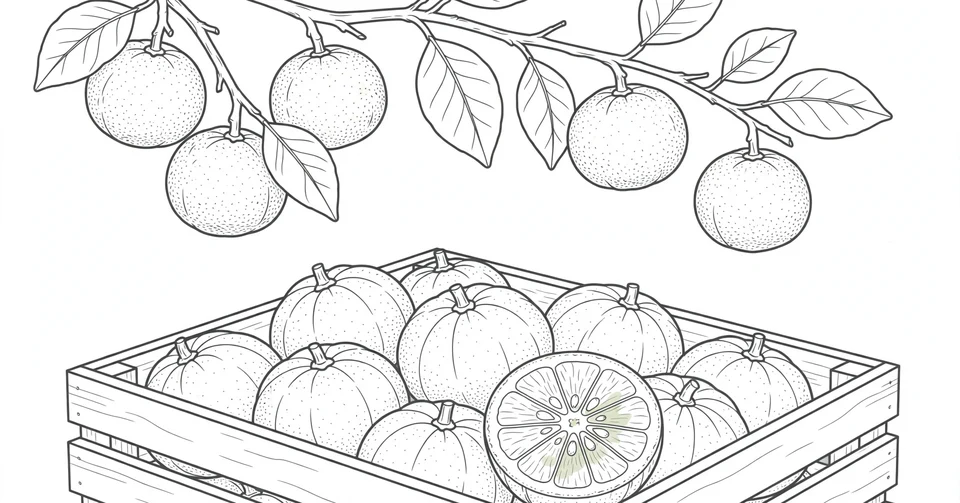
A kabosu in the hand is a small lesson in not judging by looks. The fruit is round, green, and plain, and nothing about it announces itself until it is cut. Then the scent arrives, clean and green, and the juice that follows is sour enough to wake a dish up without ever taking it over. That balance is why Oita has kept it close for so long.
What kabosu tastes like
Botanists call the fruit Citrus sphaerocarpa, a member of the rue family and a close relative of yuzu. It is thought to be a hybrid of an ichang papeda and a bitter orange, and one account traces it to a chance seedling that took hold in Oita long ago. The name itself did not appear in literature until the middle of the Showa period, which is late for a fruit with trees two or three centuries old. Kabosu spent a long time as a local secret before anyone wrote it down.
The flavour is the first thing to understand, because it explains everything else. The juice has the sharpness of lemon, and in some Japanese dishes it is used in place of vinegar altogether. But the sharpness comes wrapped in a refreshing aroma and a mild sourness, which is how Japan's agriculture ministry describes it in the geographical indication register for Oita Kabosu. Measured against its two famous cousins, it is the least acidic of the three, averaging about 3.2 percent citric acid in trials at the University of California's citrus collection. That number is the whole character of the fruit in a single figure: sour, yes, but never aggressive.
The fruit itself is slightly larger than a yuzu, about 5.3 centimetres across and nearly as tall, which makes it rounder than either of its cousins, with an average weight of around 71 grams. Cut it open and the flesh is pale yellow, even while the skin is still green, and the juice runs to about 28 percent of the fruit's weight. There are plenty of seeds, around 17 in a typical fruit, which is one reason cooks squeeze it with care. It is often confused with sudachi, the small green fruit of Tokushima, but the two can be told apart by the tip of the fruit: where the pistil fell off, a kabosu carries a slightly raised ring, a small torus shape that sudachi does not have. The tree, meanwhile, is an evergreen broad-leafed plant armed with sharp thorns, which makes picking a slower job than the fruit's mild temper might suggest.
I think of kabosu as the citrus equivalent of a good listener. Yuzu enters a room and everyone notices. Sudachi enters and everyone sits up. Kabosu enters, says almost nothing, and somehow the whole conversation gets better. That is not a small talent in a kitchen.
A fruit that belongs to one prefecture
The story Oita tells about kabosu begins with a doctor named Sogen. According to a legend from Usuki, Sogen brought a kabosu seed or sapling home from Kyoto during the Edo period and planted it in Oita, beginning cultivation in the prefecture. It is a good story, the kind every local speciality wants, and it may even be partly true. But the trees themselves tell a slightly different one. There are kabosu trees in Oita older than any found anywhere else in Japan, and in Usuki many are about 200 years old, with some thought to be around 300. A fruit with trees that old was probably never an import at all. It is now thought to be native to the prefecture, a seedling that chose Oita and stayed.
For a long time it stayed in a small way. The ministry record says the fruit has been cultivated in Oita since the late Edo period, and that it was first used for medical purposes. It was a household remedy before it was a seasoning, which is a common path for sour fruit in Japan. The turn toward the wider world came in the 1960s, when cultivation in Oita increased and shipments of the fruit to other prefectures began. The prefecture promoted production through the 1970s, and sales kept growing through the 1980s and 1990s, until the fruit was known across the country as an Oita meibutsu, a local speciality.
The numbers behind that reputation are startling. In 2018, Oita Prefecture accounted for about 99 percent of production in Japan. A decade earlier, in 2007, national production was 5,185 tons, of which Oita grew 5,019, with Aichi contributing 144 tons and Miyazaki just 17. The fruit is grown across most of the prefecture, but the heart of it is Usuki, Taketa, Bungo-Ono, and Bungotakada. Harvests swing with the years, as citrus always does. 2009 was a good year, with Oita producing about 6,587 tons, while 2010 dropped to 3,623 tons and 2011 recovered to 5,273. The agriculture ministry's own summary puts Oita's share at more than 90 percent of national production, and the fruit is registered under Japan's geographical indication system as Oita Kabosu, registration number 33.
There is something quietly stubborn about a prefecture holding on to 99 percent of a fruit for centuries. Oita could have sold the trees, licensed the name, or watched the crop spread the way yuzu spread from Kochi. Instead it kept kabosu close, promoted it slowly, and let the fruit become inseparable from the place. When you buy one, you are not just buying a citrus. You are buying a small piece of Oita's patience.
How kabosu is used at the table
In the kitchen, it is a seasoning first and a fruit second. Its juice is used with sashimi and grilled fish, in ponzu for hot pots, and as a vinegar alternative in Japanese dishes of many kinds. In Oita itself it goes further, into miso soup, over noodles, and squeezed into shochu. The habit is so ordinary there that it barely counts as a recipe. A wedge of kabosu arrives with the fish the way a lemon arrives with fish in the West, except the juice is greener, softer, and more fragrant.
There is even a right way to squeeze it. Cut the fruit into quarters along its natural lines, then press each quarter with the peel side down, so the seeds stay out of the dish and only the juice falls. It is a small piece of kitchen wisdom, the kind that only exists because generations of people squeezed the same fruit and learned what goes wrong.
The fruit's most famous role is in ponzu, the seasoned citrus sauce that Japan pours over almost everything. Ponzu began with a fruit too bitter to eat, and the sauce is really a framework, citrus plus seasoning, that each prefecture filled with whatever sour fruit it had. Yuzu leads with perfume. Sudachi leads with a peppery edge. The Oita fruit is rounder and gentler, the choice when the sauce should refresh rather than bite. In a ponzu made with kabosu, the soy sauce and dashi stay in charge and the citrus lifts them, which is exactly what a dipping sauce should do.
Beyond the table, the juice turns up in a long list of products: condiments, juices, non-alcoholic drinks, frozen desserts, snack foods, wagashi, pastries, and alcoholic drinks. And in one of the more surprising corners of Oita's food economy, the fruit feeds the fish. When the fruit is mixed into fish feed, its polyphenols slow discoloration and odour in the meat, and the resulting yellowtail and flounder are sold as Kabosu Buri and Kabosu Hirame. A citrus that seasons the fish on the plate also seasons the fish in the water, which feels like a joke Oita would enjoy. Even the dried peel has a use, burned as a mosquito repellent, a detail recorded by the botanists who first studied the fruit abroad.
Kabosu, yuzu, and sudachi: three sour cousins
Japan's sour citrus family is really a trio, and each member has a prefecture, a personality, and a job. Kochi turned yuzu into Japan's favourite citrus, growing around half the national crop and turning yuzu ponzu into a commercial product in the 1960s. Yuzu is the perfumed one, the fruit whose aroma of lemon, grapefruit, and mandarin peel arrives before the acid does. It is the star, and it knows it.
Sudachi belongs to Tokushima, which grows more than 90 percent of the national crop. It is the smallest of the three and the sharpest, with a peppery edge under the sourness, the fruit you reach for when a dish needs a jolt. The third cousin is the roundest, the largest, and the least acidic. It is the one you reach for when a dish needs lifting rather than waking.
The comparison matters because it explains why kabosu never became famous the way yuzu did. Fame in citrus goes to the loudest aroma and the sharpest bite, and kabosu has neither. What it has is a gentleness that lets the main ingredient stay the main ingredient. Squeezed over sashimi, it brightens the fish without covering it. Stirred into ponzu, it seasons the sauce without dominating it. That is a supporting role, and supporting roles rarely get their names on the poster. But ask the cooks who actually use all three fruits, and many will tell you the gentle one is the one they reach for most often.
The green harvest and the yellow one
Kabosu is picked green, and the timing matters. The agriculture ministry's register is blunt about it: Oita Kabosu is harvested during the green period because that is when it is most flavourful. Leave the fruit on the tree and it turns yellow as it ripens, and the flavour changes with the colour. The green harvest runs roughly from mid-August to October, when the rind holds its maximum of essential oil, and the colour break from green to yellow falls between the first and third week of September. In season, the fruit is available from August to March, and with greenhouse growing and cold storage it can be found all year round.
That green skin is a kind of honesty. A yellow kabosu is not a bad kabosu, but it is a different one, softer and less bright, and Oita's growers would rather pick the fruit at its best than wait for it to look ripe. It is the same instinct that makes the prefecture squeeze the fruit peel side down and register it under a geographical indication. Small choices, made the same way for a long time, add up to a flavour that cannot be copied by picking a different fruit.
Oita's affection for the fruit is visible beyond the kitchen, too. A kabosu mascot character called Kabotan was created for the National Greening Fair held in Oita in 2003, and two years later the prefecture's kabosu promotion council extended the character's use to regional development in general. A fruit with its own mascot is a fruit a prefecture has decided to keep. Kabotan is cheerful and round and green, which is to say, Kabotan is kabosu, and kabosu is Oita.
The patience of a local speciality
There is a lesson in the way kabosu stayed home. Yuzu went national in the 1960s, when Kochi producers turned it into a commercial product and the supermarkets followed. Kabosu grew in the same decade, but it grew within Oita, shipment by shipment, until the whole country knew it as Oita's fruit rather than as a fruit that happened to come from Oita. The difference is small and it is everything. One fruit became a product. The other became a place.
I find that more interesting than any tasting note. Japan is full of local specialities that could have gone national and did not, and the usual story is about missed chances. Kabosu suggests the opposite reading. A fruit that produces about five thousand tons a year in a good year, almost all of it in four districts of one prefecture, does not need to be bigger. It needs to be itself, picked green, squeezed peel side down, and served with fish that was swimming that morning. The gentleness is not a limitation. It is the product.
That is why this fruit is Oita's gentle answer to yuzu. Yuzu answers the question of how a citrus can be famous. Kabosu answers a different question, quieter and harder: how can a citrus be loved. The answer, in Oita, is to stay where you belong, to season rather than star, and to let the dish, not the fruit, take the praise. Three hundred years of trees suggest the answer is working.
It will never be the fruit on the poster. It will be the fruit in the kitchen, cut into quarters, pressed peel side down, its juice falling where it is needed and nowhere else. That is a small life for a citrus, and a good one.
More in Food & Travel
Latest posts
- Suka Duka Means the Banjar Shows Up for Joy and Grief Alike
- Tabuh Rah Spills Blood So the Ground Stays Calm
- The Bendesa Adat Speaks for a Village That Has Two Governments
- Catur Brata Is Four Silences Kept at the Same Time
- Your Weton Is the Day You Were Born, Counted Two Ways
- Rahu and Ketu Still Chase the Sun and Moon Across the Sky
- Hiwatari Asks You to Walk Across the Fire
- Ngembak Geni Is the Morning Bali Starts Talking Again
- Karang Ayahan Is the Plot of Land a Village Trusts You With
- On Tumpek Landep Bali Blesses Everything Made of Metal
- Shugendo Turns a Mountain Into a Place of Testing
- A Canang Sari Is Made Fresh Every Morning and Gone by Night
- The Aling-Aling Wall Exists Because Spirits Walk in Straight Lines
- The Tobi Were Edo's Daredevils Before They Were Its Firemen
- A Yamabushi Trains Where the Mountain Is the Temple