Ngembak Geni Is the Morning Bali Starts Talking Again
· 9 min read
After 24 hours of enforced silence, ngembak geni is the morning Bali lights its fires again, reopens its doors and goes visiting to ask forgiveness.
At six in the morning, the silence ends. For the previous 24 hours, the whole island of Bali has kept Nyepi, the Day of Silence: no fires, no lights worth the name, no work, no travel, no entertainment, and streets empty except for the pecalang, the village security men who patrol to make sure everyone else stays home. Then the clock reaches the hour when the prohibitions lift, and the first morning of the Saka new year begins properly. That morning has a name: ngembak geni.
Ngembak geni is the second day of the Balinese Saka year, the day after Nyepi, and it is the release valve for everything the silence held in. Nyepi gets the fame, the photographs of empty beaches and a closed airport, but ngembak geni is arguably the more human half of the pair. One day is spent alone with your own thoughts. The next is spent repairing your relationships with everyone else.
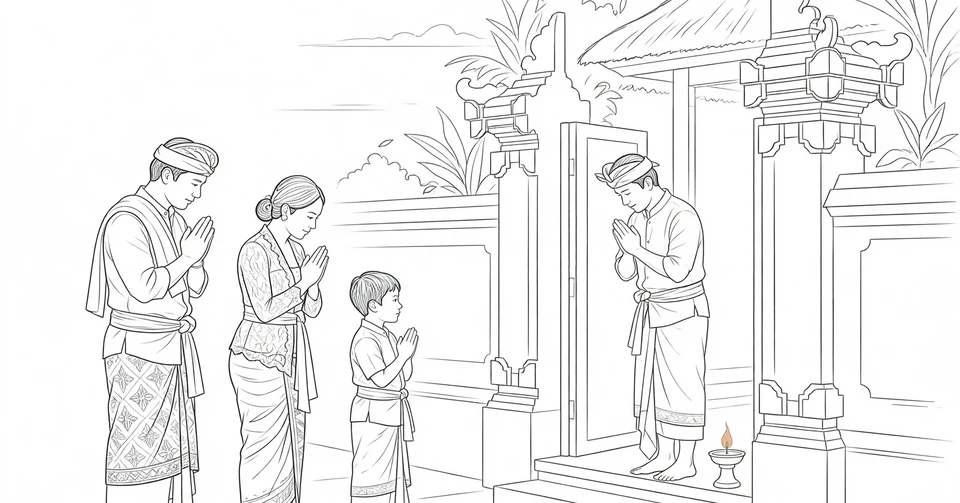
What happens on ngembak geni is simple to describe and surprisingly moving to watch. Stoves are lit again. Lamps come back on. Doors that stayed shut for a full day open, and people step out into streets that were deserted at dawn the day before, dressed for visiting. The first conversations of the year are not small talk. They are apologies.
What the name ngembak geni actually means
The name breaks into two Balinese words. Ngembak means free or released, and geni means fire. Put together, ngembak geni means being free to light the fire again, and English sources often render it as "relighting the fire". After a day in which fire was the first thing forbidden, the freedom to strike a match is not a small symbol.
In the Balinese calendar, ngembak geni falls on the second day of Kedasa, the tenth month, which makes it the second day of the Saka year. It closes the Nyepi sequence as formally as Nyepi opens it. The day before was governed by restraint. This one is governed by return.
There is a second reading of the fire that Balinese commentators like to point out. Fire is also spirit, the flame that is supposed never to go out. An old Indonesian government slogan called it the fire that never dies, and the idea carries into ngembak geni: the point of relighting the stove is not only breakfast. It is a renewed spirit, carried into the new year after a day of looking inward.
The silence that ngembak geni answers
To feel the weight of ngembak geni, it helps to remember how total the silence before it is. Nyepi runs from six in the morning to six the following morning, and for Balinese Hindus it is kept through four restraints called the Catur Brata Penyepian: amati geni, no fire or light; amati karya, no work; amati lelunganan, no travel; and amati lelanguan, no revelry or self entertainment. I have written before about how completely Nyepi stops the island for a day, down to the only airport closing and visitors staying inside their hotels whether they share the faith or not.
The night before that stillness is as loud as the day is quiet. On the eve of Nyepi, villages parade the ogoh ogoh, huge demonic statues built to personify negative forces, and then burn them, a ceremony in the Tawur Kesanga rites that I covered in the story of how Bali settles its demons before the silence. Noise, then silence, then voices again. Ngembak geni is the third beat of that rhythm, and without it the sequence would end in the dark.
First, the fire comes back
The most literal part of ngembak geni happens in the kitchen. Cooking was forbidden all through Nyepi, so the first act of the new year in most homes is to relight the stove and cook again. Fires and electricity return, lamps are switched on, and the smell of rice and coffee drifts out of houses that produced no smoke at all the previous day.
In the Banjar district of Buleleng, in north Bali, that first fire becomes a whole tradition of its own, called nyakan diwang. The name means cooking in front of the house. Villagers in places such as Banjar, Dencarik, Banyuatis and Kayuputih build simple stoves of brick at the roadside in the small hours, around two or three in the morning under a local dispensation that lets the district start early, and cook rice and side dishes out in the open while the rest of the island is still silent. Neighbours drift over to visit from about four. The cooking is the point and so is the company: the first fire of the year is used to cleanse the house, above all the kitchen that sat cold and quiet through Nyepi, and to give thanks that the fast of activity is over. The tradition is recorded in Indonesia's national catalogue of intangible cultural heritage, and it may be the purest expression of what ngembak geni means. The fire comes back, so people gather around it.
Then the visiting begins
Once prayers are said and thanks given at the temple, the centre of ngembak geni moves into people's homes. Families go visiting: to parents and grandparents first, then to relatives, neighbours and close friends, in a round of reconciliation called sima krama or dharma santi. The purpose is explicit. You ask forgiveness for whatever you did wrong in the year just ended, and you offer forgiveness in return. In the ritual language of the day, this mutual forgiving is sometimes called ngembak agni or labuh brata, the letting go of the fast and of old grudges alike.
There is no stage for any of this, and no official timetable. As the Ngembak Geni guide at Bali Travel Hub puts it, the most meaningful parts of the day happen in homes rather than in public, because the day is built from personal exchanges. Food is shared, children are taken along to learn the rounds, and conversations that were postponed all year finally happen over coffee that could not legally be brewed the day before.
I find the sequencing of it quietly brilliant. Modern wellness culture sells silence as a product, a retreat, an app, a weekend. Bali built the silence into the calendar centuries ago, and then did something smarter: it scheduled the repair work for the morning after. A day of reflection that never turns into an apology is just introspection. Ngembak geni makes sure the reflection has somewhere to go.
One banjar makes ngembak geni loud
Almost everything about ngembak geni is domestic and low key, with one famous exception. In Banjar Kaja, in Sesetan, Denpasar, the young people of the neighbourhood hold omed omedan on this day, and it is worth describing carefully because it is often misreported as an island wide festival. It is not. Omed omedan belongs to one banjar, and it is not an activity visitors are invited to join.
The name comes from a Balinese word meaning pull pull. The unmarried young men and young women of the banjar's youth organisation, the sekaa teruna teruni, form two groups on the main street. On a signal, the groups advance, and the front pairs pull at each other, grapple and embrace while their lines surge behind them, until the pecalang pour buckets of water over them to end the round. Then they reset and go again. Local tradition traces the game to the 17th century and to the household of Puri Oka in what is now south Denpasar, and since 2009 it has been wrapped in a small heritage festival. Underneath the noise, the stated purpose is the same as the rest of ngembak geni, just performed at full volume: friendship, harmony and solidarity, renewed in public once a year. Elsewhere on the island there are smaller local customs of the same spirit, such as the mud bathing of mebuug buugan at Kedonganan, where people wash in mud to rinse off the badness of the old year. Every community finds its own way back into the world.
If you wake up in Bali on ngembak geni
For a visitor staying through Nyepi, ngembak geni begins at six in the morning, not at midnight. Nothing about the island restarts at midnight, and assuming it does is the most common mistake travellers make. Flights, ferries and hotel services resume on their own schedules after the restrictions lift, as the overview of Nyepi on Wikipedia notes in its account of how fires, electricity and cooking return that morning. The practical move is to treat the first hours gently, confirm transfers with your accommodation, and let the island wake up at its own pace.
If you are lucky enough to be invited into a home, accept the invitation for what it is: the real event. Dress modestly, follow the family's pace, ask before taking photographs, and do not ask anyone to perform their reconciliations for your camera. An invitation into one household is a relationship, not a ticket, and it does not extend to the neighbours.
The morning after the silence
Nyepi will always be the day the world photographs, because an empty island is a striking image. But a year that begins with silence and never resolves into anything would be a strange, suspended thing. Ngembak geni resolves it. The fire is lit, the kitchen fills with steam, the gate opens, and the first words of the year are spoken to the people who matter, often beginning with an apology. Of the two days, I have come to think ngembak geni is the one other cultures might envy most. Most of us know how to stop. Bali also wrote down, in its calendar, how to start again, together.
More in Culture & Society
- Suka Duka Means the Banjar Shows Up for Joy and Grief Alike
- Tabuh Rah Spills Blood So the Ground Stays Calm
- The Bendesa Adat Speaks for a Village That Has Two Governments
- Catur Brata Is Four Silences Kept at the Same Time
- Your Weton Is the Day You Were Born, Counted Two Ways
- Rahu and Ketu Still Chase the Sun and Moon Across the Sky
Latest posts
- On Koyasan the Founder Is Said to Be Still Meditating
- Hiwatari Asks You to Walk Across the Fire
- Karang Ayahan Is the Plot of Land a Village Trusts You With
- On Tumpek Landep Bali Blesses Everything Made of Metal
- Sudachi Is the Sharpest of Japan's Sour Citrus
- Shugendo Turns a Mountain Into a Place of Testing
- A Canang Sari Is Made Fresh Every Morning and Gone by Night
- The Aling-Aling Wall Exists Because Spirits Walk in Straight Lines
- Oi-Nishin Sent Tohoku Farmers Chasing Herring Every Spring
- The Nishin Goten Were Palaces Paid for by Fish
- The Tobi Were Edo's Daredevils Before They Were Its Firemen
- Kabosu Is Oita's Gentle Answer to Yuzu
- A Yamabushi Trains Where the Mountain Is the Temple
- Tri Hita Karana Holds a Village in Three Balances
- Shingon Has Kept Its Fire Ritual Burning for 1,200 Years