Konbini and Why Japan's Convenience Stores Rule Daily Life
· 9 min read
A konbini is not a last resort in Japan. It is a 24-hour institution with real food, ATMs, parcel shipping, and a culture of its own. Here is how the big three chains differ, what to buy, and why tourists now plan trips around them.
It is two in the morning in Tokyo. The restaurants have closed, the last train left an hour ago, and the street outside your hotel is dark and quiet. Then you turn a corner and there it is: bright light, glass doors sliding open, and a whole small world waiting inside. That is a konbini, and if you spend any time in Japan, it will become part of your day.
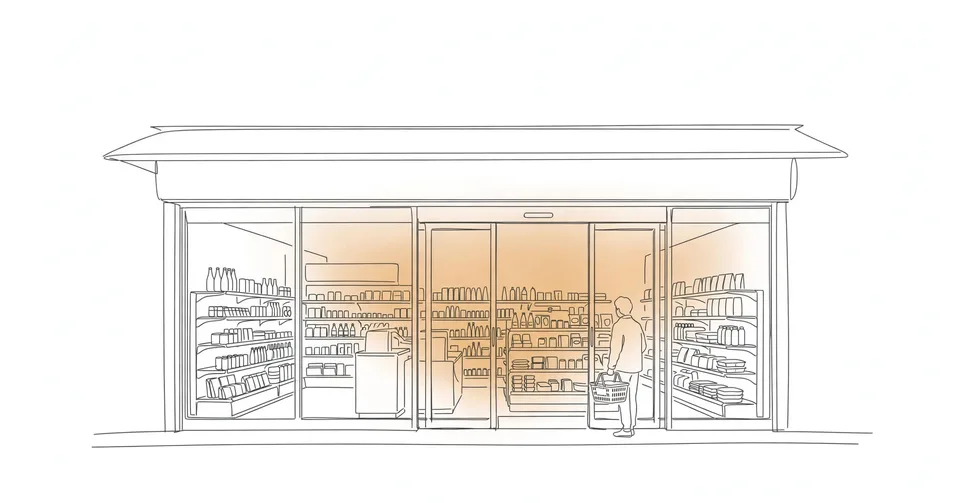
The word konbini comes from "convenience", and there are more than 55,000 of them across Japan, open 24 hours a day, 365 days a year. In a big city you are rarely more than a few minutes from one. It sells breakfast, lunch, dinner, and a midnight snack, but it also does half your errands, and it does them well.
Most visitors arrive in Japan expecting the konbini to be a sad fallback, a place for crisps and instant noodles when nothing else is open. The surprise is that it is often the best meal of the day, and the most useful stop on the street. This is a guide to how one works, what to buy, what the chains do differently, and why travellers now plan whole evenings around them.
What a Konbini Actually Is
A konbini is a small shop, usually about the size of a large living room, that stocks a few thousand items chosen with ruthless care. The shelves turn over constantly: new sandwiches, drinks, and desserts appear every few weeks, seasonal items come and go, and anything that does not sell is gone fast. The food is made fresh every day, often delivered several times a day, which is why an egg sandwich from one tastes like it was made that morning. Because it was.
The other half of the shop is services. The same counter that sells you an onigiri also takes your parcel, prints your concert ticket, and lets you pay your electricity bill in cash. There is a clean restroom, an ATM that takes foreign cards, and a shelf of everyday things you forgot to pack. It is a shop, a bank, a post office, and a kitchen, all in one small bright room.
The shop also has a rhythm. Office workers stop in for breakfast, students buy lunch between classes, and salarymen pick up dinner on the way home. Late at night, the customers change: taxi drivers, nurses coming off shift, and travellers who have just realised they are hungry. The shop never closes, so it absorbs the whole city, one visit at a time.
The Big Three and How They Differ
Three chains run most of the convenience stores in Japan: 7-Eleven, FamilyMart, and Lawson. Together they account for more than 50,000 stores, and each one has a personality. Regulars have a favourite, and they will defend it the way other people defend a football team.
7-Eleven is the biggest, with around 21,000 stores, and it is the one most people trust for food. Its onigiri are widely considered the best of the three, the own-brand range is deep, and its Seven Bank ATMs are the most reliable for foreign cards, with an English menu. If you need cash at 2am, a 7-Eleven is the safest bet.
FamilyMart, with around 16,500 stores, is the hot-snack chain. Its Famichiki, a boneless fried chicken patty, is the headline act, and the heated case by the counter usually holds the widest spread of fried things, steamed buns, and corn dogs. It is the chain you visit when you want something hot and salty right now.
Lawson, with around 14,500 stores, is the dessert and fried-chicken chain. Its Karaage-kun, small nuggets of fried chicken in a paper cup, has been a fixture for decades, and its Uchi Cafe line of desserts is good enough that people buy them as a treat rather than a snack. Some Lawson branches, the Natural Lawson and Lawson Store 100 lines, lean healthier or cheaper.
| Chain | Stores | Known for | Best at |
|---|---|---|---|
| 7-Eleven | ~21,000 | Onigiri and own-brand food | Foreign-card ATMs |
| FamilyMart | ~16,500 | Famichiki and hot snacks | The heated snack case |
| Lawson | ~14,500 | Karaage-kun and desserts | Uchi Cafe sweets |
The differences are real, but they are small, and a good rule is simple: if you see one, go in. The gap between the best and the worst chain is far smaller than the gap between one and a convenience store anywhere else.
What to Buy at a Konbini
Start with an onigiri, the triangular rice ball wrapped so the seaweed stays crisp until you open it. They cost around 130 to 200 yen each, and the safe first fillings are tuna mayonnaise, grilled salmon, and pickled plum. Then add the egg sandwich, the tamago sando, which has a cult following for good reason: whipped egg salad on soft crustless milk bread, cold from the fridge, and better than it has any right to be.
The hot case by the register deserves attention too. Fried chicken, steamed pork buns, and oden, the winter stew of fish cakes, tofu, and daikon in broth, are all cheap and genuinely good. In autumn and winter, a cup of oden from the hot case is one of the cheapest warm meals in Japan.
For drinks, the chilled shelves hold bottled green tea, cold coffee, and seasonal limited editions that appear for a few weeks and then vanish. And do not miss the coffee: self-serve ground coffee, available since 2013, costs around 110 yen for a small cup and quietly replaced the morning cafe stop for millions of people.
The dessert fridge is the last stop. Puddings, cream puffs, parfaits in cups, and seasonal fruit sandwiches rotate constantly, and the limited-edition items by the door are often the ones people photograph first. A dessert from the chilled shelves costs a few hundred yen, and it is usually the best value sweet in the neighbourhood.
Konbini Services Nobody Tells Tourists About
Food is only the beginning. The ATM inside a 7-Eleven, run by Seven Bank, accepts most overseas cards and offers an English menu, which makes it the easiest place in Japan to get cash. You can also pay with an IC card like Suica, which works at the register just as it does on the train. The official Seven-Eleven Japan site lists store services in detail, and Lawson does the same for its own branches.
Need to send a suitcase to your next hotel? The counter handles Takkyubin parcel shipping to another city, so you can travel light. Need to print a boarding pass or a document? Most konbini have a multi-function printer that takes files from a phone or a USB stick. You can even buy concert and event tickets at the terminal by the door, and pay utility bills in cash at the register.
The everyday-goods shelf is the part travellers discover by accident. Toothbrushes, socks, umbrellas, phone chargers, bandages, basic cold medicine, and sunscreen are all there, at ordinary prices, at 3am. It is the reason experienced visitors to Japan stop packing so carefully: if you forgot it, a konbini sells it.
And then there is the restroom. Clean, free, and open all night, it is a small kindness that regulars notice and visitors remember. In a country where public restrooms can be hard to find, a konbini restroom is a genuine piece of infrastructure.
Why Konbini Became a Tourist Attraction
In 2025 and 2026, something changed: the konbini stopped being a secret and became a destination. Travellers started planning "konbini crawls", visiting all three chains in one evening to compare the same items. Videos of onigiri unboxings, the careful unwrapping that keeps the seaweed crisp, became a small genre of their own. Travel guides now list konbini food next to restaurants, and some visitors plan their first meal in Japan before they land.
The appeal is easy to understand. A konbini is cheap, fast, and honest: you can see everything, read the price, and be eating in two minutes. It is also the same everywhere, which is comforting, and slightly different everywhere, which is interesting: the limited-edition snack in Hokkaido is not the one in Okinawa, and regulars collect them like stamps.
There is a deeper reason too. After the 2011 earthquake, konbini in the affected region stayed open and became lifelines, selling food and supplies when almost nothing else could. People remember that. A konbini is not just a shop that never closes; it is a piece of the neighbourhood that holds up when things go wrong, and that trust is part of why Japan loves it.
The Quiet Rules of the Konbini
A konbini has manners, and they are easy to learn. Eat at the small counter or bench inside if there is one, and throw your rubbish in the bins by the door, sorted into burnable waste, plastic, and cans, rather than carrying it away. The staff will ask if you want your food heated, and a short answer is enough. A quick "arigatou" at the register is welcome, but nobody expects a conversation.
One thing to know: eating while walking is frowned on in Japan, and the konbini is built around that idea. The shop gives you a place to stand or sit and eat properly, then sends you on your way. It is a small detail, but it says a lot about how the country works: convenience with consideration, speed with manners.
I have eaten in restaurants in Tokyo that cost a hundred times more than a konbini dinner, and I remember the konbini meals more clearly. The konbini is the most honest introduction to Japan I know. It does not perform, it does not hurry you, and it never closes. It simply does a hundred small things well, every hour of every day, and asks for nothing in return except that you come back. That is a modest kind of greatness, and it is worth a detour, even at two in the morning.
More in Life & Style
Latest posts
- Every Prefecture Argues About What Goes in Ozoni
- Japan's Population Decline and the Villages It Leaves Behind
- Kecap Manis and the Sweet Soy Sauce of Indonesia
- In Mamoiada, Two Hundred Families Still Make Wine at Home
- Shochu and the Quiet Spirit of Japan
- A Dried Shiitake Is Louder Than a Fresh One
- Maruten Numazu and the Towering Kakiage Bowl of the Port
- The Three Sisters Grow Better Together
- Half the Old Springs in Japan Thank Kobo Daishi
- Tatamiishi Terraces Filter a River Through Stone
- Wasabi-Zuke Puts the Whole Plant in Sake Lees
- Karo Is the Tengger's Other Great Gathering
- Urashima's Dragon Palace Had a Name, Ryugu
- Petruk's Nose Arrives Before He Does
- Why Nicoya Cooks Its Corn in Lime