Miyajima and the Floating Torii Gate of Japan
· 10 min read
Miyajima is the island shrine near Hiroshima where a great vermilion torii gate seems to float on the tide. Here is what to see, when to go, and how to get there.
There is a gate in Japan that stands in the sea. At high tide, the water rises around its legs and the great vermilion torii of Miyajima looks as if it floats, with no land beneath it at all. At low tide, the sea pulls back and leaves the same gate standing on wet sand, close enough to walk up to and touch.
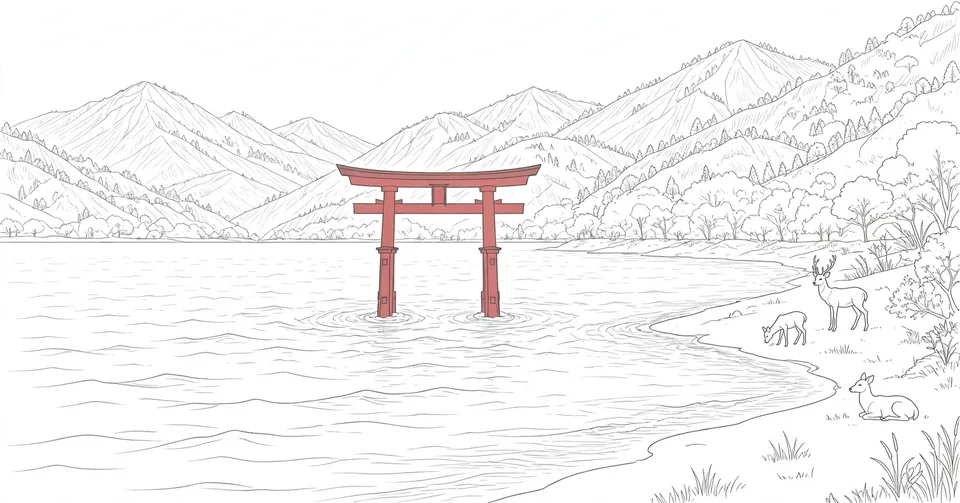
Miyajima is a small island in Hiroshima Bay, about an hour from the centre of Hiroshima city by train and ferry. Its official name is Itsukushima, and the shrine that gives the island its name has stood here in one form or another for more than a thousand years. In 1996, UNESCO added Itsukushima Shrine to the World Heritage List, and the island has been one of Japan's most visited places ever since. The reason is simple: nothing else in Japan looks quite like it.
A visit to Miyajima is easy to plan and hard to forget. The island is small enough to see in a day, but the things that make it special, the gate, the shrine, the deer, the mountain, all reward a slow pace. This is a place to arrive early, walk without a schedule, and let the tide decide what you see.
A gate that floats on the tide
The great torii gate is the first thing most visitors look for, and it does not disappoint. It stands about 16 metres tall in the bay in front of the shrine, painted a deep vermilion that seems brighter against the blue water and the green hills behind it. The present gate dates from 1875, the eighth version to stand on this spot. Each one before it was rebuilt when the wood gave out.
The gate is at its best at high tide, when the water covers its base and the whole structure seems to rest on the sea. Photographs taken at that moment are the ones that made Miyajima famous around the world. At low tide, the effect is entirely different and just as worth seeing. The water drains away and leaves the gate standing on rippled sand, with small pools and seaweed around its legs. Visitors walk out across the flat sand and stand underneath it, looking up at a structure that seemed untouchable an hour before.
The trick is to check the tide times before you go. The difference between high and low tide is about six hours, so a morning visit and an afternoon visit can feel like two different islands. Many visitors plan to arrive before high tide, watch the gate float, then stay as the water falls and walk out to it. The gate itself was closed for large scale repairs from 2019 to 2022, and the scaffolding is now gone. If you visit today, you see it as it was meant to be seen, with nothing in the way.
There is a good reason the gate stands in the water at all. The island has long been treated as sacred ground, and for centuries ordinary people were not supposed to set foot on it. Pilgrims arrived by boat and passed through the gate before they reached the shrine, entering sacred space from the sea rather than from the land. The gate was the entrance, and the water was the road.
A shrine built over the water
Itsukushima Shrine follows the same idea as the gate. The shrine buildings stand on piers over the bay, connected by long vermilion corridors that seem to float above the water at high tide. Walk through them and you hear the sea under your feet. The shrine was rebuilt in its present form in the 12th century under the warlord Taira no Kiyomori, and the layout has barely changed since. The main hall, the prayer hall, and the Noh stage all sit over the water, facing the bay and the gate.
The shrine is a working shrine, not a museum. People come to pray, to buy charms, and to watch the ceremonies that still take place through the year. The Noh stage, which also stands over the water, is one of the few in Japan where performances are still held in the open air, with the sea behind the actors. If you are lucky enough to visit on a performance day, it is worth staying for.
Take your time in the corridors. The view changes with every step: the gate framed between pillars, the hills across the bay, the small boats passing underneath. The crowds thin out quickly once you move past the main hall.
Deer, mountain, and the rest of the island
The deer are the first thing most visitors notice after the gate. Sika deer roam the island freely, wandering the streets, the shrine grounds, and the shopping arcade near the ferry pier. They are tame and used to people, though they are still wild animals, and the signs ask visitors not to feed them. Like the deer of Nara, they are part of the island's identity, and a photograph of a deer with the torii gate behind it is almost a rite of passage for a visit to Miyajima.
Behind the town, Mount Misen rises 535 metres above the bay. You can climb it on foot in about two hours, or take the ropeway most of the way and walk the last stretch to the summit. From the top, the view opens across the Inland Sea, with its scattered islands and the mainland on both sides. On a clear day you can see for miles. The mountain has its own shrines and its own quiet, and the climb is the best way to escape the crowds around the ferry pier.
The town itself is worth an hour of wandering. The shopping street near the pier, Omotesando, is lined with small shops selling the island's two famous foods: fresh oysters, farmed in the bay and served grilled, raw, or fried, and momiji manju, small maple leaf shaped cakes filled with sweet bean paste. The oysters are at their best in winter, when the water is cold. The cakes are good all year, and the maple leaf shape is a nod to the island's autumn colours.
There is also a small aquarium, a five storied pagoda from the 15th century, and a handful of temples tucked into the hills. The best plan is to leave the main street, follow a side path uphill, and see where it goes.
When to visit Miyajima
Spring and autumn are the two best seasons, and for the same reason: the island is beautiful in both, and the weather is kind. In spring, cherry blossom lines the shrine approach and the hillsides, and the pink flowers against the vermilion gate are one of the classic sights of Japan. The cherry blossom season in Hiroshima usually peaks in late March or early April. In autumn, the maples turn red and gold, and the island glows. The autumn leaves around the shrine and the Momijidani Park behind the town are at their best in mid to late November.
Summer is hot and crowded, but the days are long and the evening light on the gate is at its best. Winter is the quiet season: the crowds thin out, the air is clear, and the oysters are at their peak. If you want Miyajima mostly to yourself, come on a weekday in January or February.
Whatever the season, the tide matters more than the month. Check the tide timetable for the day of your visit and plan around high tide if you want the floating gate. The tide times shift by about an hour each day, so a gate that floats at noon on Monday will float in the early afternoon on Tuesday. The shrine and the island are worth visiting at any tide, but the floating gate is the sight that gives Miyajima its name, and it is worth timing your visit for it.
How to get to Miyajima
Getting to Miyajima is simple, and the journey is part of the pleasure. From Hiroshima Station, take the JR Sanyo Line to Miyajimaguchi, which takes about 25 minutes. From the station, it is a short walk to the ferry pier, and the ferry takes about 10 minutes to cross to the island. The whole trip from central Hiroshima takes about an hour, and Miyajima works well as a day trip from the city.
Hiroshima itself is a stop on the Shinkansen, so the island is easy to reach from anywhere on the main line. From Tokyo, the journey takes about four hours by bullet train to Hiroshima, then the local train and the ferry. From Osaka, it is under two hours. Many visitors pair Miyajima with a day in Hiroshima, and the two fit together well: a morning at the Peace Memorial Park, an afternoon on the island.
| Leg | How | Time |
|---|---|---|
| Hiroshima Station to Miyajimaguchi | JR Sanyo Line | About 25 minutes |
| Miyajimaguchi to Miyajima | Ferry | About 10 minutes |
| Hiroshima to Miyajima, total | Train and ferry | About 1 hour |
Two ferry companies run the crossing, and they leave every 10 to 15 minutes during the day. One of them passes close to the great torii gate on its way in, which is a fine way to arrive. The JR Pass covers the JR train and one of the ferries, so holders of the pass can make the whole trip without buying extra tickets. There is no bridge to the island, and no cars are allowed for visitors, so the ferry is the only way in, which is as it should be. Arriving by boat, through the gate, is how pilgrims have arrived for centuries.
A day trip worth taking slowly
Miyajima is one of the few places in Japan that lives up to its photographs. The gate really does float, the shrine really does stand on the water, and the deer really do wander the streets as if they own the place. The island asks for very little from a visitor: a ferry ticket, a few hours, and the willingness to walk slowly and look up.
Go early if you can, and stay past the point when the day trippers leave. The light changes, the tide turns, and the island settles into itself. The gate at high tide is the sight you came for, but the quiet walk back through the town, with the smell of grilled oysters in the air, is the part you will remember. Miyajima rewards the visitor who does not hurry, and that may be the best reason to go.
More in Food & Travel
Latest posts
- Sober Curious Is Not Quitting, It Is Choosing
- A Rotenburo Is a Bath With Weather
- The Tengger Carry Their Dead Out of the Village in Entas-Entas
- Urashima Opened the Tamatebako and Time Came to Collect
- How Supersemar Borrowed the Authority of a God
- Bali Has Its Own Semar, and His Name Is Twalen
- White Silk Means You Made It as a Sekitori
- The Dohyo-Iri Gives a Yokozuna Three Minutes to Own the Ring
- Nobody Commutes to a Heya
- Tokyo Keeps a Hundred Tiny Fujis Called Fujizuka
- Tomozuri Sends a Living Fish to Do the Fishing
- One Thousand Three Hundred Years of Ukai Nights on the Nagara River
- Fuji Ko, the Pilgrim Societies That Climbed Mount Fuji Together
- Dashi, the Quiet Stock Under Almost Everything Japan Cooks
- Ayu, the Sweetfish That Rules Japan's Clear Rivers