The Washlet Made the Japanese Bathroom the Warmest Room in the House
· 18 min read
The washlet turned an ordinary toilet seat into a heated, self-cleaning bidet, and in doing so it changed what comfort means in a Japanese home.
On a cold morning in Japan, the first thing you notice is not the toilet. It is the seat. It is warm before you sit down, and that small fact changes the whole room. A washlet is a heated toilet seat with a warm water bidet built into it, and once you have used one on a winter morning, an ordinary cold seat feels like a design failure rather than a normal part of life.
The idea sounds simple, and in a way it is. Warm water cleans better than dry paper, a warm seat is kinder than a cold one, and a machine that cleans itself is easier to trust than one that does not. Yet the washlet took decades to move from a hospital device to an object found in about four out of five Japanese homes, and that slow journey says a great deal about Japan, about privacy, and about how comfort quietly becomes normal.
I still remember my first encounter with a washlet in a small Japanese hotel. I sat down, reached for the panel beside me out of curiosity, and pressed a button I did not understand. A thin jet of warm water appeared from nowhere, and I stood up so fast that I nearly knocked over the little shelf by the sink. It was embarrassing, and it was also the moment I understood that this was not a gimmick. Somebody had thought very carefully about a room most people never think about at all.
What a washlet is
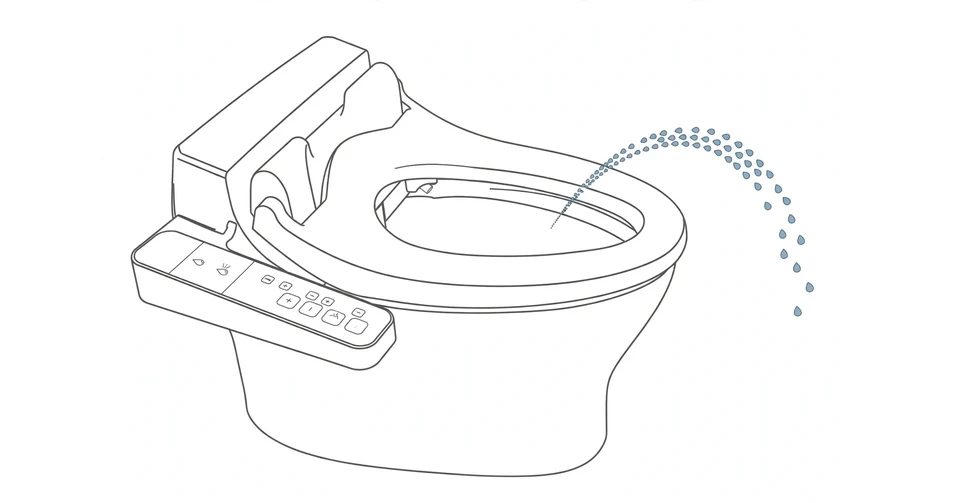
A washlet is an electronic toilet seat made by TOTO, and the name is a registered trademark of that company. In everyday speech in Japan, though, people often use the word for any warm water bidet seat, in the same way that people in some countries use one brand name for all tissues. The seat replaces an ordinary toilet seat and fits onto a standard Western style toilet bowl. It needs electricity as well as water, which is why the first thing many visitors notice, after the warm seat, is the power point on the bathroom wall.
The original washlet offered three functions, and those three still define it today. The seat is heated, so it is warm when you sit down. A small nozzle extends from under the back of the seat and sprays warm water for cleaning. A warm air dryer follows, so you do not have to rely on paper alone. Later models added more, including a deodorizer, a nozzle that cleans itself before and after use, and a mist that wets the bowl before use so it stays cleaner. The point of each addition was the same. The machine should do the awkward work for you, quietly and without fuss.
The control panel is part of the experience. On older and simpler models it sits on the side of the seat itself, within easy reach of your right hand. On newer models it is often a separate panel on the wall, sometimes with a small remote control. The buttons are usually marked with simple pictures and a few words, and on many models in Japan the labels are in Japanese. That is why so many first time users stare at the panel for a long moment before they press anything. The panel is not complicated once you know it, but it is unfamiliar, and unfamiliar buttons in a private room make even confident travellers hesitate.
How a washlet actually works
When you sit down, the seat already knows you are there. A sensor tells the washlet to keep the seat at the temperature you chose, and on many models the nozzle runs a quick self cleaning rinse out of sight before it extends. You press the spray button, the nozzle slides out from under the rear of the seat, and a jet of warm water does the cleaning. You can adjust the pressure with plus and minus buttons, and you can move the nozzle position if the spray is not quite where you need it to be. When you press stop, the nozzle pulls back inside and cleans itself again.
The dryer is the part most people skip on their first visit, and it is also the part that makes the whole idea make sense. A gentle stream of warm air dries you, so you use far less paper than you would with an ordinary toilet. The washlet does not remove paper from the room entirely. Most people still use a small amount of paper at the end, and Japanese bathrooms still keep a roll within reach. The difference is that paper becomes a finishing touch rather than the main tool.
The deodorizer works in the background, drawing air through a filter while you sit there. It does not perfume the room. It simply takes the smell away, which fits the Japanese preference for dealing with an awkward problem without drawing attention to it. The premist function, on newer models, sprays a fine mist of water into the bowl before you use it, and a second mist with electrolyzed water after use helps keep the bowl clean. Electrolyzed water is ordinary water that has been treated inside the machine so that it has a mild sanitizing effect, and it returns to plain water over time, so no chemicals need to be added.
None of this feels mechanical when it works well. The spray is steady rather than forceful, the seat stays at one even temperature, and the machine is quiet. That quietness is deliberate. A washlet is supposed to disappear into the background of your day, like a good kettle or a well made pair of shoes. You notice it most when it is missing, on a cold morning in a house that still has an ordinary seat, and you realize how much of your comfort you had been taking for granted.
From a hospital import to a June 1980 launch
The washlet did not begin as a household product. In the 1960s, TOTO imported an American device called a wash air seat, which was used mainly in hospitals and care facilities. It washed with warm water and dried with warm air, and for patients who found ordinary cleaning difficult, it was a genuine help. For ordinary homes, though, it was expensive, temperamental, and hard to explain. TOTO began making its own version in Japan in 1969, and then spent the next decade learning what was wrong with it. The water temperature was unstable, the spray angle was inconsistent, and the whole machine felt like medical equipment that had wandered into the wrong room.
TOTO began developing its own bidet toilet seat in 1978, and the result was released in June 1980. The first washlet, known as the G series, offered the three core functions of washing, drying, and a heated seat, and it was sold as a seat that could be fitted to an ordinary toilet rather than as a whole new toilet. That choice mattered. A family did not need to rebuild a bathroom or replace a working toilet. They only needed to change the seat, plug it in, and learn a new habit.
Sales were slow at first, and the numbers tell that story honestly. It took TOTO 18 years, until 1998, to sell 10 million washlet units. The next 10 million took only seven years, with total sales reaching 20 million in 2005, and the pace kept quickening after that. Sales passed 30 million in 2011, 40 million in 2015, and 50 million in March 2019. In August 2022, TOTO reached 60 million washlet units sold around the world, including sales outside Japan. The full history, with its year by year milestones, is set out in The Washlet Turns 40, and it reads like the biography of a product that refused to hurry.
The wider market grew even faster once the idea was accepted. According to the Japan Sanitary Equipment Industry Association, the total number of warm water bidet toilet seats sold in Japan, including models from TOTO and its rivals, passed 100 million in June 2022. By 2020, about 80 percent of Japanese households had a washlet or a similar bidet toilet seat, a level of saturation that puts it beside the refrigerator and the washing machine rather than beside a luxury gadget.
The name itself is a small piece of wordplay. It comes from reversing the English phrase "let's wash", which is a neat summary of the whole product. You do not need to know that to use one, but once you know it, the name stops sounding like a brand and starts sounding like an invitation.
The 1982 commercial that said the unsayable
A good product can still fail if nobody can talk about it, and in the early 1980s, talking about a washlet meant talking about the human body on television. That was not something Japanese advertisers did lightly. TOTO solved the problem with a commercial so direct that it shocked the country, and so clear that it made the product impossible to forget.
In 1982, TOTO aired a television commercial during the evening hours, when families were eating dinner and watching together. The actress Jun Togawa, then a rising star, smeared paint on her hand and tried to wipe it off with dry toilet paper. The paint smeared. She washed her hand with water instead, and it came clean. Then she looked at the camera and delivered the line that became famous across Japan, "Oshiri datte, aratte hoshii", which means "your bottom wants to be washed too".
Viewers complained. Some objected to hearing the word for bottom at the dinner table. Some objected to a toilet product being advertised at all during family viewing hours. TOTO kept the campaign going, and the complaints themselves helped, because they meant that everyone was talking about the washlet. Within a few years, the idea of washing rather than wiping had moved from a rude joke to a normal conversation, and the washlet had moved from a curiosity to a product that ordinary families were willing to try.
I admire the courage of that commercial, and I also think it teaches a wider lesson about Japan. The country is often described as polite to the point of silence about bodily matters, yet here was a major company saying the plain thing in plain language on national television, and being rewarded for it. Politeness in Japan is not the same as avoiding a subject. It is about choosing the right moment and the right words, and TOTO chose a demonstration so simple that a child could understand it, and a sentence so honest that adults could not pretend they had not heard it.
Learning the panel without pressing the wrong button
For a first time user, the hardest part of a washlet is not the water. It is the panel, and the small fear of pressing the wrong button in a room with no one to ask. The good news is that the buttons are more forgiving than they look. The spray stops when you press stop, the nozzle retracts on its own, and the seat sensor means the spray will not fire while you are standing up and reaching across the seat. You cannot flood the room by pressing one button, and you cannot break the machine by choosing the wrong spray.
Start with the seat temperature if the panel has one, and set it to low or medium on your first visit. Press the rear spray button once, and if the pressure surprises you, use the minus button before you use the plus button. The front spray, often marked with a symbol for feminine wash, is gentler and aimed differently, so do not press it by accident when you meant to press the rear spray. When you are done, press stop, then the dryer if you want to try it, and use a small amount of paper to finish. Flush with the lever or button on the tank or wall, not with anything on the washlet panel, unless the panel clearly has a flush button of its own.
The sound is the other surprise, and it connects the washlet to a quieter Japanese invention. In many Japanese restrooms, people once flushed the toilet to mask the sounds of use, which wasted water and still did not give real privacy. The answer was a small device that plays the sound of running water at the press of a button, and in newer restrooms that function is built into the washlet itself, on the same control panel as the features that make the Japanese toilet so different from toilets elsewhere. The full story of that small sound is told in Otohime, the small sound that protects privacy in Japanese toilets, and it is worth reading beside this article, because the two inventions solve two halves of the same problem. One cleans the body, and the other protects the dignity of the person using it.
If you are a guest in a Japanese home, the etiquette is simple. Use the washlet if you want to, and do not worry if you would rather not. Nobody will judge you for using paper alone, and nobody will check which buttons you pressed. If you do use it, leave the seat as you found it, close the lid if the household does, and wash your hands well, as you would anywhere. In a public restroom, the same rules apply, and you may find a sign in English explaining the buttons, because station and airport restrooms see many first time users every day.
Why Japan said yes and most of the world hesitated
The washlet spread in Japan for reasons that go beyond plumbing. Japanese homes are small, winters are cold, and the bathroom is often the coldest room in the house. A heated seat is not a luxury in that setting. It is a direct answer to a daily discomfort, and once a family has felt it on a January morning, going back to a cold seat feels like a step backward. The washlet also fits a culture that already valued bathing, cleanliness, and the careful separation of inside and outside. Japan is a country where people remove their shoes at the door and wash thoroughly before entering a shared bath. A device that washes with water fits that pattern so naturally that it is surprising it took so long to become normal.
The spread was helped by place as much as by advertising. A washlet is not only a household object. It is in offices, schools, hotels, restaurants, train stations, and airports, so a person who would never buy one at home meets one at work, on a trip, or at a friend's house, and the first awkward encounter is followed by a second, easier one. Public restrooms in Japan became a free demonstration room for the product, and that quiet, repeated exposure did what no single advertisement could do. It made the washlet ordinary.
Other countries hesitated for a mixture of practical and cultural reasons. Many bathrooms outside Japan have no power point near the toilet, and adding one means hiring an electrician and changing the wiring. Many people grew up with paper and never questioned it, so a spray of water felt strange rather than cleaner. The panel, with its rows of buttons and unfamiliar symbols, looked complicated to people who expected a toilet to have one lever and nothing else. Price played a part too, because a good washlet costs far more than an ordinary seat, and that is a lot to pay for something you have never tried.
There was also a difference in how the bathroom itself is understood. In Japan, the toilet is usually in its own small room, separate from the bath and the sink, so the washlet has a room of its own and a clear job to do. In many Western homes, the toilet shares a room with the bath and the basin, and the whole room is treated as a functional space rather than a private one. A heated seat and a warm spray feel less necessary there, and the idea of spending money on the coldest, smallest room in the house feels harder to justify. I think that is a pity, because comfort is not wasted on a small room. A small room is where a little warmth matters most.
The gap is closing, slowly. The washlet went on sale overseas in 1986, and TOTO and other makers have sold millions of units outside Japan since then. Five star hotels and landmark buildings around the world now install them, and travellers who first meet a washlet in Tokyo often look for one when they renovate a bathroom at home. The adoption rate outside Japan is still far below the Japanese level, but the direction is clear. A product that was once a Japanese curiosity is becoming a normal choice for people who have tried it once and do not want to go back.
What the washlet says about comfort and cleanliness
A washlet is a machine, but it is also an argument about what a home should feel like. The argument is that comfort is not a luxury to be saved for the living room, and cleanliness is not a chore to be done with the cheapest tool available. The smallest room in the house deserves the same care as the largest one, and the most private moment of the day deserves the same attention as a meal with guests. That is a generous way to think about a home, and it is one of the things I like most about Japan.
It also says something about how Japanese design works at its best. The washlet does not show off. It does not have a screen, it does not talk to you, and it does not try to impress visitors. It warms the seat before you sit down, cleans the nozzle before you use it, and dries the air after you leave, all without asking for praise. The technology is there to remove small discomforts, one by one, until the room feels easy to be in. That is a different kind of progress from a faster phone or a bigger television. It is progress measured in mornings that start a little more gently.
There is a risk in praising the washlet too much, and I should be honest about it. A washlet uses electricity, and a heated seat that stays warm all day uses more of it than a cold seat. Newer models have energy saving modes that lower the seat temperature when the toilet is not in use, and that helps, but it does not erase the cost. A washlet is also a complex machine, with a nozzle, a heater, a sensor, and a control panel, and a complex machine can break in ways that a plain seat cannot. A family that buys one is choosing comfort and cleanliness in exchange for a higher price, a power point, and the occasional repair. For most Japanese households, that trade has been worth making. For others, it may not be, and that is a fair choice either way.
The warmest room in the house
The washlet made the Japanese bathroom the warmest room in the house, and it did so without changing the shape of the room or the size of the house. It changed the seat, and the seat changed the morning. That is the whole story, and it is enough. A home is not made comfortable by one large purchase, but by many small decisions to treat ordinary moments well, and a warm seat on a cold morning is one of the smallest and kindest of those decisions.
The best machines are the ones that make a private, ordinary moment feel a little more human, and the washlet has been doing that, quietly and warmly, since June 1980. For a fuller picture of the Japanese toilet as a whole, and how the washlet fits into it, read Why Japanese toilets are the most advanced in the world. The TOTO Museum in Kitakyushu, where the first generation washlet stands beside Japan's first domestic sit-down toilet from 1914, is described in Learning about Japan's toilet culture at the Toto Museum, and it is a good place to see how a century of patient work led to a warm seat.
More in Life & Style
- Onsen Etiquette and the Unwritten Rules of Japan's Hot Springs
- Forest Bathing in Japan, the Quiet Science of Shinrin-Yoku
- A Kamado Turned the Japanese Kitchen Into a Slow Oven
- Japanese Futon and the Art of Sleeping on the Floor
- A Tanzen Is the Full Length Robe Japan Wears Indoors in Deep Winter
- A Hanten Is the Winter Jacket Japan Wears to Work
Latest posts
- Gado-Gado, the Peanut Sauce Salad That Feeds All of Indonesia
- Bakso and the Meatball Soup Indonesia Eats Everywhere
- Kecak Dance and the Hundred Voices That Tell the Ramayana
- Sapporo Snow Festival and the Ice City That Rises Every February
- Rangda Is the Witch Queen Bali Never Lets Win
- The Japanese School Uniform and the Story Behind the Sailor Suit
- Aikido and the Martial Art That Refuses to Fight Back
- Satay and the Smoke That Carries Indonesia to the World
- Barong Is the Lion Bali Calls Out When the Village Needs Protection
- Tumpeng Is the Rice Cone Java Serves When It Wants to Say Thanks
- Japan's Winter Illuminations Turn Dark Nights Into Light
- Setsubun, the Bean Throwing Festival That Chases Winter Away
- Karate, the Empty Hand That Became Japan's Most Exported Martial Art
- Kemari Is the Ball Game Japan Played Without Trying to Win
- Chagama Is the Kettle That Never Leaves the Tea Room