Japanese Sake, the Rice Wine Japan Has Brewed for Centuries
· 9 min read
Japanese sake is rice, water, koji mold and patience, turned into a drink Japan has served at weddings, festivals and quiet dinners for centuries. This is what it is, how it is made, and how to enjoy it.
Japanese sake is not rice wine in the way most people imagine it. It is brewed more like beer, from steamed rice, water, yeast and a mold called koji, and the craft behind it took its current form more than 500 years ago. In December 2024, UNESCO added the traditional knowledge and skills of sake making with koji mold to its Representative List of the Intangible Cultural Heritage of Humanity, making it the 23rd Japanese entry on the list.
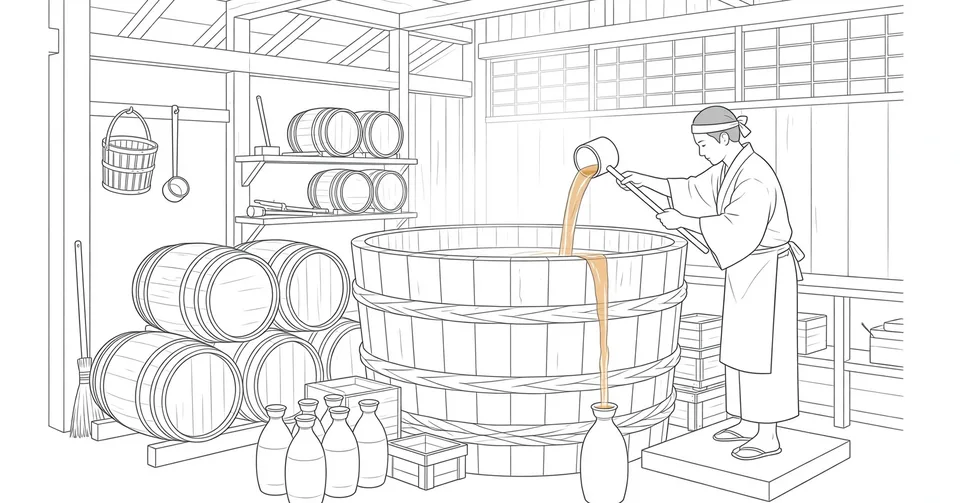
If you have only ever met Japanese sake in a small cup beside sushi, you have met the short version. It comes in styles that range from light and fruity to rich and earthy, served chilled, at room temperature or warmed, and it is poured at shrine festivals, weddings and family dinners alike. The drink has a craft behind it, and the craft is the story.
The short answer is that Japanese sake is worth taking slowly. You do not need to memorise grades or regions to enjoy it, but knowing a little about how it is made changes the way it tastes.
What Japanese sake really is
Japanese sake is often called rice wine, but the label is misleading. Wine is made by fermenting the sugar that is already in fruit. Japanese sake starts with rice, which has starch and no fermentable sugar at all. A mold called koji, Aspergillus oryzae, is grown on steamed rice, and it turns the starch into sugar. Yeast then turns that sugar into alcohol. The two steps happen in the same tank at the same time, a method brewers call multiple parallel fermentation, and it is what lets Japanese sake reach around 15 to 16 percent alcohol without any distillation.
The ingredients are simple: rice, water, koji and yeast. The water matters more than most drinkers realise. Soft water tends to give a gentle, sweet sake, while hard water gives a drier, crisper one. This is why famous brewing regions grew up around famous springs, and why brewers talk about their local water the way winemakers talk about soil.
Japanese sake is also a sacred drink. In Shinto, it is treated as a gift from the deities, and it is indispensable at festivals, weddings and rites of passage. At shrines, sacred sake called omiki is offered to the kami and then shared among the people present, so drinking it is a communal act, not just a toast. That is a useful thing to remember when a cup is pressed into your hand at a festival. You are not only tasting a drink. You are taking part in something old.
How koji makes Japanese sake
The brewing year starts in the cold months, when the air is clean and the slow fermentation can be controlled. First the rice is polished, washed, soaked and steamed. Then comes the step that makes Japanese sake different from every other drink: koji making. In a warm, humid room called the koji muro, workers sprinkle koji spores over the steamed rice and tend it for about two days, turning it by hand until a sweet smelling white mold covers each grain.
Next the brewers build a starter, a small, vigorous culture of yeast, lactic acid, steamed rice and koji. Then comes the main fermentation, the moromi, built up in three additions over four days in a tradition called san dan jikomi. The mash ferments for about a month, and the brewer watches it daily, listening and smelling as much as measuring. Finally the sake is pressed, filtered, pasteurised and left to rest before bottling.
The work is led by a toji, a master brewer, and carried out by a team of brewery workers called kurabito. The toji reads the mash the way a cook reads a pot, and much of the knowledge is passed down by doing, not by manual. That is exactly what UNESCO chose to protect: not a brand and not a recipe, but the hands and the judgement of the people who make it.
Junmai, ginjo and daiginjo: reading the label
The grades of Japanese sake depend mostly on how much of each rice grain is polished away before brewing. The outer layers of the grain hold proteins and fats that can give rough flavours, so polishing them away leaves the starchy heart and a cleaner taste. The polishing ratio is called seimaibuai, and it is printed on the label.
| Grade | Rice polished to | Character |
|---|---|---|
| Junmai | 70 percent or less remaining | Full, rich, often served warmed |
| Ginjo | 60 percent or less remaining | Light, fragrant, usually served chilled |
| Daiginjo | 50 percent or less remaining | Delicate, fruity, the premium style |
Junmai means pure rice, with no distilled alcohol added. Ginjo and daiginjo are the fragrant, premium styles, and they are best served chilled so the aroma survives. Honjozo is a related style with a small amount of added alcohol, which lightens the body. Below the premium grades sits futsushu, everyday table sake, which is what most Japanese people actually drink most of the time, often warmed in winter.
You do not need to remember the table to enjoy a cup. It helps to know that a daiginjo is a delicate drink to sip cold, while a junmai is a sturdy one that can take warming. If a shopkeeper or a bartender asks what you like, those two words are enough to start a conversation.
Where Japanese sake comes from
Every one of Japan's 47 prefectures has sake breweries, and each region has a character. Niigata, on the Sea of Japan coast, is known for clean, dry sake made with snowmelt water, and its breweries are a good reason to visit a prefecture many travellers skip. Nada, in Hyogo, is the old industrial heart of brewing, famous for hard water called Miyamizu and for large historic breweries. Fushimi, in southern Kyoto, is known for soft water and a gentle, slightly sweet style, and its sake district, with willow lined canals and old wooden brewery buildings, is one of the most pleasant walks in the city.
Visiting a brewery is the best way to understand Japanese sake. Many open their doors for tastings, some run small museums, and a few let you watch the cedar tanks and the pressing room. A tasting set, usually three small cups of different styles side by side, teaches more in ten minutes than any article can. If you are travelling in winter, a hot spring town in the evening pairs naturally with a cup of warmed junmai, the same slow rhythm that makes Japan's hot springs a way of life.
Japanese sake also belongs to a wider food culture that Japan has shared with the world. The same postwar energy that turned instant noodles into a global food, the story told in how a bowl of noodles changed the world, also carried sake abroad, and today good Japanese sake is poured in restaurants far from Japan.
How to drink Japanese sake
Temperature is part of the drink. Ginjo and daiginjo are served chilled, in a small glass or a ceramic cup, so their fragrance stays bright. Junmai can be served at room temperature or warmed, which the Japanese call kan, and warming suits cold evenings and rich food. There is no single correct temperature. The correct one is the one the brewer intended, and a good shop or bar will tell you.
At a table, pour for the people around you before pouring for yourself, and let them pour for you. It is a small gesture, but it is how Japanese sake is meant to be shared. A small cup called an ochoko is the usual vessel, and the wooden masu box, once a measuring cup for rice, is now a festive way to serve it, sometimes with a pinch of salt on the rim.
Japanese sake goes with more than sushi. It loves grilled fish, simmered dishes, hot pot and the small plates of an izakaya, and a dry sake can cut through fried food the way a cold beer does. The old idea that sake only belongs beside raw fish sells it short. It belongs beside a meal, in the middle of a conversation, poured slowly.
Why UNESCO noticed Japanese sake now
The UNESCO inscription in December 2024 covers more than sake. It also covers honkaku shochu, awamori and hon mirin made with the same koji technique, because the craft is one family of knowledge, not one drink. The listing recognises the toji and the kurabito, the four great toji groups of Iwate, Niigata, Hyogo and Ishikawa, and the breweries across the country that kept the work alive.
The timing matters. Japanese sake consumption at home has been falling for decades, and small breweries have been closing. At the same time, exports have been growing, and young brewers have been reviving old methods, experimenting with local rice and opening tasting rooms to visitors. The inscription is a recognition that the craft is worth keeping, and a preservation association now counts 808 registered holders of the technique, people whose job is to pass it on.
That is the hopeful part of the story. Japanese sake is not a museum piece. It is a living craft that changes a little every year, and the UNESCO listing is less a prize than a promise: that the knowledge will still be there for the next generation of brewers.
The best way to take part is simple. Find a small brewery or a good sake bar, ask for a tasting set, and drink it slowly. Japanese sake rewards patience, and the cup you remember will not be the most expensive one. It will be the one you drank unhurried, with people you like, in a place that took its time making it. That is what five centuries of brewing were for.
More in Food & Travel
- Numazu Deep Sea Aquarium and the Creatures of Suruga Bay
- Numazu Himono and the Art of Dried Fish
- Numazu Port and the Freshest Seafood in Shizuoka
- Bullet Climbing Mount Fuji, the Overnight Ascent Japan Is Trying to Stop
- Climbing Mount Semeru, Java's Highest Volcano
- Tamago Sando and Japan's Konbini Egg Sandwich
Latest posts
- Love Live Sunshine and How Anime Changed Numazu
- Numazu Imperial Villa and Japan's Seaside Imperial Retreat
- Disaster Vending Machines in Japan That Give Their Drinks Away
- The E33G Remote Worker Visa and How to Legally Work from Bali
- Wabi-Sabi and the Japanese Beauty of Imperfect Things
- Women Only Train Cars in Japan and the Problem They Answer
- Maneki Neko and Japan's Beckoning Lucky Cat
- The Baduy People and Life Without Modern Technology
- The Salaryman and Japan's Loyal Office Culture
- Onsen Tattoo Rules in Japan and How They Are Slowly Changing
- Key Money in Japan and Why Renting Costs Four Months Up Front
- Sento, Japan's Everyday Public Bathhouse
- The Fuji Five Lakes and the Best Views of Mount Fuji
- The Obon Festival, Japan's Week for Honouring Ancestors
- Visiting the Ghibli Museum and Ghibli Park in Japan