Amazake, the Sweet Fermented Drink of Japanese Winters
· 8 min read
Amazake is a thick, sweet fermented rice drink served hot at shrines in winter. It comes in two kinds, one made from rice koji with almost no alcohol and one from sake lees, and it is nicknamed a drinkable IV drip.
Visit a Japanese shrine on a cold January morning and someone will likely hand you a small paper cup of amazake, steaming, thick, and surprisingly sweet. It tastes like a dessert, yet the most common kind contains no added sugar and almost no alcohol at all.
The name does not help much. Amazake means sweet sake, but the cup in your hand is closer to a drinkable rice porridge than to anything in a sake bottle. Two quite different drinks share the name, and the winter favourite hides a second life that most visitors never hear about.
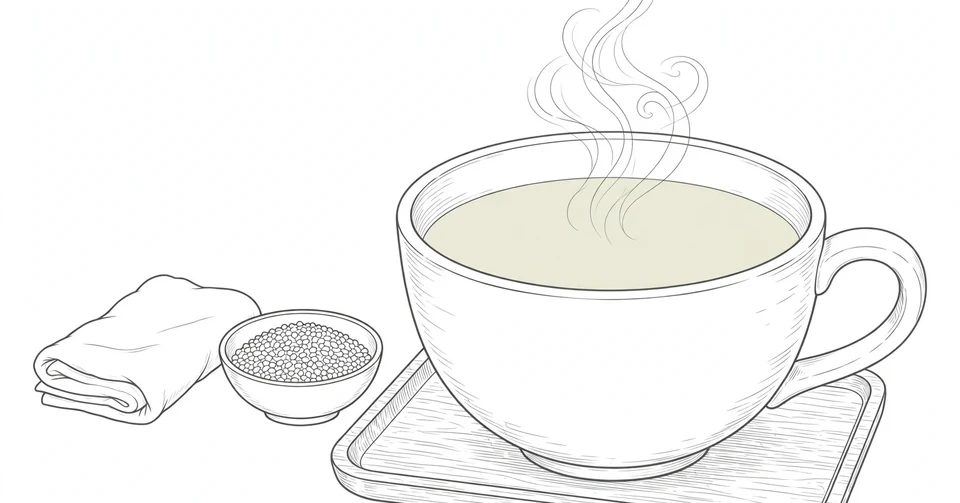
That double life is worth a closer look, because amazake has been quietly reinventing itself for well over a thousand years, and it is still doing it now, on shrine grounds in January and in cafe lattes the rest of the year.
Two drinks share the name amazake
The first kind is rice koji amazake. Cooked rice is mixed with koji mold, the same mould that drives miso, soy sauce, and sake, and left to ferment gently for about eight to twelve hours. No yeast is involved, so no alcohol forms. The result is completely alcohol free, which is why children drink it, why it can be served to anyone avoiding alcohol, and why it is the version sold as a health drink. Its flavour is clean and soft, like sweetened cream with a gentle scent of rice.
The second kind starts where sake ends. When brewers press a batch of Japanese sake, the white solids left in the cloth are called sake kasu, or sake lees. Dissolve those lees in hot water, stir in sugar, and you get sake lees amazake. It tastes warmer and more complex, with a faint fermented aroma, and it carries a trace of alcohol, usually somewhere between 0.5 and 1 percent. It also tends to be the cheaper of the two kinds, since it begins as a byproduct. This is the version most often ladled out at shrine stalls in winter.
Same name, same cloudy colour, different drinks. A guide to the two types of amazake suggests a simple label check before buying. If the ingredients list rice koji, the drink is alcohol free. If it lists sake lees, it is not. It is a small detail that matters when the cup is for a child, or for anyone who needs to be careful.
Texture separates them less than taste does. Both are thicker than juice and thinner than a smoothie, and traditional versions keep some soft rice grains, which gives each sip a slight chew. Some makers strain their amazake smooth. In parts of Japan the drink is even called amagayu, sweet gruel, which tells you honestly what to expect.
Sweetness that nobody added
The real puzzle of amazake is its sweetness, because in the koji version nobody adds any sugar. Koji produces enzymes, mainly amylases, that cut the long starch chains in rice into simple sugars, mostly glucose. The process is called saccharification, and it is the same first step sake brewers depend on before yeast enters the picture and turns sugar into alcohol. Amazake simply stops at the sweet stage and goes no further.
That is why a bottle of koji amazake can honestly promise no added sugar while tasting like sweet cream. The sweetness was in the rice all along, locked inside the starch. The enzymes just opened the lock. Personally, I find that more satisfying than any sweetener. It is sweetness the ingredient earned by itself, with a little help from a mould Japan has trusted for centuries.
The sake lees version cannot make the same claim, since its sweetness mostly comes from sugar stirred in by the maker. That is not a flaw, exactly. It is a different drink with a different balance, sharper and more grown up. But when people praise amazake as a naturally sweet drink, it is the koji kind they are talking about.
A winter drink with a summer past
Written records reach back a long way. A drink of this kind appears in the Nihon Shoki, the chronicle completed in 720, and its roots are usually traced to the Kofun period, well over a thousand years ago. Few drinks anywhere can show a paper trail like that.
For much of that history, amazake belonged to summer, not winter. In the Edo period, street vendors carried it through the towns and sold it as protection against natsubate, the heavy fatigue of the Japanese summer. It was valued enough that the authorities kept its price low so ordinary people could afford a cup, and poets made amazake a kigo, a season word for summer in haiku. A history of amazake and its seasons tells the story in detail, and it still surprises people who only know the drink from January.
The winter role grew later and stuck harder. At hatsumode, the first shrine visit of the year, shrines sell or hand out hot amazake to crowds standing in the cold, often with grated ginger stirred in to add warmth and cut the sweetness, or a curl of yuzu peel for its scent. In March it appears again at Hina Matsuri, the doll festival, where it is served in wishes for the health of girls. A pinch of salt is the home cook's trick, used to make the sweetness taste deeper. The season word may say summer, but the steam rising from a paper cup in the January cold is now the stronger image.
The drinkable IV drip
In Japan, koji amazake is nicknamed nomu tenteki, a drinkable IV drip. The comparison is not random marketing. Hospital drips deliver glucose and amino acids quickly, and amazake naturally carries glucose in an easily absorbed form, all nine essential amino acids, B vitamins, and some dietary fibre. Fresh, unpasteurised amazake also holds live cultures, though most shop bought versions are pasteurised, which keeps the nutrients and loses the living bacteria.
It is easy to see why a drink like that was handed to people recovering from colds, fevers, and heat exhaustion long before anyone used the word superfood. Quick energy, gentle on the stomach, and nothing in it that needs much digestion. Edo townspeople drinking it against summer fatigue were, without knowing the chemistry, using it in exactly the way the nickname describes.
A little honesty helps here, though. Amazake is still a sweet drink, with roughly 18 to 22 grams of natural sugar in every 100 millilitres, which puts it close to fruit juice. A small shrine cup is a pleasure and a quick lift, not a treatment. Treating the drip nickname as a medical claim would go further than the drink itself does, and the traditional serving size, a small cup rather than a mug, seems to understand that perfectly.
From shrine stalls to cafe menus
Some places have been making amazake for a very long time. Amanoya, beside Kanda Myojin Shrine in Tokyo, was founded in 1846 and still makes it from just rice and koji, with nothing added. Across the city, the Ningyocho district has a whole shopping alley called Amazake Yokocho, named after the drink that shops there have sold for generations. When a street takes a drink's name, the drink has clearly earned its place.
Regions bend the drink to local taste. In Kyoto, some shops stir white miso into the cup for a savoury sweetness. Sake country, Niigata among it, leans toward the lees version and serves it stronger. Okinawa, characteristically, mixes amazake with pineapple or shikuwasa citrus. The base never changes, rice, water, and either koji or lees, but the cup in your hand quietly tells you where in Japan you are standing.
Lately the old drink has picked up new jobs. Home cooks use koji amazake as a gentle sweetener in baking, dressings, and smoothies, and its enzymes tenderise meat in marinades. Cafes fold it into lattes and desserts. Convenience stores stock bottles all year and warm cans through the winter, and anyone with a rice cooker can make a batch at home, as long as the mixture stays below about 60 degrees so the enzymes survive. Fresh homemade amazake keeps for about a week in the fridge.
I like this second career, with one reservation. After a dip in the middle of the last century, when Western soft drinks took over, amazake came back on a wave of interest in fermented food, and that wave sometimes prices it like a luxury tonic. Its real charm has always been the opposite. It is an ordinary, inexpensive drink that a shogunate once kept cheap on purpose. The revival is healthiest when it remembers that.
A cup of amazake holds a lot of Japanese history in a small serving: a mould that turns rice sweet, a summer remedy that became a winter ritual, and a nickname borrowed from hospital wards. Drink it hot at a shrine in January, or cold in August the way Edo vendors intended, and it makes the same quiet promise either way. Warmth, sweetness, and a little strength to carry on with the day.
More in Food & Travel
Latest posts
- Manza Onsen Bathes at 1,800 Metres
- Irezumi Was an Art Before It Was a Warning
- The Oshi Kept Fuji's Pilgrims Fed, Housed, and Devout
- Japan's Population Decline and the Villages It Leaves Behind
- KRL Commuterline and the Trains That Move Jakarta
- Loma Linda's Long Lives Run on Saturdays
- Maruten Numazu and the Towering Kakiage Bowl of the Port
- The Three Sisters Grow Better Together
- Half the Old Springs in Japan Thank Kobo Daishi
- Tatamiishi Terraces Filter a River Through Stone
- Wasabi-Zuke Puts the Whole Plant in Sake Lees
- Konyoku Is Still Out There, Past the Last Train Station
- Karo Is the Tengger's Other Great Gathering
- Dry January Lasts a Month on Purpose
- Urashima's Dragon Palace Had a Name, Ryugu