Shigaraki Ware Turns an Ancient Lake Bed Into Japan's Warmest Pottery
· 12 min read
Shigaraki ware is the stoneware of Shigaraki in Shiga Prefecture, fired from clay laid down by an ancient lake, and its warm, rough surface has carried Japanese tea culture for centuries.
Pick up a piece of Shigaraki ware and the first thing you notice is that it does not try to impress you. It is heavy, rough to the touch, and warm in colour, like a handful of earth that has been persuaded, not forced, into the shape of a jar or a cup. No shine, no painted pattern, only clay and fire and the marks they left on each other.
That plainness is the whole point, and it is why Shigaraki ware has been made in the same small town for centuries. The town is Shigaraki, in Koka City in Shiga Prefecture, and the clay under it was laid down about four million years ago, when the ground was the bed of an ancient lake that would one day become Lake Biwa. A pot made there is, in a literal sense, a piece of that old lake, dug up, shaped by hand, and hardened in a wood fire.
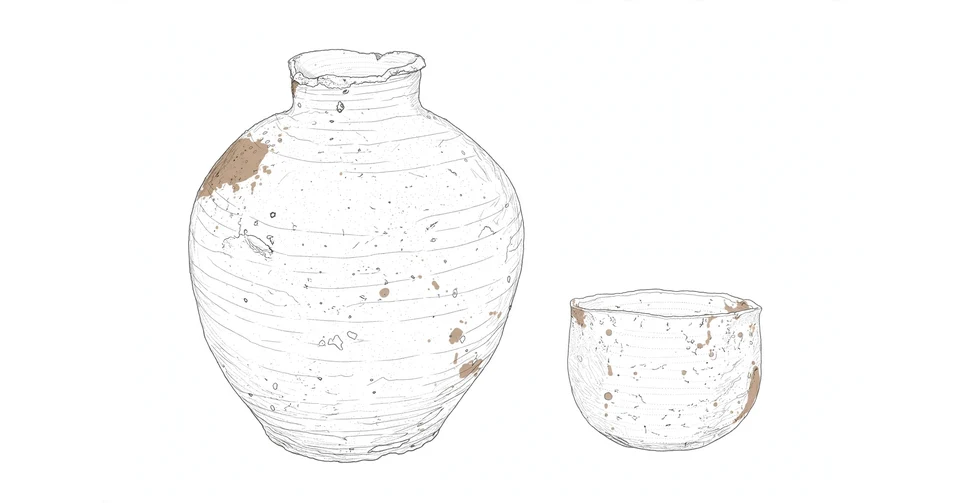
This article follows that clay from the lake bed to the kiln, through the tea rooms where Shigaraki ware became famous and the decades when it heated Japanese homes.
A town built on the bed of an ancient lake
Shigaraki sits in the southeastern part of Shiga Prefecture, in a mountainous area on the border of Kyoto and Shiga prefectures, within about 100 kilometers of both Osaka and Nagoya. It is a small pottery town tucked into the hills, and for centuries its main industry has been the clay under its feet.
The clay used for Shigaraki ware comes from a stratum known as the Old Biwako Layer. About four million years ago there was an ancient lake near Shigaraki which would eventually become Lake Biwa, and the soil that settled on its bed became the clay potters still dig today. Potters knead this clay with other types such as Kibushi and Mizuchi clay, and the result is a strong, sticky clay that suits large works with thick walls. It is this clay, more than any single potter or period, that gives Shigaraki ware its character.
Two qualities of the clay matter most: high heat resistance, which lets potters fire large, thick pieces without cracking, and coarseness. The clay is full of grains and grit, and it keeps that grit through the firing, so the surface of a finished piece feels sandy and alive under the hand. A smooth, perfect surface would be easier to sell, but it would not be Shigaraki ware. The roughness is not a flaw the potters failed to remove. It is the material speaking.
There is something humbling about a craft that begins with geology rather than with an artist. The potter starts with a lake bed four million years old and asks what it is willing to become, and that patience is why the ware feels so calm in the hand.
Shigaraki ware and the Six Ancient Kilns
Shigaraki ware is one of Japan's Six Ancient Kilns, known in Japanese as the Nihon Rokkoyo. The six are Seto, Echizen, Tokoname, Tamba, Bizen, and Shigaraki, the pottery producing regions that have fired continuously since medieval times. In 2017 their shared heritage was recognized as a Japan Heritage story.
The history of Shigaraki ware is often traced back to the eighth century, when roof tiles were fired for the palace of Emperor Shomu at Shigaraki. The kiln remains that archaeologists have actually found date to the Kamakura period, which ran from 1185 to 1333, and to the early Muromachi period after it. The palace tiles give the town a proud origin story, but the solid evidence begins with the medieval kilns.
By around the end of the medieval period, Shigaraki potters were making jars, vats, and mortars and firing them in anagama kilns, long single chamber kilns built into hillsides. The town stood at a crossroads for transport between Nara, Yamashiro, and the Tokai region, and it lay near Kyoto and Nara, where the tea ceremony was being born. Good clay, a good location, and a new fashion in tea were about to meet.
In 1976 the Japanese government designated Shigaraki ware as one of Japan's Traditional Handicrafts, a formal recognition of a craft already practised for centuries.
How the tea ceremony found Shigaraki ware
The turning point for Shigaraki ware came with the tea ceremony. During the Muromachi period, which ran from 1333 to 1573, tea masters began to value a quality the Japanese call wabi-sabi, the beauty of things that are simple, imperfect, and marked by time. A rough jar with an uneven surface and a glaze made by wood ash fitted that taste exactly, and Shigaraki ware became a favourite of the tea world. The history of Shigaraki ware and the tea ceremony traces this rise in detail, from the first tea ceramics of the Muromachi period to the great tea masters who collected them.
The key figure was Murata Juko, a Buddhist monk and tea master who established the Wabicha style of tea ceremony. Juko turned away from the flashy, ornate Chinese tea ceramics that had dominated tea gatherings until then and chose simple Japanese ceramics called Wamono, which made use of the earthiness of Shigaraki and Iga. The story of Iga ware shows how the same love of rough, honest clay shaped its neighbour's pottery too.
The spirit of Wabicha passed from Juko to Takeno Jo-o, and then to Jo-o's disciple Sen no Rikyu, who developed it to its fullest extent during the Momoyama period, from 1573 to 1600. Jo-o was so taken with old Shigaraki ware that the tea ceramics he had made became known as Jo-o Shigaraki, and Rikyu created his own Rikyu Shigaraki. By the Momoyama period, Shigaraki ware tea utensils had become an indispensable part of tea ceremonies, and the town's potters were making water jars, tea bowls, and flower vases for the most refined rooms in Japan.
The tea masters did not choose Shigaraki ware because it was the finest ware available. They chose it because it was honest: its surface showed exactly what the clay and the fire had done, and nothing was hidden. In a tea room, where every object is looked at closely and in silence, that honesty mattered more than polish, and I think the standard is worth carrying outside the tea room too.
What fire does to Shigaraki clay
The look of Shigaraki ware is made in the kiln, not on the potter's wheel, and three effects define it. The first is hiiro, a warm scarlet fire colour in tones of pale orange, pink, and reddish brown, where the flame has touched the clay directly. The second is haikaburi, the blackish brown colouring that appears where ash accumulated inside the kiln and covered the piece during firing, a rusty look that tea practitioners value highly. The third is the natural glaze, known as bidoro or vidro glaze, which forms when ash from the burning firewood settles on the surface and fuses with the feldspar in the clay, melting into a glassy blue green or yellowish green sediment.
Until the Edo period, which ran from 1603 to 1867, Shigaraki ware was made without applied glaze at all. The pots were fired at high temperature and the glaze came only from the ash and the clay meeting in the heat. That is why no two pieces ever come out alike: the ash falls where it falls, the flame touches where it touches, and the feldspar grains show as pale speckles against the warm ground.
The kilns themselves are part of the story. The climbing kiln, or noborigama, is built on a mountain slope so that the rear chambers are heated by the residual heat of the front ones. Because it burns firewood, it can produce the scarlet colour and the ash covered surfaces that define the ware. A gas or electric kiln could fire the same shapes more cheaply, but it could not make the same surfaces, because those surfaces are the record of a wood fire.
This is why Shigaraki ware still matters. A piece of it is a record of a particular firing on a particular day, and that record cannot be copied. Factories can copy a shape in an afternoon, but they cannot copy the fall of ash in a wood kiln.
The hibachi years
For all its fame in the tea room, Shigaraki ware has also lived a thoroughly practical life, and its most famous practical product was the hibachi. In the Meiji era, which ran from 1868 to 1912, Shigaraki potteries began to produce hibachi charcoal braziers glazed with a newly developed namako glaze, a mottled blue glaze that suited the rough clay. The braziers proved extremely popular, at one point winning more than 90 percent of the market across Japan. From the Taisho era, which ran from 1912 to 1926, to the prewar period of the Showa era, the Shigaraki area established itself as a major producer of braziers. The story of the hibachi tells how those braziers carried the warmth of the hearth into every room of the Japanese home.
Then, in the 1960s and 1970s, electric and oil heaters spread through Japanese homes, and demand for the hibachi collapsed. For a town that had built its economy on braziers, it was a severe blow. The potters answered by adapting the craft rather than abandoning it, applying the namako glaze to ceramic planters, and production shifted to planters for high quality bonsai and other plants. The new products were well received, and the town survived.
That adaptation says something important about craft traditions. Shigaraki ware survived because its potters understood that the tradition was the clay and the firing, not any single product. A hibachi and a bonsai planter look nothing alike, but they are made from the same lake bed clay and fired in the same kind of kiln.
The tanuki that took over the town
Today, the first thing many visitors notice in Shigaraki is not a tea bowl at all. It is a tanuki, the Japanese raccoon dog, standing outside a shop or a house with a straw hat, a sake bottle, and a broad grin. Shigaraki has become famous across Japan for its ceramic tanuki figures, which stand outside shops and restaurants nationwide as good luck figures.
When Emperor Showa visited Shigaraki, he was welcomed with a row of Shigaraki tanuki figures all bearing Japanese flags. The sight greatly pleased the emperor, and press reports of the visit drew the entire country's attention to the Shigaraki tanuki. From that moment the figure became the town's most recognizable product, and potters began making tanuki in every size.
There is a risk in letting one cheerful figure stand for a whole tradition. A visitor who only sees the tanuki might leave thinking the town makes garden ornaments, and miss the tea bowls and the eight centuries of kilns behind them. But the tanuki has also done the town a real service, giving Shigaraki a friendly face and bringing visitors who might never have come for a tea bowl and then stayed to learn about the kilns.
Shigaraki ware today
Shigaraki today produces planters, flower vases, tableware, architectural tile, and garden furniture, and the town has grown into a centre for ceramic art as well as production. The Shigaraki Ceramic Cultural Park stands at the heart of that new life. The park was completed and opened in June 1990 to support ceramic art, training, and exhibitions, and since 1992 its Institute of Ceramic Studies has run an artist in residence program that has welcomed ceramic artists from around the world to live and work in Shigaraki. The park is open from 9:30 in the morning until 5:00 in the afternoon, about a twenty minute walk from Shigaraki Station.
The town's pottery world is larger than any single institution. The Shigaraki Pottery Industrial Cooperative Union is made up of more than 150 manufacturers, and the Shigaraki Art and Craft Ceramists Association brings together more than 100 ceramic artists. The tradition is a living industry, with young potters learning the craft alongside the old ones.
If you ever buy a piece of Shigaraki ware, a few simple checks will serve you well. Pick it up first. A genuine piece feels heavy for its size and rough to the touch, because the walls are thick and the clay is coarse. Look at the surface next. The colour should be warm and uneven, with patches of scarlet, dark ash covered areas, and perhaps a pool of greenish natural glaze. No two pieces should look exactly alike, and a piece that looks too even or too perfect is a reason to ask questions.
Living with the ware asks little. It is stoneware, fired hard, and made to be used rather than admired from a shelf. Wash it, dry it, and use it. A piece used every day will change slowly, as tea stains a cup or hands polish the rim of a jar, and those changes are not damage. They are the same process the kiln began.
A pot that asks you to slow down
Shigaraki ware endures because it refuses to hurry, and that refusal is its gift. The clay took four million years to form, the kilns have fired for centuries, and a pot that comes out of them still asks the person who uses it to slow down and look closely. In a world built for speed, a rough jar that shows the marks of its making is a small act of resistance.
A pot made of earth has outlasted so many things made of steel and plastic, not because it is faster or cheaper, but because it treats the material with respect and lets the fire finish the work. The lake is gone, but its bed is still here, in the warm surface of a cup or a jar, and as long as potters in Shigaraki keep digging it, shaping it, and firing it, that old lake will keep finding its way into Japanese homes, one quiet pot at a time.
More in Culture & Society
- Boro Turns Rags Into the Cloth Japan Refused to Throw Away
- Iga Ware Fires the Clay Pot That Holds Heat the Longest
- Sashiko Turns Mending Into the Most Beautiful Part of a Garment
- Warosoku Burns Brighter Because Its Wick Is Hollow
- Japanese Chopsticks and the Quiet Rules Behind Every Meal
- The Haze Tree Grows the Wax Behind Japan's Oldest Candles
Latest posts
- Japanese Futon and the Art of Sleeping on the Floor
- A Hohin Is the Handleless Teapot Gyokuro Was Waiting For
- Mount Takao and the Day Trip Tokyo Takes When It Needs Air
- A Donabe Turns a Clay Pot Into Japan's Slowest and Warmest Way to Cook
- A Shichirin Turns a Handful of Charcoal Into a Full Meal
- A Tanzen Is the Full Length Robe Japan Wears Indoors in Deep Winter
- A Hanten Is the Winter Jacket Japan Wears to Work
- Haze Wax Keeps Japan's Oldest Candles Burning
- Furoshiki, the Japanese Cloth That Wraps Almost Anything
- Japanese Candles Are Still Rolled by Hand in Japan
- Ubame Oak Is the Tree That Turns Into White Charcoal
- Binchotan Is the Charcoal That Made the Hibachi Possible
- Igusa Is the Humble Grass Under Every Tatami Mat
- Japanese Incense and the Art of Listening to Smoke
- Kumiko Builds Beauty From Wood Without a Single Nail