Kasuzuke Pickles Almost Anything in Sake Lees
· 11 min read
Kasuzuke is the Japanese family of pickles made by burying fish, vegetables and more in a bed of sake lees, the fragrant leftovers of brewing. Here is how the kasudoko bed works, what goes into it, and why the same technique can take a night or three years.
There is a tub in many Japanese kitchens that never really gets emptied. It holds kasuzuke in the making: fish fillets, cucumber spears, slices of daikon, whatever the season offers, all buried in a pale and fragrant bed of sake lees. Kasuzuke is the family name for foods pickled in sake kasu, the soft solid left behind when a finished batch of sake is pressed, and it might be the most forgiving technique in Japanese cooking. If an ingredient can stand up to salt and a little time, it can probably stand up to the lees.
The range is the point. At one end of the family, a salmon fillet spends a single night in the bed and goes to the grill tasting faintly of the brewery. At the other end, melons sleep in the lees for years. In between sits almost everything a Japanese market sells: cod, sea bream, mackerel, turnips, carrots, eggplant, ginger, even chicken and pork. The bed treats them all the same way, drawing out water and sending in sweetness, savoury depth and the clean smell of fermented rice.
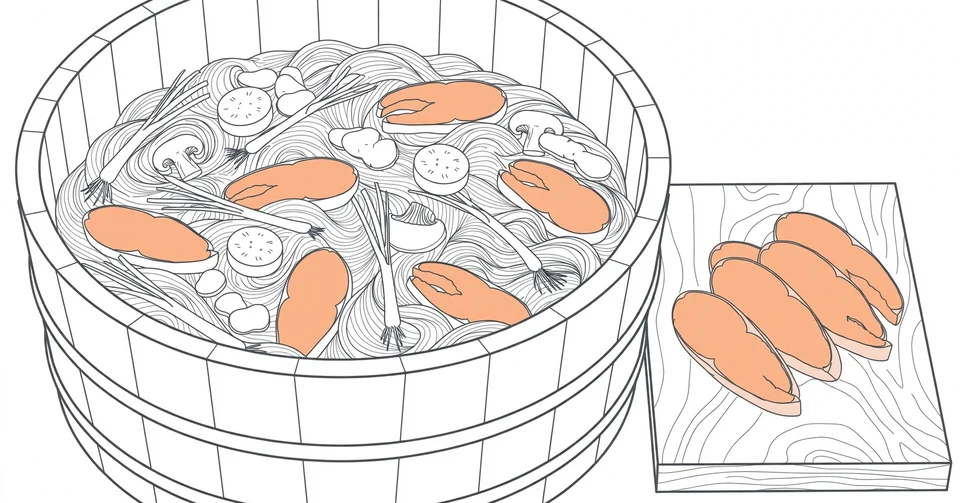
The best known member of the family is also the slowest, and most kasuzuke is nothing like it. The everyday version is a working pickle, made for tonight's dinner or this week's rice bowls, in a bed that lives in the fridge and takes new tenants whenever there are leftovers. Understanding kasuzuke means holding both ends in view at once: the quick marinade and the years long sleep are the same idea at different speeds.
What kasuzuke actually is
Kasuzuke belongs to tsukemono, the broad church of Japanese pickles, whose branches are usually named after their pickling medium. There are salt pickles, vinegar pickles, miso pickles and rice bran pickles, and then there is this one, pickled in lees. The medium deserves a short introduction of its own. Sake kasu, the sake lees Japan cooks with instead of throwing away, is what remains when the fermented rice mash is pressed and the sake runs clear. Large breweries press it into firm, dry sheets, while small breweries working by hand produce a moist and chunky paste. Either way it arrives smelling of the brewery, faintly sweet, and still holding a noticeable share of alcohol.
The lees also follow the brewing calendar. Sake is made in the cold months, so the freshest kasu reaches shops in late winter, around February and March, when the breweries are pressing. The sheets keep well and sell all year, but cooks who care about kasuzuke plan around that season. The bed is nutritious in its own right, too: sake kasu is rich in protein, amino acids and B vitamins, leftovers of the rice and yeast it came from. A kasuzuke pickle is not just flavoured by the bed. It has been fed by it.
The technique is old enough to have grown up alongside sake itself. Kasuzuke was already being made in the Kansai region in the Nara period, roughly twelve hundred years ago, and one tradition credits Buddhist monks with spreading it. A document from the year 905 already describes the method, which gives kasuzuke one of the longest paper trails of any Japanese cooking technique. It is also said to have served samurai as food that would not spoil on campaign, which makes sense: a bed of salty, alcoholic lees is a hostile place for the microbes that ruin fresh food. By the Edo period, sake dealers were promoting kasuzuke across Japan, and as brewing improved, the supply of good lees grew with it.
What the lees do to food is quiet chemistry. Sake kasu carries enzymes left over from fermentation, and those enzymes get to work on whatever rests in the bed, loosening proteins into amino acids and nudging starches toward sugar. The result is not a coating but a change that runs through the ingredient itself. Vegetable kasuzuke comes out sweet and mild, while fish kasuzuke keeps a gentle pungency under its sweetness, a flavour that reads as both fermented and clean.
The kasudoko, a bed you keep
Nobody pickles in plain lees straight from the press. The lees are first turned into a kasudoko, a seasoned bed. The usual method is to knead the kasu with miso, most often white miso, plus sugar and salt, then loosen the mixture with sake, a little at a time, until it reaches the soft consistency of miso paste. Home cooks following Just One Cookbook's kasuzuke guide will recognise the proportions, though every household adjusts the seasoning to its own taste, and beds meant for fish tend to be built with sake rather than sweet mirin, for freshness and food safety.
A kasudoko is not a single use marinade. Kept in the refrigerator, a home bed can be used again and again for months, topped up with fresh lees as it thins or dries. One widely used home guide gives a working life of up to about six months, and gives the bed's death certificate as well: if it turns sour or watery, it is finished and should be thrown out. Each fillet and cucumber that passes through leaves a little of itself behind, and cooks who keep a bed describe it deepening in flavour over time, in much the way a sourdough starter gathers character. There is one firm rule: a bed that has held fish or meat should never then hold vegetables that will be eaten raw. Serious kasuzuke keepers run two beds, or accept that the fish bed stays a fish bed.
To me this is the most appealing part of the whole method. The kasudoko turns pickling from a recipe into a small household institution, something maintained rather than made. You do not finish it. You feed it, borrow from it, and put things to sleep in it, and it quietly gets better at its job.
What goes into the bed
Vegetables were there first. The earliest kasuzuke was a vegetable pickle, starting with white melon and spreading to cucumber, eggplant and other melons, then to carrots, turnips, daikon, ginger and even watermelon rind. Vegetables are salted first and left to give up their water, because a waterlogged cucumber would dilute the bed and soften instead of pickling. Home recipes often salt at about two percent of the vegetable's weight and rest it for an hour before the transfer. Buried in the kasudoko, a cucumber needs only half a day to a day before it is wiped clean, sliced and served, crisp and gently boozy. Firmer vegetables can stay longer, and everything that comes out is eaten within days. Modern cooks keep pushing the list outward, and cheese, dried shiitake and dried seaweed have all been sent into the bed by the curious, with results that suggest the old medium still has room for new tenants.
Fish is the other great tenant. A fillet is salted for about half an hour, long enough to pull moisture from the surface, then patted dry and pressed into the bed. Hours to a few days later it comes out transformed, ready for the grill. Cod and salmon are the modern standards, joined by sea bream, butterfish, red snapper and mackerel. The bed also takes seafood such as squid, scallops and abalone, and it is not unusual to find chicken or pork kasuzuke either. My own bias is firmly with the fish: few marinades anywhere do so much with so little, and a piece of kasuzuke salmon needs nothing beside it but rice.
Kasuzuke in a hurry, narazuke at leisure
Most kasuzuke is fast, and it is worth saying plainly, because the family's celebrity can mislead people. I wrote elsewhere about narazuke, the pickles that spend years asleep in sake lees, and narazuke are kasuzuke pushed to an extreme. In Nara, salted melons and daikon are packed into lees, then lifted out and repacked into fresh beds again and again, for one to three years in total. The Wikipedia entry on kasuzuke notes that the younger pickles tend to be eaten locally in summer, while the older ones, turned a deep amber, are the ones sold under the narazuke name.
Between the overnight cucumber and the three year melon there is no change of method, only of calendar. The same salt, the same lees, the same slow exchange of flavour. Kasuzuke is best thought of as one technique with a very wide dial, and most Japanese cooks keep the dial turned low, using the bed the way other kitchens use a jar of pickles in brine: often, casually, and without ceremony.
Kyoto made fish kasuzuke a shop craft
If narazuke belongs to Nara, fish kasuzuke has a strong claim to Kyoto. The old capital is a pickle city, and it is also a sake city, with the brewing district of Fushimi inside its borders. Kyoto Kasuzuke Uokyu, a shop that began as a fishmonger in 1914 and reinvented itself as a kasuzuke fish specialist in 1965, when such a shop was still a rarity, shows what the craft looks like at its most developed. Its beds are built largely on lees from Fushimi, spoken of as something handed down and maintained across generations, and its signatures are black cod and silver salmon rested in the lees, with Spanish mackerel in a bed of lees blended with white miso.
Shops like Uokyu sell the fish ready to cook, each fillet carrying its perfume of sake into the pan. It is a telling arrangement: the customer never sees the kasudoko at all, yet the whole business rests on how well that bed has been kept. Kyoto's version of kasuzuke is less a home pickle than a kept inheritance, closer to a baker's starter than to a recipe card.
Kyoto is not the only place that turned the bed into a trade. In Niigata, another of Japan's great sake prefectures, the shop Kashimaya is known for kasuzuke seafood: northern fish and shellfish are salted first, then rested in lees from Niigata breweries, and sold as a regional delicacy. The pattern repeats wherever brewing is strong. A sake town produces lees, the lees produce a pickle, and sooner or later the pickle becomes the thing travellers carry home.
Wipe it off, then grill
Fish kasuzuke has one non negotiable rule at the stove. Before grilling, the lees are wiped or lightly rinsed off the surface, never left in a thick coat. The bed is rich in sugars created during fermentation, and those sugars colour fast: a thin film caramelises into a deep, fragrant glaze, while a thick one scorches black before the fish is cooked through. Watched carefully, the surface turns almost lacquered, and the flesh inside stays dense and moist, carrying the sake aroma all the way through. Not all of it meets the heat, either. Some fish kasuzuke is sliced and eaten exactly as it leaves the bed, served over rice, where the raw flesh has turned silky and faintly sweet from its rest in the lees.
Vegetables ask for gentler handling. They are lifted out, the clinging lees wiped away with fingers rather than washed off under the tap, then sliced and eaten as they are. Because kasuzuke keeps some of the alcohol of the bed, the flavour stays distinctly grown up, sweet first and then warm, and small children are usually offered only a taste.
What stays with me about kasuzuke is that it begins as waste management. The lees are what a brewery has left when the valuable part, the sake, is already in the bottle. Buried in that leftover, a cheap cucumber becomes a delicacy and a plain fish becomes a shop's signature. Nothing about it is fast by modern standards, and nothing about it is difficult either. It asks for salt, a tub, and the willingness to keep a bed alive, and in return it wastes nothing at all.
More in Food & Travel
Latest posts
- Manza Onsen Bathes at 1,800 Metres
- Irezumi Was an Art Before It Was a Warning
- The Oshi Kept Fuji's Pilgrims Fed, Housed, and Devout
- Japan's Population Decline and the Villages It Leaves Behind
- KRL Commuterline and the Trains That Move Jakarta
- Loma Linda's Long Lives Run on Saturdays
- Maruten Numazu and the Towering Kakiage Bowl of the Port
- The Three Sisters Grow Better Together
- Half the Old Springs in Japan Thank Kobo Daishi
- Tatamiishi Terraces Filter a River Through Stone
- Wasabi-Zuke Puts the Whole Plant in Sake Lees
- Konyoku Is Still Out There, Past the Last Train Station
- Karo Is the Tengger's Other Great Gathering
- Dry January Lasts a Month on Purpose
- Urashima's Dragon Palace Had a Name, Ryugu