Nasi Padang and How Indonesia's Most Famous Restaurants Work
· 10 min read
Nasi padang is the Indonesian meal where dozens of small plates arrive before you order anything. Here is how the hidang system works, what to eat, and how to pay only for what you touch.
You sit down at a table in Jakarta or Surabaya, and before you have said a word, the food arrives. Plate after plate after plate, until the table is full. Nobody asked what you wanted. Nobody handed you a menu. This is nasi padang, and it works on trust. You eat what you like, and you pay only for what you touch.
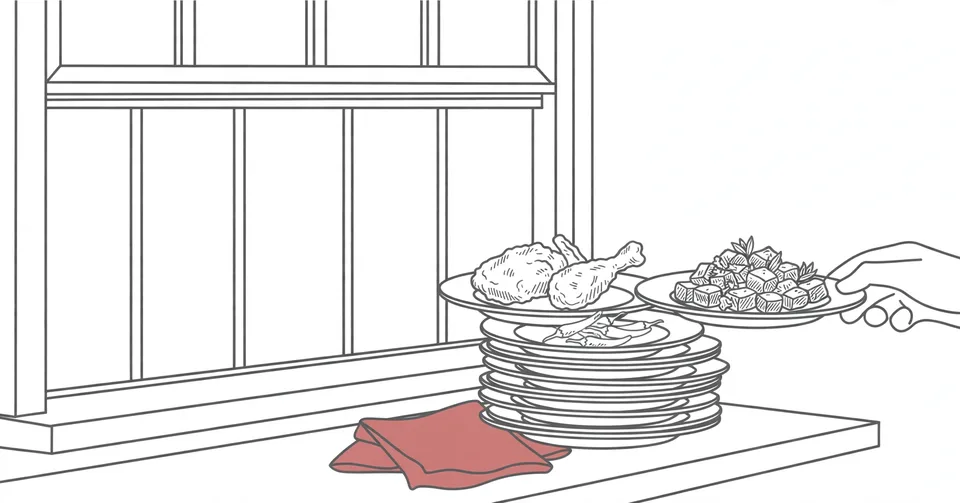
Nasi padang is the food of the Minangkabau people of West Sumatra, and it is the most widely available regional food in Indonesia. You can find a Padang restaurant in almost every Indonesian city, from Flores to central Jakarta. They are easy to spot. Look for the window stacked high with small plates, each one a different dish, and you have found one.
What nasi padang actually is
The name is simple. Nasi means rice, and Padang is the capital of West Sumatra, the home of the Minangkabau. But nasi padang is not one dish. It is a whole meal built around rice and a spread of side dishes, and the spread is the point. A single meal can include ten, fifteen, or even twenty dishes on the table at once, and the variety is what makes it different.
The Minangkabau are one of Indonesia's largest ethnic groups, and their food travelled with them. For generations, Minangkabau men have followed the tradition of merantau, leaving home to seek their fortune elsewhere, and they opened restaurants wherever they settled. That is why Padang food is everywhere. It is not a recent trend. It is the food of a people who moved, cooked, and stayed.
The flavours are bold. Chilli, turmeric, galangal, lemongrass, and coconut milk appear again and again. The cooking is slow. Rendang, the most famous dish of all, is beef simmered in coconut milk and spices for hours until the sauce dries into a dark coating. If you want the full story of that dish, it is worth reading about why rendang was named the world's best food, because the dish and the restaurant system around it belong together.
How hidang works
The serving system behind nasi padang is called hidang, and it is what makes a Padang restaurant unlike almost any other restaurant you will ever visit. When you sit down, the waiter brings a stack of small plates to your table. Each plate holds a different dish. A mound of rice arrives too, on its own plate. You have not ordered anything. The food simply comes.
Then you eat. You take from the plates you want and leave the rest. When you finish, the waiter counts the plates you touched. The untouched plates go back to the kitchen, or to the window display, to be served to the next guest. You pay only for the dishes you ate.
This sounds strange to a first-timer, and it raises an obvious question. How does the restaurant know what you ate? The answer is simple. Each dish has its own plate, and the staff keep track. A plate of rendang costs more than a plate of vegetables, so the count is done carefully at the end. The system runs on honesty on both sides. The restaurant trusts you not to eat from a plate and claim you did not touch it. You trust the restaurant to charge you fairly.
There are two ways to eat nasi padang. The first is hidang, the full spread described above. The second is to order by the plate, or ordering one or two dishes with rice when you eat in. Most locals who are in a hurry do the second. They point at the window and get a plate of rice with their chosen dishes. The nasi padang hidang spread is for when you have time, or when you are eating with friends and want to try everything.
The rice is almost always served in a generous portion. If you are eating hidang with friends, the rice keeps coming. The dishes are the star, but rice is the foundation, and nobody leaves hungry.
The dishes on a nasi padang table
A full nasi padang spread can feel overwhelming. Here are the dishes you are most likely to meet, and the ones worth trying first.
| Dish | What it is |
|---|---|
| Rendang | Beef slow cooked in coconut milk and spices until dark and dry |
| Ayam pop | Chicken boiled in coconut water, then lightly fried, pale and tender |
| Gulai | A yellow curry, usually chicken or fish, rich with turmeric and coconut milk |
| Dendeng balado | Thin slices of beef, fried until crisp, topped with red chilli sambal |
| Sayur singkong | Cassava leaves cooked in coconut milk, mild and slightly bitter |
| Sambal ijo | Green chilli sambal, the standard hot condiment on every table |
| Gulai tunjang | Beef tendon cooked in curry until soft and sticky |
| Telur balado | Hard boiled egg coated in red chilli sambal |
Rendang is the dish most people know, and it deserves its reputation. But ayam pop is the quiet surprise. It looks plain, almost uncooked, because the chicken is boiled, not grilled or fried hard. The flavour is gentle, and it balances the heat of the sambals. If you find the chilli too strong, ayam pop is your friend.
Dendeng balado is the opposite. It is chewy, salty, and hot, and a little goes a long way. Sayur singkong, cassava leaves in coconut milk, steadies the meal with a mild bitterness against the richness. And sambal ijo, the green chilli sambal, is on every table. It is hot, fresh, and slightly sour, and Indonesians spoon it over everything.
The drinks are simple. Hot tea, served sweet, is the standard choice, and it cuts through the richness of the meal. Iced tea and young coconut are common too. There is no wine list and no dessert course. A nasi padang restaurant is about the food on the table, and nothing else competes with it.
Eating with your hand
In a nasi padang restaurant, eating with your right hand is normal. The rice and the side dishes are mixed together with the fingers, and the food is lifted to the mouth in small handfuls. It takes practice, and the first attempt is usually clumsy, but it is worth trying. The flavours blend differently when the food is mixed by hand, and the meal feels more direct.
If you are not comfortable eating with your hand, nobody will judge you for asking for a spoon and fork. Most restaurants keep them behind the counter. But there is a small pleasure in doing it the local way, even badly. The staff notice, and they usually smile.
A few practical rules help. Use only your right hand, never the left. Wash your hands before you eat. Most restaurants have a sink near the entrance. Do not take food from a plate and put it back. If you touch a dish, you pay for it. And do not rush. A hidang meal is meant to be slow, with conversation between bites.
The meal ends when you stop eating. You do not ask for the bill. The waiter comes, counts the plates, and tells you the total. If you ate with friends, one person usually pays and the rest settle up outside. It is a simple system, and it has worked for generations without a menu or a ticket in sight.
Nasi kapau, the cousin from Bukittinggi
Nasi padang has a close cousin that is easy to confuse with it. Nasi kapau comes from Bukittinggi, a highland town in West Sumatra, and it looks similar at first glance. The dishes overlap: rendang, gulai, and dendeng all appear. But the serving style is different, and the difference matters.
In nasi kapau, the dishes are served in bowls on a large tray, not on stacked plates. The tray is carried to the table, and the server dishes out what you ask for. You point, they serve, and you pay for what you take. It is closer to a cafeteria line than to the hidang system, and it is usually found in a rumah makan Kapau, often run by families from Bukittinggi itself.
The food is a little different too. Nasi kapau tends to use more offal, such as gulai tambusu, which is cow intestine stuffed with egg and tofu, and gulai cancang, a curry of beef and offal. These are dishes a visitor might find challenging, and exactly the dishes locals love most. If you have eaten nasi padang a few times and want to go deeper, nasi kapau is the next step. It is the same culinary world, seen from a different town.
How to order as a first-timer
If this is your first nasi padang meal, here is the simplest way. Walk in, sit down, and let the hidang spread arrive. Do not panic at the number of plates. Take rice first, then add small portions of three or four dishes: rendang, ayam pop, sayur singkong, and a spoonful of sambal ijo. Eat slowly. If you want more of something, take more. If a dish is untouched at the end, it costs you nothing.
If the full spread feels too much, order by the plate instead. Point at the window and choose two or three dishes with rice. This is cheaper and faster, and it is what most Indonesians do on a workday lunch. The hidang system is a pleasure, not an obligation.
As for price, nasi padang is affordable by Indonesian standards. A plate with rice and two or three dishes costs roughly what a modest meal costs anywhere in Indonesia, and the hidang spread for two people is not much more. Prices vary by city and by restaurant, and the most famous chains, such as Sederhana and Garuda, charge a little more than a small neighbourhood place. Either way, you are paying for real cooking, not for decoration.
Nasi padang is not the only famous Indonesian meal built around rice. Nasi goreng, Indonesia's fried rice, is the other half of the story, and it is the dish most visitors meet first. But nasi goreng is a single plate. Nasi padang is a table full of food. If nasi goreng is Indonesia's everyday meal, nasi padang is its feast.
That is what makes it special. A nasi padang restaurant does not ask you to choose before you eat. It puts the food in front of you and trusts you to know what you want. In a world where every meal starts with a menu, a queue, and a decision, there is something generous about that. Sit down, and the food comes to you.
More in Food & Travel
- Dashi, the Quiet Stock Under Almost Everything Japan Cooks
- Ayu, the Sweetfish That Rules Japan's Clear Rivers
- Sake Kasu, the Sake Lees Japan Cooks With Instead of Throwing Away
- Kopi Tubruk and the Indonesian Way to Drink Coffee
- Subak and the Rice Terraces of Bali
- Nara Deer and the Sacred Animals of the Old Capital
Latest posts
- Fuji Ko, the Pilgrim Societies That Climbed Mount Fuji Together
- Gensen Kakenagashi, the Onsen Water That Never Circles Back
- Shiko, the Leg Stamp That Starts Every Sumo Day
- Semar, the God Who Chose to Work as a Servant
- Kyushoku and the Japanese School Lunch
- Sumadori, Japan's Smart Drinking for People Who Do Not Drink
- Bureiko, the Drinking Party Where Rank Is Left at the Door
- Kagami Biraki, Japan's Ceremony of Breaking Things Open
- Capsule Hotels and Sleeping in a Pod in Japan
- Hiroshima and the City That Chose Peace
- Shinnenkai, Japan's New Year Parties That Start the Year Over
- Punakawan, the Clown Servants Who Steal Every Wayang Show
- Kashikiri, the Private Onsen Bath You Book by the Hour
- Nomi-Hara, When After-Work Drinks in Japan Turn Into Harassment
- Shio Koji, Japan's Salted Ferment That Seasons Everything