Omakase, the Japanese Meal Where the Chef Decides Everything
· 11 min read
Omakase means "I leave it to you", and at a sushi counter that trust buys the best meal in Japan. This guide explains what omakase is, how a meal unfolds, what it costs, and the etiquette that keeps the chef on your side.
There is no menu at an omakase counter. You sit down, you say one word, and the chef takes over. That word is omakase, and it means "I leave it to you". In return you get the freshest fish the chef bought that morning, prepared piece by piece in front of you, in an order the chef chose for a reason. It is the most trusting meal in Japanese dining, and for many visitors it is also the most memorable.
Omakase is not a dish. It is a way of ordering, or rather a way of not ordering. You hand every decision to the chef, the chef reads the season and the market and your reactions, and the meal becomes a conversation without words. The format can feel intimidating from the outside, especially at the prices a good counter charges, but the idea behind it is simple and generous: the person who knows the fish best should be the one who decides what you eat.
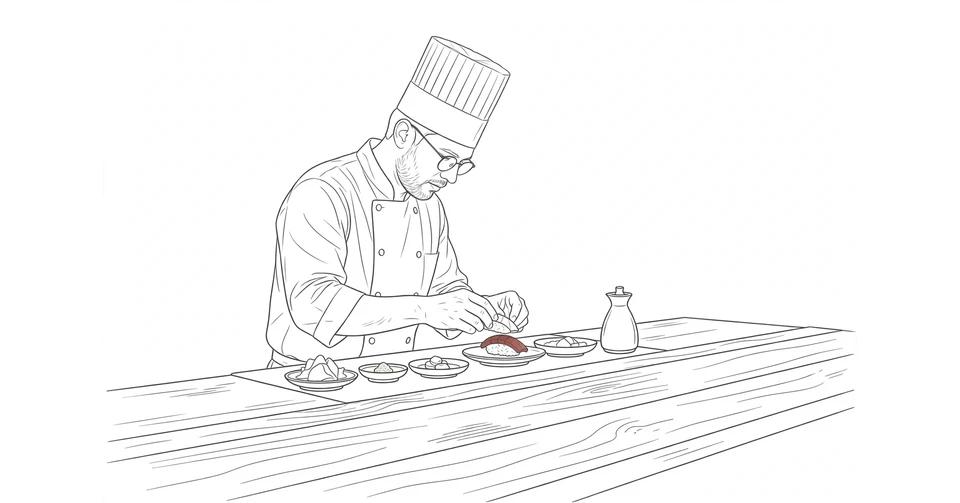
The word omakase comes from makaseru, "to entrust", with the polite prefix o in front. The literal sense is "I leave it to you", and that is exactly what the diner does. According to Britannica, the word itself was coined in 1967, and it only became attached to sushi dining in the 1990s. The habit it describes is much older. Bokksu traces it back to the sushi stalls of Edo, the old name for Tokyo, where customers two hundred years ago did not browse a menu but simply asked the vendor to serve whatever was best that day. Sushi was street food then, fast and informal, eaten standing up. Omakase grew out of that quick trust between vendor and customer, and it never really left the counter.
That history explains why omakase still feels so different from ordering a la carte. At a normal sushi restaurant you choose from a list and the chef fills the order. At an omakase counter the order runs the other way. The chef bought the fish at dawn, decided the sequence before you arrived, and adjusts it as the meal goes on, watching which pieces make you pause and which ones you finish too fast. The chef at the counter is called the itamae, and the best of them are spoken of as shokunin, artisans, because the work is as much craft as cooking. The rice, the cut, the temperature, the brush of sauce, all of it is decided piece by piece, and none of it is written down anywhere for you to choose from.
What an omakase meal looks like
A typical omakase counter seats only a handful of people, often eight to twelve, all facing the chef across a plain wooden counter of hinoki cypress. There is no menu on the table and no waiter taking orders. The chef stands in front of you, knife in hand, and the meal begins the moment you sit down. Every course is served the instant it is ready, and it is meant to be eaten within seconds, while the rice is still warm and the fish is still at the temperature the chef intended.
The meal usually opens light and builds toward richer flavours. A sushi omakase might start with a delicate white fish such as tai, sea bream, or a small starter, then move through silver-skinned fish, shellfish, and yellowtail before finishing with the fatty tuna, sea urchin, and a piece of sweet tamago omelette. A full dinner often runs fifteen to twenty pieces over one to two hours, and the menu changes every day because it follows the market, not a printed list. The chef names each piece as it is set down, often adding where the fish came from, and that short exchange is part of the meal. You are not only eating, you are being told the story of what you are eating.
Almost everything served is nigiri, a slice of fish laid over a small bed of vinegared rice. The topping is the neta, the rice is the shari, and the two are held together with a dab of wasabi the chef has already placed between them. Many pieces arrive brushed with nikiri, a soy-based glaze, so they need nothing more. Between pieces you will find thin slices of pickled ginger, called gari or shoga, which exist to cleanse the palate, not to sit on top of the fish. A little green tea or, at many counters, a small cup of sake keeps pace with the meal. My own first time at a counter, I spent the first three pieces worrying I was doing it wrong, and by the fifth I had stopped worrying entirely, because the chef was plainly enjoying the work and the fish was too good to argue with.
Omakase is not kaiseki
Visitors often confuse omakase with kaiseki, the other famous chef-led meal in Japan, and the two do share a spirit. Both leave the menu to the kitchen, both follow the seasons, and both treat a meal as a small piece of theatre. But they are different meals with different centres of gravity. Kaiseki is a multi-course dinner built around seasonal ingredients and elaborate presentation, served over a long evening, often at a ryokan or a formal restaurant. It can include soup, sashimi, grilled fish, simmered dishes, and rice, and it rarely puts sushi at the centre.
Omakase, by contrast, is a sushi meal first. The chef's skill is the point, not the variety of the kitchen, and the counter is the stage. A kaiseki dinner is a procession of dishes from a kitchen you never see. An omakase dinner is a conversation with one person standing two feet away, making each piece while you watch. If you want the broadest tour of Japanese cooking, kaiseki is the one to book. If you want to watch a master at work and eat the best fish of the day, omakase is the one. The two meals also differ in price and pace, and knowing which one you are booking matters, because a guest who sits down expecting kaiseki and gets twenty pieces of nigiri will be confused, and a guest who sits down expecting omakase and gets a two-hour procession will be hungry.
What omakase costs
Omakase has a reputation for being ruinously expensive, and at the top end it is. But the range is much wider than the reputation suggests, and lunch is the quiet secret of the format. Many counters serve a shorter lunch set for a fraction of the dinner price, which is the best way to try the experience without committing a large part of a travel budget.
| Meal | Typical price per person | What you get |
|---|---|---|
| Lunch set | About $38 to $100 | Around 10 courses in about an hour |
| Standard dinner | About $100 to $250 | 15 to 20 pieces over one to two hours |
| Top Tokyo counter | $250 to $500 or more | The chef's full sequence, often 20 courses or more |
The figures come from current listings and guides: a New York lunch omakase is listed at $38 a person, a well-known Los Angeles counter charges $240 for dinner, and Britannica puts the top of the market at as much as $800. Rosetta Stone puts the usual range at $100 to over $500 depending on location. In Japan, dinner at a good Tokyo counter commonly sits in the middle of that range, and the most famous counters in Ginza charge more still. What you are paying for is not only the fish. You are paying for the chef's time, the small room, the sourcing, and the fact that the counter seats so few people. Tipping, meanwhile, is not part of the deal. In Japan a tip is not expected at an omakase counter, or at any restaurant, and the price you see is the price you pay, apart from tax and any drinks you order.
One honest note on value: omakase is worth the money when the counter is good, and it is a poor use of money when it is not. A cheap omakase in a city with no good fish is just expensive sushi served slowly. The format rewards the chef, so it is only as good as the chef. If you are choosing between one top-tier omakase dinner and three very good ordinary sushi meals, the three meals will teach you more about sushi. The omakase will give you one evening you remember for years. Both are reasonable choices, and the right one depends on what you want from the trip.
Etiquette at the counter
Omakase has rules, but they are fewer and kinder than the format's reputation suggests. The Michelin Guide once described the experience as revered and intimidating, and first-timers take that warning to heart, but most of the rules are simple courtesies that keep the meal running well for everyone at the counter.
Book ahead. A counter with eight seats fills days or weeks in advance, and walking in without a reservation will almost always fail. Read the confirmation carefully, because many counters take a deposit and charge for late cancellations. Arrive on time, because the meal starts when you sit down and the chef cannot hold your sequence while the rest of the counter waits. Skip perfume and cologne, because strong scents sit between you and the fish, and the chef will notice.
Eat each piece the moment it lands in front of you. The chef timed it to be eaten now, not in a minute, and the rice cools and the fish warms while you wait. You can pick it up with your fingers or with chopsticks, and you should finish it in one bite. If the chef has already brushed the piece with sauce, leave the soy sauce alone. If you add any, dip the fish side, never the rice, because rice soaked in soy sauce falls apart and drowns the flavour the chef built. Do not ask for extra wasabi as a rule, because the chef already put the right amount inside. And tell the restaurant about allergies and foods you cannot eat when you book, not when the piece is in front of you, because the chef plans the whole sequence around what the counter can eat.
There is one more option worth knowing. If the idea of surrendering every choice makes you nervous, ask for osusume instead. Osusume means "recommended", and it is a different arrangement: the staff suggest dishes, and you still choose. Omakase means the chef chooses everything. Knowing the difference saves you from ordering the wrong kind of trust.
Is omakase worth trying
Omakase is not the best way to learn about sushi, and it is not the cheapest way to eat it. It is the best way to understand what a sushi chef actually does. At an ordinary sushi restaurant the chef is a cook you never see. At an omakase counter the chef is a host, a teacher, and a performer, and the meal is shaped around the person in front of them. That is why regulars return to the same counter for years, and why chefs remember what their regulars liked last time. The meal is personal in a way that a menu can never be.
It is also, quietly, a lesson in trust. Most of us spend our days making small decisions, and a meal where you make none of them feels strange for about five minutes. Then it feels like a relief. You sit down, you say omakase, and for the next hour someone who has spent decades learning fish decides what you eat, one piece at a time. Not every meal needs to be that way. But once, in Japan, it is a meal worth having, because it is the one meal where the chef's judgment, not your appetite, is the menu.
If you go, go at lunch first, sit at a counter with a chef you can watch, and eat each piece the moment it arrives. The rest takes care of itself.
More in Food & Travel
- Nikko and the Shrines Hidden in the Cedar Forest
- The Orangutan and the Vanishing Forests of Borneo
- Hozomon Guards the Treasure House Behind Senso-ji's Main Hall
- Nakamise Is the Shopping Street That Has Fed Pilgrims for Centuries
- Kaminarimon Is the Thunder Gate That Opens Asakusa to the World
- Kit Kat Japan, the Flavours You Will Not Find Anywhere Else
Latest posts
- Takarabune Sails Under the Pillow to Bring Japan a Lucky Dream
- Seven Lucky Gods Sail Into the New Year on a Treasure Ship
- Ebisu the Rejected Child Who Became Japan's God of Good Fortune
- How Izanagi and Izanami Created Japan From a Drop of Salt Water
- Dohyo-Iri Is the Ring Entering Ceremony That Opens Every Sumo Day
- Kayabuki Is the Roof Japan Rebuilds Every Generation
- The Andon Lantern Lit Edo Homes With Oil and Paper
- Akari Lamp Is the Paper Lantern a Sculptor Turned Into Light
- Chochin Is the Paper Lantern Japan Folds Away and Brings Back to Life
- Odalan Is the Birthday Bali Gives Every Temple
- Japanese Mythology and the Gods Who Shaped an Island Nation
- Mepeed Is the Slow Walk That Carries Bali to the Temple
- Gebogan Is the Tower of Fruit Bali Carries to the Temple
- Banten Are the Offerings Bali Makes Out of Almost Nothing
- Amado Are the Storm Shutters That Close Japan for the Night