Hikikomori, Japan's Hidden Generation
· 9 min read
Hikikomori describes about 1.46 million working-age people in Japan who have withdrawn from social life. This is what the word means, why it happens, and what Japan is doing about it.
Hikikomori is a Japanese word for a life lived mostly behind a closed door. It describes people who withdraw from school, work and social life and stay at home for six months or more, going out only for a hobby or a quick errand nearby. A national survey by Japan's Cabinet Office estimated that about 1.46 million people aged 15 to 64 live in this state, roughly 2 percent of that age group, or about one person in 50.
The word sounds strange to outsiders, and the numbers sound shocking, but the reality is quieter than the headlines suggest. Most people living as hikikomori are not angry or dangerous. They are often tired, ashamed, or stuck after a setback that never got resolved. The Japanese government itself is careful with its language here: hikikomori is a state a person is in, not a diagnosis and not a character flaw.
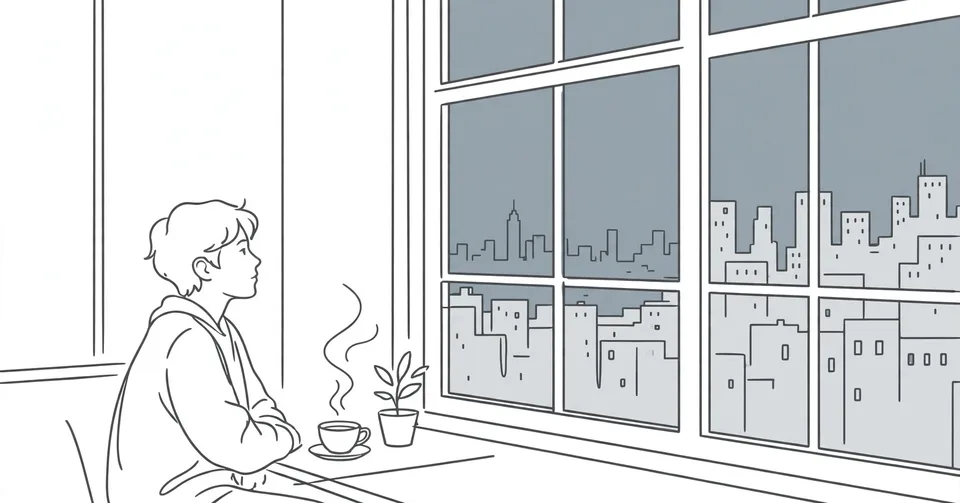
This article explains what hikikomori means, how many people it affects, why it happens, and what Japan is doing about it. The picture is serious, but it is not hopeless. The most useful thing to understand is that withdrawal usually has a reason, and reasons can be addressed, slowly and with patience.
What hikikomori actually means
The word comes from Japanese: hiki means to pull, and komoru means to shut oneself in. Put together, hikikomori means pulling inward. It entered common use in Japan in the 1990s, when psychiatrists and journalists began writing about young people who had stopped going to school or work and rarely left their rooms.
The government's definition is practical rather than medical. A person counts as hikikomori if they have stayed at home for six months or longer, going out only for hobbies or nearby errands, without a medical reason keeping them there. The Cabinet Office survey counted four situations, from going out only for hobbies to hardly going out at all. The health ministry's guideline from 2010 calls hikikomori a phenomenon, a state that a person is in, and ministry material adds that the word describes a situation, not the person.
That distinction matters. Hikikomori is often confused with NEET, the label for people not in education, employment or training. The two overlap, but they are not the same thing. NEET describes an employment status. Hikikomori describes withdrawal from social life. A person can be one without being the other, and treating hikikomori as simple laziness misses the point entirely. Many people who withdraw were once high achievers who hit a wall, a failed exam, a lost job, a period of bullying, and never found a way back.
How many people live like this
The best estimate we have comes from the Cabinet Office survey carried out in November 2022 and published in 2023. It went out to 30,000 randomly chosen people aged 10 to 69, and around 13,800 replied. Just over 2 percent of respondents in the working-age groups met the definition of hikikomori: 2.05 percent of people aged 15 to 39, and 2.02 percent of those aged 40 to 64. Applied to the whole population, that comes to about 1.46 million people.
| Survey | Age group | Estimate |
|---|---|---|
| 2015 | 15 to 39 | 541,000 |
| 2018 | 40 to 64 | 613,000 |
| 2022, published 2023 | 15 to 64 | 1,460,000 |
Earlier surveys had put the total lower. The 2015 survey estimated 541,000 people aged 15 to 39, and the 2018 survey estimated 613,000 aged 40 to 64, which together come to about 1.15 million. The government warned that the questions changed between surveys, so a direct comparison is unreliable. The 2022 survey was also the first to cover young and middle-aged people together, and the first to include homemakers who stayed at home because of family responsibilities if they rarely talked with anyone outside the family.
The split between men and women is close to even. Among those aged 15 to 39, about 53.5 percent were men and 45.1 percent were women. Among those aged 40 to 64, the balance tipped slightly the other way, with 47.7 percent men and 52.3 percent women. About one in six people in the survey had been withdrawn for ten years or more, which shows how long the state can last once it sets in.
These numbers are estimates, and they are probably undercounts. Withdrawal hides from surveys by nature, and many families feel shame about it and do not talk about it. Researchers have long said the real figure could be higher, since the surveys catch only people willing to answer, or whose families answer for them.
The 8050 problem
The most worrying part of the story has a name of its own: the 8050 problem. It describes parents in their 80s supporting children in their 50s who have been withdrawn for years. The parents cook, clean, pay the bills and keep the household running. The child stays in their room. The arrangement can last for decades, and it works until it does not.
The crisis arrives when the parents grow too old to care for themselves, let alone for an adult child, or when they die. The child is then left alone in a house they may not own, with no income, no work history, no friends to call and no experience of dealing with the outside world. Support workers in Japan say this is the moment when a quiet family problem becomes an emergency, and it is arriving more often as the generation first identified as hikikomori in the 1990s and 2000s ages along with their parents.
The 8050 problem is also a warning about time. Withdrawal that is left alone tends to last. The longer a person stays inside, the harder it becomes to go back out, because the world moves on, skills fade, and the gap on a resume grows.
Why people withdraw
There is no single cause, and that is part of why the issue is hard to solve. Surveys and support groups point to a mix of starting points: bullying at school, pressure around exams, burnout at work, a failed job search after graduation, illness, or caring for a family member until there is nothing left for anything else. The 2022 survey asked people directly, and for those aged 40 to 64 the most common trigger was leaving or losing a job, cited by 44.5 percent of respondents. About 20 percent cited COVID-19, which pushed many people inside during the pandemic and left some of them there after it ended.
It helps to see hikikomori in the context of the wider culture around work in Japan. This is the same country that gave the world the word karoshi, death by overwork, where long hours and total dedication to a job are still treated as virtues. When the pressure to perform is that intense, the cost of failing can feel just as intense. Some people burn out in public and keep going. Others quietly step back, and find stepping back in harder than expected.
Withdrawal usually happens gradually. A bad week becomes a bad month. The month becomes a year. The person stops answering messages, then stops going out, then stops trying, not because they gave up on life but because each small step back felt safer than the step forward. Shame does the rest. In a society that values fitting in, admitting that you cannot cope feels like a failure in itself, and that feeling keeps people inside longer than the original problem would have.
What Japan is doing about it
For a long time, the official response was slow and quiet, much like the problem itself. That has changed in the last few years. In April 2024, the Act on the Promotion of Measures against Loneliness and Isolation came into force, giving the government a legal framework for dealing with social isolation as a public issue rather than a private family matter.
In January 2025, the health ministry issued a new Hikikomori Support Handbook for local government offices and anyone supporting withdrawn people and their families. The emphasis in the new guidelines is on autonomy and dialogue: support workers are encouraged to respect the choices of the person they are helping, rather than forcing them out of the house. In April 2026, the government adopted a three-year support programme running to the 2028 financial year, and in June 2025 it had already agreed a new support framework.
On the ground, the work is done by support centres in every prefecture, by family associations such as the KHJ federation, and by small local groups that visit homes, run meeting spaces and help people take small steps back into the world. A magazine called SHIP, made by people with personal experience of hikikomori, launched in April 2025 to give them a voice of their own. The approach is deliberately slow: a conversation at the door, a walk to the convenience store together, a part-time job for a few hours a week. The goal is not to fix a person but to widen their world a little at a time.
There is a connection here to another Japanese idea, ikigai, a reason to get up in the morning. Support workers often find that recovery starts not with a job or a lecture but with something small that gives a day a shape: a hobby, a routine, a person to talk to. A reason to leave the room does not have to be grand. It only has to be real.
A quiet problem with a slow answer
Hikikomori is easy to misunderstand from the outside. It is not a strange Japanese mystery, and it is not a story about lazy young people. It is what happens when pressure, shame and bad luck meet a society that makes it hard to ask for help, and it can happen anywhere. Japan counts it more carefully than most countries, which is why we know the number, but withdrawal itself is not unique to Japan.
The honest answer is that there is no quick fix. A person who has spent ten years inside will not be cured by a single visit or a single programme. But the direction of travel is encouraging: the government now treats isolation as a public issue, support is built around patience rather than pressure, and more families are talking about it openly than a decade ago. The lesson of hikikomori is a simple one, and it applies far beyond Japan. People do not withdraw because they have nothing to offer. They withdraw because the way back in looks too steep, and the most useful thing anyone can do is to make the first step smaller.
More in Culture & Society
- Numazu Imperial Villa and Japan's Seaside Imperial Retreat
- Wabi-Sabi and the Japanese Beauty of Imperfect Things
- Women Only Train Cars in Japan and the Problem They Answer
- Maneki Neko and Japan's Beckoning Lucky Cat
- The Baduy People and Life Without Modern Technology
- The Obon Festival, Japan's Week for Honouring Ancestors
Latest posts
- Love Live Sunshine and How Anime Changed Numazu
- Numazu Deep Sea Aquarium and the Creatures of Suruga Bay
- Numazu Himono and the Art of Dried Fish
- Numazu Port and the Freshest Seafood in Shizuoka
- Disaster Vending Machines in Japan That Give Their Drinks Away
- The E33G Remote Worker Visa and How to Legally Work from Bali
- Bullet Climbing Mount Fuji, the Overnight Ascent Japan Is Trying to Stop
- Climbing Mount Semeru, Java's Highest Volcano
- Tamago Sando and Japan's Konbini Egg Sandwich
- The Salaryman and Japan's Loyal Office Culture
- Onsen Tattoo Rules in Japan and How They Are Slowly Changing
- Key Money in Japan and Why Renting Costs Four Months Up Front
- Sento, Japan's Everyday Public Bathhouse
- The Fuji Five Lakes and the Best Views of Mount Fuji
- Visiting the Ghibli Museum and Ghibli Park in Japan