Mount Rinjani, the Volcano Trek That Tests Every Hiker
· 12 min read
Mount Rinjani rises 3,726 metres above Lombok, with a crater lake, hot springs and a sunrise that rewards three hard days on the trail.
There is a moment on Mount Rinjani when the trail stops pretending to be a walk. The savanna grass falls away, the slope turns to loose volcanic sand, and every step forward slides half a step back. It is 2:30 in the morning, the air is close to freezing, and the summit is still an hour above you. Then the sky starts to lighten, and you understand why thousands of people put themselves through this every year.
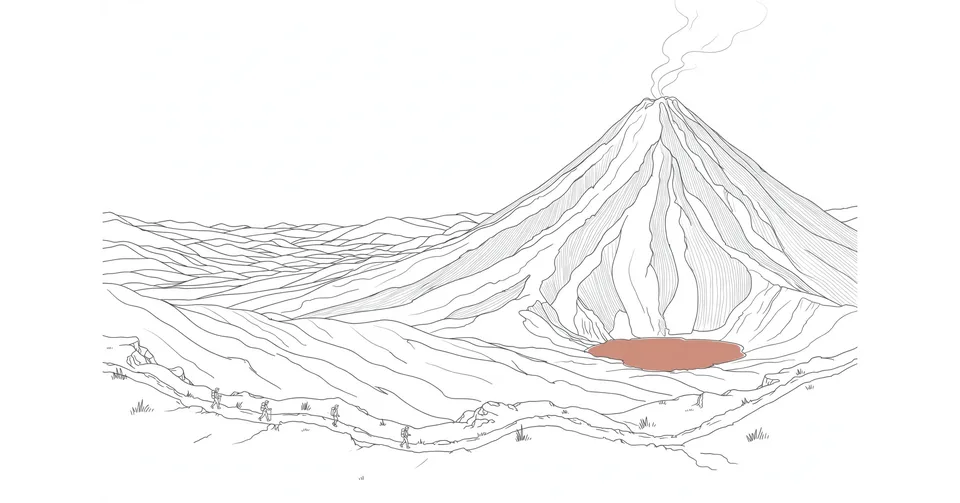
Mount Rinjani is the second highest volcano in Indonesia, a 3,726 metre giant on the island of Lombok. Its crater holds Segara Anak, a turquoise lake that sits about 2,000 metres above sea level, and a small active cone called Gunung Barujari rises from the water. The classic trek crosses the whole mountain in three days, from the savanna village of Sembalun to the rainforest village of Senaru, and it is widely rated one of the best multi day hikes in Southeast Asia.
I have never believed that a hard walk is automatically a good walk, and Mount Rinjani does not try to persuade you with comfort. What it offers instead is variety that few mountains can match: open grassland, a crater rim camped above the clouds, a lake you can swim beside, and a sunrise that stretches from Bali to Sumbawa. If you are fit, patient, and willing to be cold and dusty, it repays the effort many times over.
This is what the trek is actually like, what it costs, when to go, and how to do it without turning a great mountain into a miserable memory.
The mountain in numbers
Mount Rinjani stands 3,726 metres above sea level, second only to Kerinci in Sumatra among Indonesian volcanoes. The mountain became a national park in 1990, covering about 41,330 hectares, and in 2018 the whole Rinjani area was named a UNESCO Global Geopark. The summit is the top of a caldera roughly 6 kilometres wide and 8.5 kilometres long, and the lake inside it, Segara Anak, covers about 11 square kilometres.
Segara Anak means Child of the Sea in the local Sasak language, and the name fits. The lake is so large that it looks like a sea dropped into the top of a volcano. Gunung Barujari, the small cone in the middle of the lake, is still active. It last erupted in 2015 and again in 2016, throwing ash over the trails and closing the mountain for months. The park watches it closely, and the trekking routes are adjusted whenever the volcano stirs.
Indonesia is a country built by volcanoes, and Mount Rinjani sits in very good company. Lake Toba in Sumatra is the scar of a supervolcano eruption 74,000 years ago, while Mount Bromo in East Java lets you walk right up to a smoking crater in a morning. Mount Rinjani is different from both. It does not give you its drama in an hour. It makes you earn it over three days, and the slow build is part of the point.
Two villages, two very different routes
Almost every Mount Rinjani trek starts in one of two villages, and the two approaches could hardly be more different. Sembalun, on the eastern side at 1,156 metres, begins in open savanna. The grass rolls away in every direction, the sun has nowhere to hide, and the trail climbs steadily toward the crater rim at 2,639 metres. Senaru, on the northern side at 601 metres, begins in dense tropical rainforest. The trail is shaded, the air is humid, and monkeys watch from the branches as you climb toward the rim at 2,641 metres.
| Route | Start | Terrain | Best for |
|---|---|---|---|
| Sembalun | 1,156 m | Open savanna, exposed | Summit attempts |
| Senaru | 601 m | Rainforest, shaded | Crater rim in two days |
| Torean | 601 m | River valley, steep | Lake access, currently closed |
Most trekkers go up one side and down the other, which means they see both landscapes in a single trip. The standard direction is Sembalun up and Senaru down, because the Sembalun side gives the shortest path to the summit and the Senaru side gives the gentlest descent through the forest. A third route, Torean, follows a river valley from the lake down to the north coast, but it has been closed since 23 September 2026 after forest fires burned parts of the trail, and there is no reopening date yet.
The classic three day trek, day by day
The three day, two night Mount Rinjani trek from Sembalun to Senaru is the version most people choose, and it covers about 30 kilometres. Day one starts with a drive to Sembalun village, registration at the national park office, and a walk through the savanna. The first hours are gentle, but the afternoon climb to the Sembalun crater rim is long and exposed. By the time you reach camp at 2,639 metres, you have gained about 1,450 metres, and the reward is a sunset over the lake with the summit cone glowing above it.
Day two is the hardest day on Mount Rinjani, and the one people remember. The wake up call comes at 2:30 in the morning. Headlamps on, you climb the loose sandy slope to the summit, a push of three to four hours that feels much longer in the dark and the cold. The summit at 3,726 metres is a narrow ridge of rock and ash, and on a clear morning you can see Bali and its Mount Agung to the west, the Gili Islands below, and Sumbawa to the east. Then you descend all the way back down to Segara Anak, a drop of more than 1,700 metres that punishes the knees, and spend the afternoon at the lake.
Day three begins with a climb back up to the Senaru crater rim at 2,641 metres, then a long descent through the rainforest to Senaru village. The forest is a relief after two days of sun and ash: giant trees, birdsong, and troops of black monkeys moving through the canopy. By the time you reach the village, you have crossed the entire mountain, and the hot shower waiting at the bottom has never felt so well earned.
Shorter options exist. A two day, one night trek from Senaru reaches the crater rim and comes back the same way, which suits people who are short on time or unsure about the summit. A two day summit push from Sembalun is possible for very fit hikers, but it skips the lake, and the lake is half the reason to go.
Segara Anak, the lake inside the volcano
Segara Anak is the heart of Mount Rinjani, and it is stranger than any photograph suggests. The lake is crescent shaped, bright turquoise in the sun, and warm in places where volcanic heat seeps through the lake bed. Near the shore, natural hot springs bubble up at a spot called Aik Kalak, where trekkers soak their legs after the long descent from the summit. The water is genuinely hot, and after two days of cold nights on the rim, it feels like the mountain apologising.
The lake is also a sacred place. Sasak people from Lombok and Balinese Hindus both make pilgrimages here, leaving offerings at the shore and bathing in the hot springs for ritual purification. Local fishermen work the lake too, catching tilapia that were introduced decades ago and now thrive in the warm water. If you camp beside Segara Anak, you will probably see a fisherman casting a line at dawn while the mist lifts off the water, which is one of the quietest scenes on the whole trek.
What it costs and what is included
Foreign visitors pay a national park permit of Rp250,000 per person per day on the main routes, so a three day trek means Rp750,000 in permits alone, and nearly every package includes it in the price. Most group packages for the three day Mount Rinjani trek run from about US$180 to US$300 per person, depending on the season, the group size, and what is included. Private treks cost more. The price normally covers the permit, a licensed guide, porters who carry the tents and food, meals on the mountain, camping equipment, and transport from Senaru or Mataram to the trailhead.
Since 1 April 2026, every trekker on Mount Rinjani must also hold valid travel insurance that covers medical emergencies, trekking accidents, and emergency evacuation. The rule arrived after years of rescues that were slow and expensive, and the park checks it at registration, so arrange it before you fly to Lombok. The porters deserve a mention too. They carry up to 25 kilograms each over the same brutal trails, cook your meals at camp, and set up your tent before you arrive. A tip at the end of the trek is customary, and it is the least the job deserves.
When to go
The dry season, roughly April to December, is the time to climb Mount Rinjani. The park closes every year from 1 January to the end of March, for ecological recovery and because the rainy season makes the trails dangerous, and in 2026 it reopened on 1 April. The best months are usually May to October, when the skies are clearest and the summit views are most reliable. November and December can still be good, but afternoon rain becomes more likely.
Check the trail status before you book. The fires of September 2026 closed the Torean route and shut Senaru briefly from 26 September until it reopened on 3 October, which is a reminder that conditions on an active volcano change fast. A current Mount Rinjani trek guide and the park booking portal, eRinjani, publish the latest updates, and a reputable operator will tell you honestly if a route is closed rather than selling you a trek that cannot run.
Safety is not a footnote
Mount Rinjani is a real mountain, and it has real dangers. The altitude is high enough to cause headaches and nausea, the summit slope is steep loose scree, the nights on the rim are close to freezing, and the weather can turn in an hour. In June 2025, a Brazilian hiker fell into a ravine near the crater rim and died after a rescue that took four days, a tragedy that shocked Indonesia and pushed the park to tighten its rules, including the insurance requirement that followed in 2026.
The lessons for Mount Rinjani are simple and worth taking seriously. Go with a licensed operator, not the cheapest offer you find online. Stay on the marked trail, especially near the rim, where the edge crumbles. Tell your guide immediately if you feel altitude sickness coming on. Bring a warm layer and a headlamp that actually works. And if the weather closes in on summit morning, accept it. The mountain will still be there next year, and no sunrise is worth a rescue.
How to prepare
Fitness matters more than gear on Mount Rinjani. The second day alone involves about nine or ten hours of walking, with a 2:30am start and a huge descent, so train with long hilly walks carrying a day pack before you go. Good broken in hiking boots are essential, because the descent from the summit is a scree slide that destroys soft shoes and unprepared knees. Trekking poles help enormously on both the climb and the descent, and most operators provide them if you ask.
Pack light but pack warm. You need a warm jacket and a beanie for the summit push, sun protection for the savanna, rain gear even in the dry season, and at least two litres of water capacity per day, because the only reliable water on the trail is at the lake and the springs. Your porter carries the heavy gear, but your day pack is yours, and every extra kilogram in it is a kilogram you carry up 1,450 metres on day one.
One last piece of preparation has nothing to do with equipment. Mount Rinjani is a national park and a sacred mountain, and the trails suffer when trekkers leave rubbish behind. Carry a small bag for your own waste, take it back down with you, and leave the lake and the rim as clean as you found them. The porters carry enough already.
Why the effort is worth it
There are easier mountains in Indonesia, and there are prettier lakes. What makes Mount Rinjani special is that it puts everything into one trek: the savanna and the rainforest, the crater rim camp above the clouds, the lake and the hot springs, and a summit sunrise that covers three islands at once. It is the kind of walk that changes how you think about walking, and that is a rare thing for a holiday to do.
If you go, go ready. Train for it, pick a good operator, respect the weather, and give the mountain three full days. Climbing Mount Fuji is a fine introduction to big volcanoes, but Mount Rinjani is the deeper test, and the one you will still be talking about years later. The sand will get into your boots, the cold will get into your bones, and somewhere on the rim at dawn, with the lake glowing below you, you will decide it was worth every step.
More in Food & Travel
- Yogyakarta and the City Where Java Keeps Its Soul
- Shirakawa-go, the Village of Praying Hands
- Tempeh and the Fermented Bean Cake Indonesia Gave the World
- Gado-Gado, the Peanut Sauce Salad That Feeds All of Indonesia
- Bakso and the Meatball Soup Indonesia Eats Everywhere
- Sapporo Snow Festival and the Ice City That Rises Every February
Latest posts
- Koi-Koi Is the Card Game Where Knowing When to Stop Wins
- Reog Ponorogo and the Giant Lion Mask That Dancers Carry With Their Teeth
- Doraemon, the Blue Robot Cat Japan Still Cannot Live Without
- Hanafuda Turns Twelve Months of Flowers Into a Card Game
- Nintendo, the Playing Card Maker That Became a Gaming Giant
- Tana Toraja and the Funerals That Last for Days
- The Washlet Made the Japanese Bathroom the Warmest Room in the House
- Kecak Dance and the Hundred Voices That Tell the Ramayana
- Rangda Is the Witch Queen Bali Never Lets Win
- The Japanese School Uniform and the Story Behind the Sailor Suit
- Aikido and the Martial Art That Refuses to Fight Back
- Satay and the Smoke That Carries Indonesia to the World
- Barong Is the Lion Bali Calls Out When the Village Needs Protection
- Tumpeng Is the Rice Cone Java Serves When It Wants to Say Thanks
- Onsen Etiquette and the Unwritten Rules of Japan's Hot Springs