Ryokan, Japan's Traditional Inns
· 9 min read
A ryokan stay is a night inside old Japan: tatami floors, a futon laid out while you eat, and a kaiseki dinner. This is what it is really like, and what it costs.
A ryokan is not just a place to sleep in Japan. It is a night inside a slower, older Japan, one where the floor is straw, the bed is laid out while you eat, and the day runs on a rhythm that has barely changed in centuries.
If you have only ever stayed in a business hotel in Tokyo, it can feel strange at first. There is no bed in the room when you arrive. The door slides instead of swinging. The staff kneel when they serve you tea. But within an hour, most guests understand the appeal: it does not sell you a room, it sells you a whole evening, and it does the worrying for you.
A night in one costs far more than a night in a city hotel, often two or three times as much. The price usually covers dinner and breakfast, both of them serious meals, and the service that comes with them. So the honest answer to whether a ryokan is worth it is simple: if you want a bed, no, but if you want one of the most Japanese nights you can have, then yes, at least once.
What a ryokan actually is
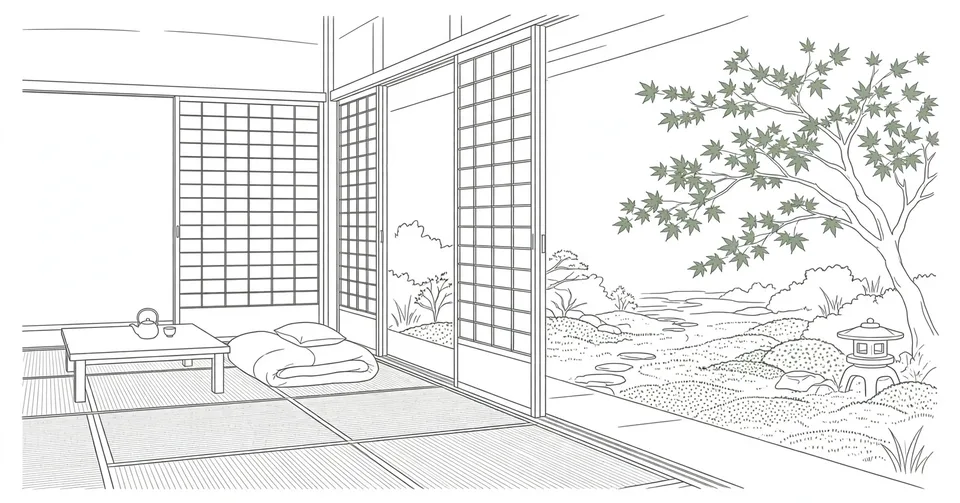
A ryokan is a traditional Japanese inn. The word itself is old, and the idea is older: a house where travellers could eat, bathe and sleep on their way between towns. The rooms have tatami mat floors, futon bedding that is laid out in the evening and folded away in the morning, sliding paper doors called shoji, and a low table with floor cushions where you sit for tea.
You will not find a bed, a television blaring in the corner, or a minibar. The room is deliberately empty, and the emptiness is part of the point. The room is a space that changes shape during the day: a sitting room in the afternoon, a dining room in the evening, a bedroom at night. The staff come in while you are at dinner and transform it, so you return to a room that is ready for sleep. Guests often say this small act of care is the most memorable part of the stay.
Each guest receives a yukata, a light cotton robe, to wear during the stay. You wear it to dinner, to the baths, and around the building. It is not a costume for tourists. It is what everyone wears, and putting it on is the first step in slowing down. The Japanese have a saying that you should leave your hurry at the door of the inn, and the yukata is the uniform for that.
The oldest hotel in the world
The tradition is not a modern invention for tourists. Nishiyama Onsen Keiunkan, an inn in Yamanashi Prefecture, was founded in 705 AD and is recognised by Guinness World Records as the oldest hotel in the world. It was run by the same family for 52 generations until 2017, when the business passed to a new company, and it still operates today, fed by the same hot spring water that drew its first guests thirteen centuries ago.
That fact says something important about what a ryokan is. It is not a theme park version of old Japan. It is a living institution, one that survived wars, earthquakes, and the arrival of the bullet train by doing the same thing, slowly and well, for longer than most countries have existed. When you stay in one, you are not watching history. You are sleeping inside it.
What the price includes
The first surprise for many visitors is the price, and the second is what the price covers. A ryokan stay is almost always sold as a package: one night, dinner, and breakfast. The dinner is usually kaiseki, a multi-course meal of small, seasonal dishes, served in your room or in a private dining room. The breakfast is a traditional Japanese breakfast, with rice, miso soup, grilled fish, and pickles.
Check-in is typically around 15:00 and check-out around 10:00. That early check-out is not a trick. It exists because the staff need time to prepare the rooms for the next guests, and because the day is built around the evening meal. You arrive in the afternoon, bathe before dinner, eat slowly, and sleep early. The schedule is the experience.
Prices vary enormously. A modest inn in a small town can cost less than a hotel room in Tokyo, while a famous luxury ryokan can cost several hundred dollars a night per person. The range is part of the charm: there is a ryokan for almost every budget, and the core experience, the tatami, the futon, the bath, the meal, is the same at every level. Japan's national tourism organisation puts the average stay at around 15,000 yen a night, and high-end inns charge much more.
The rhythm of a ryokan day
The day has a rhythm, and it helps to know it before you arrive. You check in during the afternoon and are shown to your room, where tea and a small sweet are already waiting. You change into your yukata. Then you bathe, because in a ryokan the bath comes before dinner.
Most have onsen baths, fed by natural hot spring water, and they are usually separated by gender. If you have never bathed in a Japanese onsen before, the rules are worth learning: wash and rinse completely before entering the water, enter naked, and do not bring a towel into the bath. It feels awkward the first time, and completely natural the second. The hot water after a day of walking is the reason many Japanese people travel to onsen towns in the first place, and a ryokan stay is built around that pleasure. If you want to understand why Japan's hot springs are a way of life, a night in one is the fastest way to learn.
Dinner follows the bath, and it is an event in itself. Kaiseki is not a meal you rush. Course after course arrives, each one small, seasonal, and carefully arranged, and the staff explain what you are eating. A kaiseki dinner can last two hours. By the time it ends, your room has become a bedroom, the futon is laid out, and the only thing left to do is sleep.
Breakfast is served early, usually between 7:00 and 9:00, and it is a proper meal, not a buffet afterthought. Then you check out, usually by 10:00, and the ryokan day ends as calmly as it began.
Where to stay
Japan has thousands of them, but a few onsen towns are famous for them. Kusatsu in Gunma Prefecture is one of Japan's most celebrated hot spring towns, with steaming water running through its centre. Hakone, near Mount Fuji, mixes ryokan with views of the mountain and easy access from Tokyo. Beppu in Oita Prefecture has more hot spring water than anywhere else in Japan, and Kinosaki in Hyogo Prefecture is a small town where guests stroll from bath to bath in their yukata, lanterns glowing in the evening.
If you are choosing your first ryokan, a few practical points matter. One with a private open-air bath attached to the room costs more, but it solves the one worry many first-time guests have, which is bathing naked with strangers. Many ryokan also offer rooms with a private bath that can be reserved by the hour, a good middle option. And if you are travelling with tattoos, ask in advance: some ryokan still restrict tattooed guests from the public baths, although private baths are usually fine.
The season matters too. Autumn, with its maple leaves, and winter, with snow outside and steam rising from the bath, are the classic seasons. Spring is beautiful as well, and summer is the quietest and often the cheapest time to go. There is no bad season for a ryokan, only different ones.
A few manners that matter
It is not a hotel with stricter rules. It is a house with a host, and a little manners go a long way. Remove your shoes at the entrance and leave them in the space provided. Wear the yukata to dinner and to the baths, but wear it left over right, since right over left is how the dead are dressed. Be quiet in the corridors after dinner, because the walls are thin and your neighbours are sleeping on futons a few steps away.
The staff will look after you, and it is polite to let them. If they offer to carry your bag, let them. If they kneel to serve tea, sit and enjoy it. A ryokan works because the guest accepts the care on offer, and the staff take pride in offering it. It is a small social contract, and it is part of what makes the night feel different from any hotel stay.
Money is worth thinking about before you go. A night here is a splurge, and it helps to know the rest of your trip budget first. A single night in a mid-range ryokan can cost as much as two or three nights in a Tokyo business hotel, so it pays to plan the trip around it. If you want a sense of what daily life in Japan actually costs, what it really costs to live in Tokyo is a useful starting point, and a ryokan night is the one line in the budget that is pure pleasure.
Why a ryokan still matters
Japan changes fast. The trains get faster, the cities get taller, and the countryside empties. But the ryokan has survived all of it by refusing to hurry. The futon is still laid out by hand. The bath is still hot. The dinner is still served one small course at a time.
That is the real reason to stay in one. It is not a museum, and it is not a luxury product. It is a working answer to the question of how to spend an evening well: bathe, eat slowly, sleep early, and wake up to a quiet morning. In a country that is famous for speed, the ryokan is the one place that still insists on slowness, and after one night there, you will understand why so many people keep going back.
More in Life & Style
- Onsen Tattoo Rules in Japan and How They Are Slowly Changing
- Sento, Japan's Everyday Public Bathhouse
- Jamu, Indonesia's Herbal Medicine in a Bottle
- Shibuya Crossing, the Busiest Intersection on Earth
- Why Japanese Toilets Are the Most Advanced in the World
- Chakubarai, the Japanese Way to Make the Receiver Pay for Delivery
Latest posts
- Love Live Sunshine and How Anime Changed Numazu
- Numazu Deep Sea Aquarium and the Creatures of Suruga Bay
- Numazu Himono and the Art of Dried Fish
- Numazu Imperial Villa and Japan's Seaside Imperial Retreat
- Numazu Port and the Freshest Seafood in Shizuoka
- Disaster Vending Machines in Japan That Give Their Drinks Away
- The E33G Remote Worker Visa and How to Legally Work from Bali
- Wabi-Sabi and the Japanese Beauty of Imperfect Things
- Bullet Climbing Mount Fuji, the Overnight Ascent Japan Is Trying to Stop
- Women Only Train Cars in Japan and the Problem They Answer
- Climbing Mount Semeru, Java's Highest Volcano
- Maneki Neko and Japan's Beckoning Lucky Cat
- Tamago Sando and Japan's Konbini Egg Sandwich
- The Baduy People and Life Without Modern Technology
- The Salaryman and Japan's Loyal Office Culture