The 9060 Problem, When Parents in Their 90s Still Carry Children in Their 60s
· 8 min read
The 9060 problem is the name Japan now gives to households where parents in their 90s still support withdrawn children in their 60s. It is the 8050 problem ten years on, and this is what changes when both generations are old.
Behind the 8050 problem, support workers in Japan now speak of the 9060 problem. It is the same household, ten years later. Parents in their 90s are still cooking, cleaning, shopping and paying the bills for a child in their 60s who withdrew from the world decades ago and never found a way back.
Nothing new has gone wrong in these homes, and that is the point. The arrangement did not collapse. It simply kept going, carried by parents whose long lives have stretched it far beyond what anyone planned for. For years the 9060 problem was described as a future waiting its turn. Welfare workers now use the term for households they already meet.
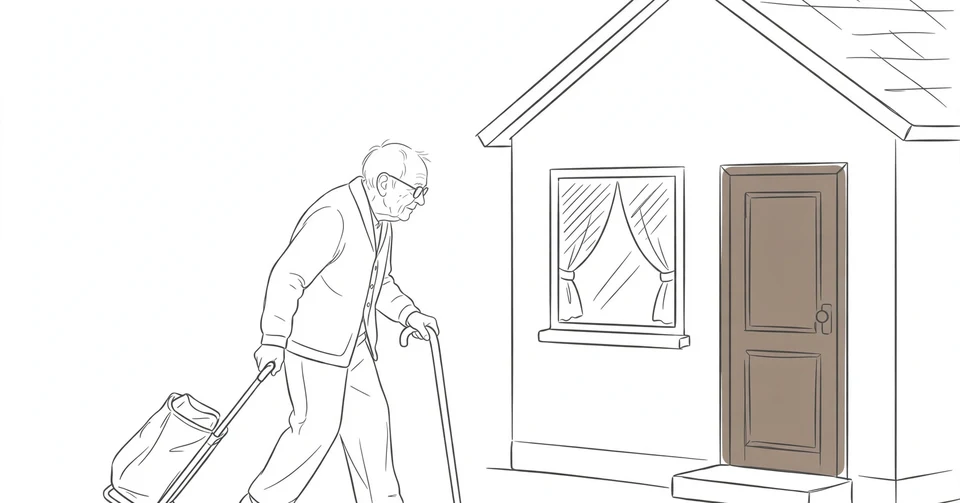
This is a look at what the 9060 problem changes. The carer is now frail enough to need care. The child is elderly too. The household still runs on the parent's pension, and the cliff that the 8050 problem pointed to is no longer distant. It is close, and in some homes it has already arrived.
What the 9060 problem means
The numbers in the name are ages again. Ninety stands for the parents, sixty for the child, and the 9060 problem is the 8050 problem after another decade has passed over the same front door.
The child in these homes is usually a hikikomori, someone who has pulled away from school, work and social life for six months or far longer. At the 8050 stage, far longer could mean twenty years. By the time a household reaches the 9060 problem, it can mean thirty or forty.
A Cabinet Office survey carried out in 2022 counted about 1.46 million people aged 15 to 64 in a hikikomori state. Notice where that count stops. The survey's upper age limit is 64, which means the generation at the heart of the 9060 problem is ageing out of the very statistics used to describe it. The people are still there. The counting frame is what leaves them behind.
The same families, ten years on
The clearest view of the drift comes from families already in contact with support. In the latest survey by the KHJ federation of hikikomori families, covering 280 households, the average age of the withdrawn person was 36.9, up from 33.1 when the federation began tracking in 2014. About 43 percent were over 40, and nearly 13 percent were in their 50s or older. The relatives carrying them averaged 66.3 years old. The same survey documented the households this article is about: parents in their 90s supporting children in their 60s.
Government figures for the older age group tell the same story from the other side. In the 2019 study of people aged 40 to 64 in a hikikomori state, 26 percent were already in their 60s. By 2023, the reported balance had shifted again, with 36 percent in their 60s and 42 percent in their 50s. The centre of the group keeps climbing, year after year, in one direction only.
The reason is not mysterious. Withdrawal that began in the 1990s, when psychiatrist Tamaki Saito first described hikikomori and the average age of withdrawal was around 15, often did not end. At the same time, Japanese parents began living long enough for a refuge that was meant to last a few years to become an arrangement of forty years. Longevity did not create the 9060 problem. It simply gave the 8050 problem time to become the 9060 problem.
When the carer also needs care
In the 8050 years, a parent in their early 80s could often still run a household. In the 9060 problem, that margin is mostly gone. A parent in their 90s may be living with dementia, failing mobility, or both, and struggling with their own daily care. The household's only carer has become a person who needs care.
The child, meanwhile, is in their 60s, an age at which health problems of their own begin to gather. This is the quiet difference inside the 9060 problem. It is no longer one strong generation carrying a weaker one. It is old caring for older, and neither side can absorb a shock.
Japan's welfare systems are divided by category, and a 9060 household straddles the divisions. The parent belongs to long term care insurance. The child may belong to livelihood support or disability services, through a different office and a different door. A care manager can visit the parent every week while the child in the next room is connected to nothing at all. Japanese media have a word for the feared outcome, oyako tomodaore, parent and child collapsing together. In a household living with the 9060 problem, the distance to that outcome is short.
Money that depends on one long life
Most households inside the 9060 problem run on the parent's pension. Where the child has no stable income of their own, the pension of a parent in their 90s pays for food, utilities and the house, just as it did ten and twenty years earlier. The 9060 problem is, in large part, a pension with a whole household attached to it.
A pension is paid because the parent is alive. When the parent dies, it stops, and the child can be left with no income, little practice with banks and official paperwork, and entitlements, such as a disability pension or public assistance, that exist but have never been applied for. Saito's advice from the 8050 years applies here with more force: arrange the money and the applications while the parent is still able to help.
Welfare guidance in Japan notes reported cases at the far end of this fear, where a parent's death went unreported and pension payments continued. Read closely, those cases look less like fraud than like paralysis: a child who could not face the paperwork, because the paperwork meant admitting that the arrangement holding up their whole life had ended.
The cliff is no longer distant
Every account of the 8050 problem points to the same cliff. The parent is hospitalised, or dies, and the child is suddenly alone with no income, no contacts and a house full of procedures they have avoided for decades. In the 9060 problem, the cliff is the same. What has changed is the distance. A parent in their 90s turns a theoretical risk into a near term one.
Police figures show the shape of it. In 2023, 31 people in their 60s were investigated for leaving a deceased parent's body unattended, the highest number for that age group since 2014. In many cases the parent had died of natural causes, and the child had no money for a funeral and no one they felt able to call.
One case, stated plainly, shows a 9060 household after the cliff. In Kanagawa in June 2023, an unemployed man of 63 was arrested after his father's body was left unattended for six months. His father was 95. The son told investigators he could not afford funeral arrangements. Behind the legal language sits a simpler fact: the person who had run his life for him was gone, and there was no one else.
What help exists for the 9060 problem
The doors built for the 8050 problem are still the main ones for the 9060 problem, and they matter more when reached early. The health ministry counts 85 regional support centres for hikikomori. City and town halls run consultation desks. The KHJ federation, a national network of family associations founded in 1999, has long argued that supporting the parents is as important as reaching the child, because families need guidance before they reach a breaking point.
At the 9060 stage, a second door becomes just as important. Comprehensive community support centres are the local consultation windows for people aged 65 and over and their families. A visit that begins as a parent's care application can become the first time the whole household is seen at once, and welfare guidance describes such a consultation as a starting point for building support around the entire family, not only the person who applied. Workers often first learn that a withdrawn adult exists in a home when an elderly parent applies for nursing care.
The wider frame is moving too. An act on loneliness and isolation came into force in April 2024, and in January 2025 the health ministry issued a support handbook that tells workers to build trust through dialogue rather than trying to drag anyone out of a room. The honest limit remains. Every route begins with contact, and contact is what these households have avoided for decades. Help cannot be forced on an adult who refuses it. Progress is counted in visits accepted, not rescues performed.
The 9060 problem is sometimes described as a prediction coming true, but from inside the house it feels less dramatic than that. It feels like a family arrangement that worked for a very long time, held up by one person's strength, in a country where that person now routinely lives long enough to reach their 90s still holding it. What gives me some hope about the 9060 problem is the care door. Because the parent usually meets the support system first, there is a way in that does not depend on the child opening theirs, as long as the people who come for the parent are looking at the whole household. A household like this does not need to be rescued. It needs to be noticed, gently, while there are still two people in it to help.
More in Culture & Society
Latest posts
- Katsuobushi Is a Fish You Shave Like a Block of Wood
- Why Kagami Mochi Is Never Cut With a Knife
- Narazuke Pickles Spend Years Asleep in Sake Lees
- Tomozuri Sends a Living Fish to Do the Fishing
- Fuji Ko, the Pilgrim Societies That Climbed Mount Fuji Together
- Dashi, the Quiet Stock Under Almost Everything Japan Cooks
- Ayu, the Sweetfish That Rules Japan's Clear Rivers
- Gensen Kakenagashi, the Onsen Water That Never Circles Back
- Shiko, the Leg Stamp That Starts Every Sumo Day
- Semar, the God Who Chose to Work as a Servant
- Kyushoku and the Japanese School Lunch
- Sumadori, Japan's Smart Drinking for People Who Do Not Drink
- Sake Kasu, the Sake Lees Japan Cooks With Instead of Throwing Away
- Bureiko, the Drinking Party Where Rank Is Left at the Door
- Kagami Biraki, Japan's Ceremony of Breaking Things Open