Tokyo Disneyland and Why Japan Loves It Differently
· 13 min read
Tokyo Disneyland is the most visited theme park in Asia, yet it is not run by Disney at all. Here is why Tokyo Disneyland feels different, from the company that owns it to the queues its guests happily join.
Tokyo Disneyland looks like every other Disney park from the outside. The castle rises over the same fairytale rooftops, the same mouse ears sit on the same small heads, and the same parade music drifts down the same kind of main street. Step inside, though, and the place starts to feel different in ways that are hard to name until you have spent a day there. The queues move with unusual patience. The staff bow. The popcorn comes in flavours you will not find anywhere else. And the company that runs it all is not Disney.
The short answer is that Tokyo Disneyland is a Japanese park wearing a Disney costume. It opened on 15 April 1983 as the first Disney park built outside the United States, and it has been owned and operated ever since by the Oriental Land Company, a Japanese firm that licenses the characters and stories from Disney. Disney designs the rides and takes a share of the money, but it holds no stake in the park and does not run it day to day. That single fact explains almost everything that makes Tokyo Disneyland feel different.
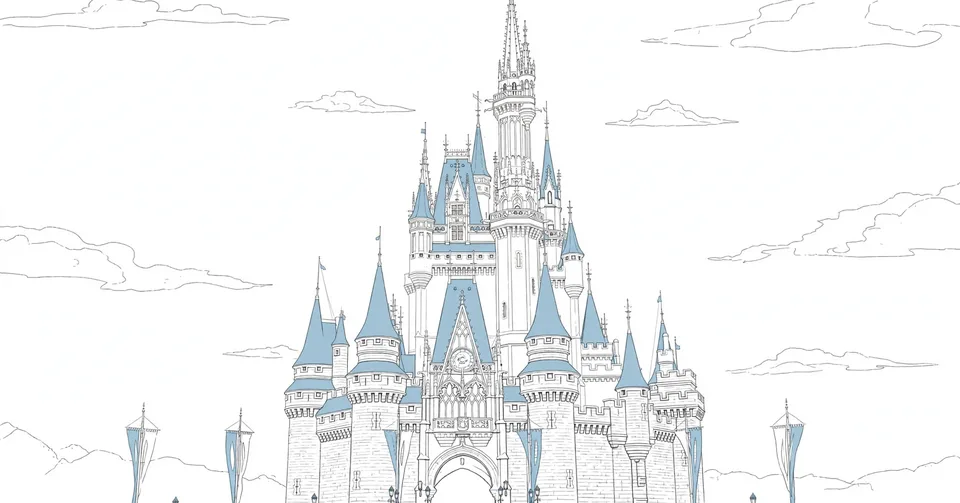
In 2024, Tokyo Disneyland welcomed 15.1 million visitors, making it the fourth most visited theme park in the world and the second most visited in Asia. Only the two Disney parks in Florida and Disneyland in California drew more people. The resort as a whole, Tokyo Disneyland and Tokyo DisneySea together, welcomed its 900 millionth guest in January 2026. Those numbers belong to a park that sits not in Tokyo at all, but in Urayasu, a city in Chiba Prefecture on reclaimed land in Tokyo Bay, about fifteen minutes by train from central Tokyo. Millions of people make that short journey every year, and most of them leave saying the same thing. It was the cleanest, calmest, most orderly theme park they had ever visited.
A park Japan built for itself
The story of Tokyo Disneyland begins in 1962, when the Oriental Land Company approached Walt Disney Productions about building a park on land it was reclaiming from Tokyo Bay. The deal took seventeen years to close. Disney would design the park and license its characters, while the Japanese company would pay for the construction, about 180 billion yen at the time, and run the place itself. Construction began in late 1980, and the gates opened on 15 April 1983.
That arrangement has never changed. The Oriental Land Company still owns Tokyo Disneyland, still operates it, and still pays Disney a licensing fee. It is a franchise in the truest sense, and it shows in the details. Tokyo Disneyland is spotless in a way that feels Japanese rather than corporate. Staff, known as cast members, are trained to a standard that visitors often describe as the best customer service in the country. Litter is rare. Queues are orderly. Nobody shouts. The whole operation runs on the same quiet discipline that keeps Japanese trains almost never late, and it is no accident that the same culture produces both.
I find this the most interesting thing about Tokyo Disneyland. A park built from American stories became, over four decades, a deeply Japanese institution. Families treat a visit the way they treat a festival or a shrine visit, something to plan carefully and enjoy properly. Tokyo Disneyland celebrated its fortieth anniversary in 2023, and by then it had stopped being a copy of anything. It was simply the place where Japan goes to be delighted, on Japan's own terms.
Seven lands and one castle
Tokyo Disneyland is arranged around the same hub and spoke layout as the original park in California, with Cinderella Castle at the centre and seven themed lands fanning out around it. The castle stands 51 metres tall, and it is the first thing most visitors photograph. Inside it sits a walkthrough attraction telling the story of Cinderella in dioramas, a quiet corner that many first timers walk straight past on their way to the rides.
Each land has its own character, and a first visit is mostly about choosing which ones matter most to you.
| Land | What it is known for |
|---|---|
| World Bazaar | A covered Victorian street of shops and restaurants, the entrance to the park |
| Adventureland | Pirates of the Caribbean and the Jungle Cruise |
| Westernland | Big Thunder Mountain and Tom Sawyer Island |
| Fantasyland | Enchanted Tale of Beauty and the Beast and Pooh's Hunny Hunt |
| Critter Country | Splash Mountain and the Beaver Brothers Explorer Canoes |
| Toontown | Roger Rabbit's Car Toon Spin and meet and greets with the characters |
| Tomorrowland | Monsters, Inc. Ride and Go Seek, plus Space Mountain, closed until 2027 |
The headline ride is Enchanted Tale of Beauty and the Beast, which opened in September 2020 as part of a major expansion of Fantasyland. It is a trackless dark ride that moves guests through the story in dancing teacups, and it regularly posts the longest standby wait in the park. Pooh's Hunny Hunt, which uses the same trackless technology, has been a favourite since it opened in 2000. Splash Mountain, which closed in the American parks, still runs here, and its drop into the briar patch remains one of the best photographed moments in Tokyo Disneyland.
Space Mountain is the notable absence at Tokyo Disneyland. The original ride, which had run since opening day in 1983, closed on 31 July 2024. Its replacement, a completely rebuilt coaster called Space Mountain Earthrise, is due to open in 2027. Until then, Tomorrowland feels a little quieter, and the park's thrill seekers lean on Big Thunder Mountain and the Happy Ride with Baymax, a spinning ride that has become an unlikely favourite.
The ticket system, explained simply
Tokyo Disneyland no longer sells tickets at the gate. Every ticket must be bought in advance, either through the official Tokyo Disney Resort site or through a travel agent, and the tickets are dated. Prices follow a date based system, so a quiet Tuesday costs less than a Saturday in spring. A one day passport currently runs from about 7,900 yen to 10,900 yen for an adult, depending on the day. Children and seniors pay less.
The part that confuses first timers is the queue skipping system. Until 31 August 2026, the park offered a free 40th Anniversary Priority Pass for some rides. That pass has now ended, and there is no free replacement. The only way to skip a line is Disney Premier Access, a paid pass bought inside the official Tokyo Disney Resort app after you enter the park. Prices are charged per ride, per person. Enchanted Tale of Beauty and the Beast costs 2,000 yen, and the most popular passes can sell out before noon on a busy day. You cannot buy another Premier Access while one is still active, so the system rewards deciding early which ride matters most.
The app is the single most useful tool for a day at Tokyo Disneyland. It shows live wait times, show schedules, a digital map, and it is the only place to buy Premier Access or to order food from your phone. Download it before you travel, link your tickets to it, and check it the moment you walk through the gates. The first hour after opening has the shortest waits of the day, and the guests who arrive before the gates open get the best of it. Tokyo Disneyland usually opens at 8 or 9 in the morning and closes at 9 or 10 at night, depending on the date.
Getting there is simple. Take the JR Keiyo Line or the Musashino Line to Maihama Station, which sits right outside the resort. From Tokyo Station the ride takes about fifteen minutes, and from there it is a short walk to the gates, or one stop on the Disney Resort Line monorail. The trains that carry you there are the same punctual ones that define travel in the rest of the country, and the journey itself is part of the experience.
The queues are part of the experience
Ask anyone who has visited Tokyo Disneyland what surprised them most, and the answer is often the queues. Waits of ninety minutes or more are normal for the headline rides on a busy day, and yet the lines are calm. People stand in neat rows. Nobody pushes. Families eat snacks they brought from home, couples take photos, and children play quietly with their parents. It is the same patience you see at a busy station or a popular restaurant, and it changes the feeling of waiting entirely.
Part of the reason is that queuing itself is treated as part of the day, not as time stolen from it. The lines are designed to be interesting, winding through themed scenery with details to look at. Cast members keep them moving and answer questions with a politeness that visitors remember long after the ride. And the Japanese habit of planning ahead means many guests arrive with a rough schedule already in mind, which ride first, which parade to watch, where to eat lunch, so the waiting feels chosen rather than imposed.
I think there is something quietly admirable about this. A theme park is, at its heart, a machine for manufacturing joy, and most parks hide the machinery. Tokyo Disneyland lets you see it, the long lines, the careful crowd control, the staff working hard in the background, and the joy survives anyway. Perhaps it survives because the machinery is handled with such care. Tokyo Disneyland does not pretend the queues do not exist. It simply makes them as pleasant as a queue can be.
When to go and what to skip
The best days to visit Tokyo Disneyland are Tuesdays through Fridays, outside Japanese school holidays. Mondays run busier than the rest of the work week, and Saturdays are usually the most crowded day at either park. The quietest months are January and February, outside the New Year period, and June, before the summer holidays begin. March through May is busy, partly because of cherry blossom season and partly because of Golden Week, the cluster of national holidays at the start of May that fills the park with families.
Each season brings its own event. Spring has the cherry blossoms and an Easter programme. Summer has water shows that soak the crowds on purpose. Halloween fills the park with guests in costume, and Christmas brings the grandest decorations of the year, with the castle lit up and a parade that draws crowds hours early. If you can choose, pick the season you care about most, then pick a weekday inside it. The difference between a Tuesday in June and a Saturday in late December is the difference between riding five headline attractions and riding two.
A few things are worth skipping. The World Bazaar shops are lovely, but they are busiest in the last hour before closing, when everyone buys souvenirs at once. Shop earlier in the day, or use the resort's delivery service to send purchases to your hotel. The parades are wonderful, but a good viewing spot needs to be claimed an hour or more ahead on busy days, so decide in advance whether a parade matters more than a ride. And if a ride posts a wait above two hours, consider coming back in the evening, when families with small children start to leave and the lines shorten.
The small details that give it away
What finally makes Tokyo Disneyland feel different is not any single ride or show. It is the accumulation of small details, each one slightly more thoughtful than it needs to be. The popcorn, for instance, comes in flavours that change by cart and by season, and the soy sauce and butter flavour has its own following. The food at Tokyo Disneyland is better than theme park food has any right to be, from the churros to the alien mochi, small green dumplings shaped like the aliens from Toy Story. The restrooms are clean at every hour of the day. The gardens are tended like a botanical garden, not a backdrop.
The cast members at Tokyo Disneyland deserve a mention of their own. They are famous for their friendliness, and it is not an act. They will help you take a photo, direct you to the shortest line, and wish you a good day with a sincerity that can catch a visitor off guard. The park employs thousands of part time workers, many of them students, and the training they receive is often cited as some of the best in Japanese service culture. It is one of the reasons the park runs so smoothly, and one of the reasons guests keep coming back.
Even the weather becomes part of the experience. Tokyo Disneyland is an outdoor park, and rain changes it. Ponchos appear, the crowds thin, and the castle looks different against a grey sky. Some regulars say a rainy day is the best day to visit, because the waits collapse and the park feels like it belongs to the few people who stayed. There is something in that attitude that feels very Japanese to me, the willingness to find the pleasure in the imperfect version of the plan.
A day that stays with you
Tokyo Disneyland works because it never tries to be Disneyland in California with a Japanese accent. It is a Japanese park that happens to tell Disney stories, run by a Japanese company that has spent more than forty years learning what its own guests want. The castle is the same, the mouse is the same, and yet the feeling is different, calmer, more careful, more considered. That is why 15.1 million people visited in a single year, and why so many of them plan their next visit before they have even left.
If you go, arrive early, download the app, and buy your Premier Access for the Beauty and the Beast ride before it sells out. Then put the phone away for a while. Watch the parade from the curb, eat popcorn that tastes of soy sauce and butter, and let the day unfold at the pace the park sets for you. Tokyo Disneyland rewards the guests who plan, but it is kindest to the ones who, having planned, are willing to be surprised.
More in Food & Travel
- Walking Through Senbon Torii Feels Like Entering Another World
- Onigiri, Japan's Two-Thousand-Year-Old Portable Meal
- Prambanan Towers Over Java With a Love Story in Stone
- Ekiben, the Train Station Bento That Turns a Journey into a Meal
- Natto, the Sticky Fermented Beans Japan Loves and Visitors Fear
- Base Genep Seasons Every Balinese Feast From the Mortar Up
Latest posts
- Temizuya Is Where Every Shrine Visit Begins With Water
- Shide Are the Paper Lightning That Marks a Sacred Space
- Yabusame Turns Horseback Archery Into a Moving Prayer
- Roro Jonggrang and the Thousand Temples Built in One Night
- Ten Thousand Vermilion Gates Lead Up Fushimi Inari
- Shimenawa Marks the Line Between Ordinary and Sacred
- A Torii Gate Marks Where the Ordinary World Ends
- The Yumi Stands Taller Than Its Archer
- Kyudo Turns Archery Into a Moving Meditation
- Iaido Is the Art of Drawing the Sword Before the Fight Begins
- Pancawara Gives Bali a Five Day Week That Never Stops Turning
- Hanami Turns Cherry Blossom Season Into Japan's Longest Picnic
- Bogu Is the Armour That Lets Kendo Strike at Full Speed
- Ema Lets You Hang a Wish Where the Kami Can Read It
- Bonsai and the Thousand-Year Art of Tiny Trees