Japan's Snow Monkeys and Their Hot Spring Baths
· 8 min read
The snow monkeys Japan is famous for live in Jigokudani, Nagano, where a troop of about 200 Japanese macaques soaks in natural hot springs all winter. This is how they found the baths, when to go, and how to visit them well.
There is a valley in Nagano where monkeys take hot baths. Not once, as a stunt, but every day, all winter, in a steaming pool surrounded by snow. The snow monkeys of Jigokudani have become one of the most photographed animals in Japan, and the honest reason is simple: they look like us on a cold day, shoulders up, eyes half closed, in no hurry at all.
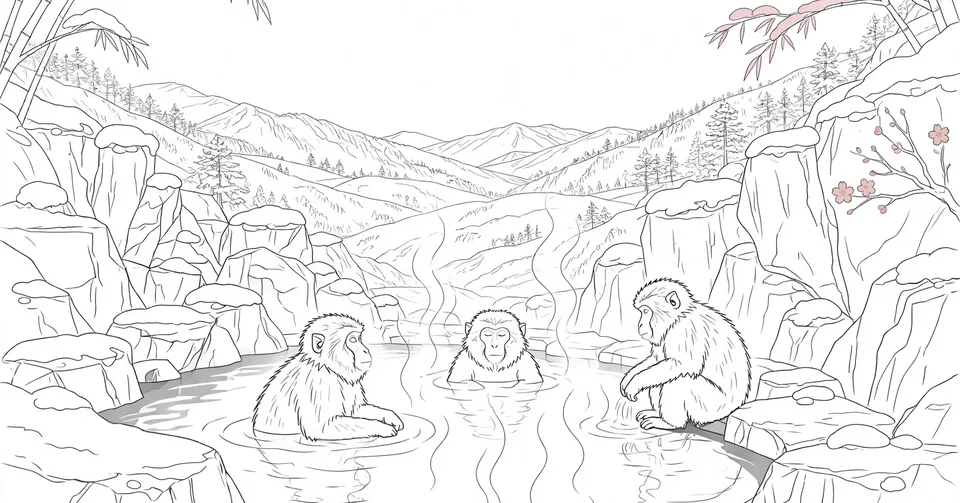
The place is Jigokudani Monkey Park, in the town of Yamanouchi in Nagano Prefecture. The animals in the pool are Japanese macaques, the snow monkeys Japan is known for, and the northernmost monkeys in the world apart from humans. They have lived in these mountains long before anyone built a bath for them. The best time to visit is winter, from December to March, when snow covers the valley and a troop of around 200 monkeys comes down from the forest to warm up in the onsen.
If you are planning a snow monkeys Japan trip, the short answer is this: go in winter, arrive early, dress for snow, and walk the forest trail. The monkeys do the rest. They are wild animals, not performers, and the park works because visitors respect that.
How the snow monkeys found the hot springs
The bathing began in 1964, and it began by accident. A young monkey fell into the hot spring at a nearby inn, and instead of climbing straight out, it stayed. Other monkeys watched, and then they followed. Within a short time the whole troop was using the bath, and the inn could no longer keep its guests and its monkeys apart. The park opened the same year, with a pool of its own for the monkeys, and the troop has been coming back ever since. That accident made the snow monkeys Japan famous around the world.
It is worth pausing on that detail, because it explains the whole place. The monkeys were not trained, and nobody taught them to enjoy hot water. They found it, the way any cold creature finds warmth, and they kept coming back. Japan's relationship with hot springs runs just as deep: the onsen is not a luxury here but a daily habit, and the monkeys simply joined a tradition that was already old. The park is, in a sense, a shared bathhouse, with one side for people and one side for macaques.
The troop is not kept in the park. The monkeys are free to come and go, and they do, roaming the forest around the valley. What keeps the snow monkeys Japan coming back is food, warmth, and habit, in that order. Park staff put out food at set times, and the monkeys have learned the schedule the way commuters learn a timetable.
When to see snow monkeys Japan at their best
Winter is the season the park is known for, and for once the reputation is honest. From December to March the valley is under snow, the air is cold enough to make your breath visible, and the snow monkeys Japan is famous for spend long hours in the pool. Cold mornings are the best of all: after a freezing night, the whole troop seems to agree that the bath is the only sensible place to be.
That does not mean winter is the only season worth visiting. In spring, from April to June, the troop has babies, small and pink-faced, clinging to their mothers. In summer the monkeys spend more time in the forest and less in the water, so a visit can be quieter, with fewer people on the trail. Spring is also the quietest season for snow monkeys Japan, with fewer visitors on the trail. In autumn the forest turns colour, and the monkeys eat heavily, building up fat for the cold ahead.
If you can only come once for snow monkeys Japan, come in winter, and come early. The park fills up by late morning, and the monkeys are at their most relaxed before the crowds arrive. A weekday beats a weekend, and a snowy day beats a clear one, at least for the photographs.
| Season | Months | What to expect |
|---|---|---|
| Winter | December to March | Monkeys in the bath for hours, snow everywhere, the busiest season |
| Spring | April to June | New babies, fewer bathers, green forest |
| Summer | July to September | Monkeys mostly in the forest, quiet trails, little bathing |
| Autumn | October to November | Autumn leaves, monkeys feeding heavily before winter |
The table makes winter look like the obvious choice, and it is, but it is not the only good one. A spring visit trades the snow for babies, and a summer visit trades the crowds for a quiet forest walk. A snow monkeys Japan visit works in any season, because the monkeys are there all year. What changes is what they are doing.
Getting to Jigokudani
A snow monkeys Japan itinerary usually starts at Nagano Station. From there, take the Nagano Electric Railway to Yudanaka, the last stop, a ride of about 50 minutes. From Yudanaka, a bus runs to Kanbayashi Onsen, and from there it is a walk of 30 to 40 minutes through the forest to the park entrance.
The walk itself is part of the visit. The trail to see the snow monkeys Japan in winter follows a river through cedar forest, and it is snow-covered and sometimes icy, so wear shoes with grip and take your time. There are no shops on the trail, so bring water and anything else you need. In summer the same walk is cool and green, and it is easy to forget you are on your way to see monkeys at all.
The park is open all year, and the entrance fee and opening hours can change, so check the park's official website before you go. The official site has the current hours, fees, and any closures, and it is the one place to trust over a travel blog, including this one.
The rules of watching wild monkeys
The snow monkeys Japan is known for are wild, and the park's rules exist to keep it that way. Keep your distance, never touch a monkey, and never feed one. Do not stare a monkey in the eye, because in monkey language that is a challenge, not friendliness. Keep food out of sight, stay on the paths, and do not use flash photography.
These rules sound strict, and they are meant to be. A monkey that learns to take food from visitors stops being a wild animal and starts being a beggar, and a beggar is a nuisance that eventually has to be dealt with. The park has lasted more than sixty years because visitors mostly follow the rules, and the monkeys mostly ignore the visitors. That is the deal, and it works.
The same attitude applies on the cat island of Tashirojima, where the cats outnumber the people and the island belongs to them as much as to anyone. The best animal places in Japan work the same way: the animals set the terms, and visitors adapt. The snow monkeys Japan is known for are no different, and that is exactly why they are worth the trip.
Why the monkeys stay
It would be easy to call the park a tourist attraction and leave it there, but that misses what is actually happening. The snow monkeys Japan made famous stay because the valley gives them what they need: food in winter, water all year, and a forest to disappear into. The park gives them a pool and leaves the rest alone. It is a small, practical truce between people and wild animals, and truces like that are rarer than they should be.
There is also something quietly reassuring about the whole scene. The snow monkeys Japan is known for do not perform, and they do not care that you came. They sit in the water, they groom each other, they squabble, and they get out when they are warm enough. Watching them is a reminder that rest is not laziness and that warmth is a need, not a reward. On a cold morning in Nagano, that is a lesson worth the walk.
Go in winter, go early, and go ready for snow. Walk the forest trail slowly, keep your distance at the pool, and give the monkeys the same quiet you would want in a bath. The snow monkeys Japan is known for will still be there when you arrive, shoulders up and eyes half closed, in no hurry at all. That is the whole trip, and it is enough.
More in Food & Travel
- Numazu Deep Sea Aquarium and the Creatures of Suruga Bay
- Numazu Himono and the Art of Dried Fish
- Numazu Port and the Freshest Seafood in Shizuoka
- Bullet Climbing Mount Fuji, the Overnight Ascent Japan Is Trying to Stop
- Climbing Mount Semeru, Java's Highest Volcano
- Tamago Sando and Japan's Konbini Egg Sandwich
Latest posts
- Love Live Sunshine and How Anime Changed Numazu
- Numazu Imperial Villa and Japan's Seaside Imperial Retreat
- Disaster Vending Machines in Japan That Give Their Drinks Away
- The E33G Remote Worker Visa and How to Legally Work from Bali
- Wabi-Sabi and the Japanese Beauty of Imperfect Things
- Women Only Train Cars in Japan and the Problem They Answer
- Maneki Neko and Japan's Beckoning Lucky Cat
- The Baduy People and Life Without Modern Technology
- The Salaryman and Japan's Loyal Office Culture
- Onsen Tattoo Rules in Japan and How They Are Slowly Changing
- Key Money in Japan and Why Renting Costs Four Months Up Front
- Sento, Japan's Everyday Public Bathhouse
- The Fuji Five Lakes and the Best Views of Mount Fuji
- The Obon Festival, Japan's Week for Honouring Ancestors
- Visiting the Ghibli Museum and Ghibli Park in Japan