Komodo Dragons and the Islands They Rule
· 9 min read
Komodo dragons are the largest lizards on Earth, and they live wild on only a handful of islands in Indonesia. Here is how to see them in Komodo National Park, from Labuan Bajo to the ranger-led trek on Rinca.
There is a place on Earth where the largest lizard alive still walks free, and it is not a zoo. Komodo dragons live wild on a small group of dry, sun-baked islands in eastern Indonesia, and seeing one in person feels less like a wildlife tour and more like stepping into a much older world.
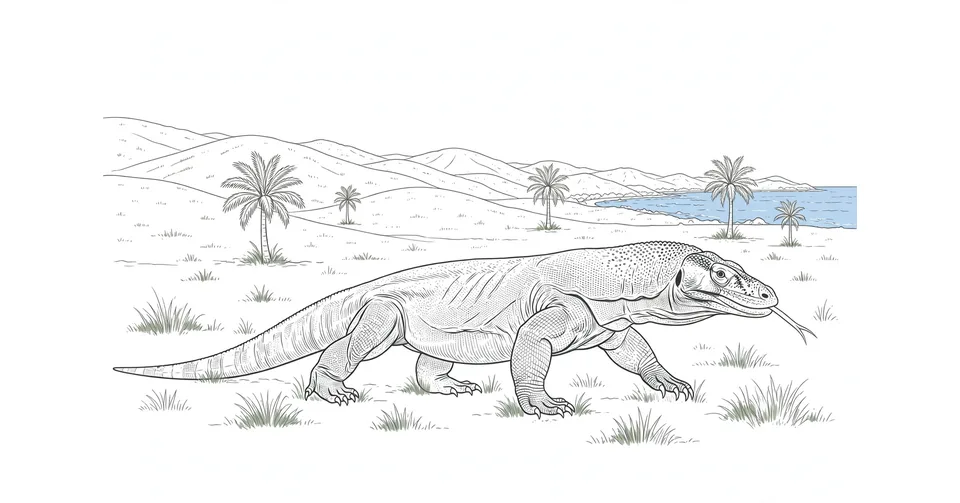
The islands belong to Komodo National Park, a UNESCO World Heritage Site since 1991. The park covers about 1,733 square kilometres of land and sea between the islands of Sumbawa and Flores, and it was set up in 1980 to protect the Komodo dragons that give it its name. Three large islands form its core, Komodo, Rinca and Padar, plus 26 smaller ones, and almost everything about a visit here runs by boat.
This guide covers the Komodo dragons themselves, the choice between Rinca and Komodo Island, what the ranger-led trek is actually like, and the rest of the boat loop that makes the trip worth the journey. Most travellers base themselves in Labuan Bajo, a fishing town on the western tip of Flores, and reach the park by boat in under two hours.
Komodo Dragons Up Close
Komodo dragons are the largest living lizards in the world. Adults usually grow to two or three metres long and weigh 70 to 90 kilograms, and they sit at the top of the food chain on islands that have no large mammalian predators. Komodo dragons carry the scientific name Varanus komodoensis, and UNESCO puts the wild population at around 5,700 animals, spread across Komodo, Rinca, Gili Motong and a few coastal stretches of western and northern Flores.
Komodo dragons hunt deer, wild boar and smaller prey, and they can smell carrion from kilometres away. Komodo dragons spend the heat of the day resting in the shade, which is why the early morning is the best time to see them moving. Komodo dragons were listed as Endangered on the IUCN Red List in 2021, and their numbers have held roughly steady since 2018 thanks to patrolling inside the park, though the long-term outlook is still rated as a significant concern.
What makes the encounter so striking is the scale. Komodo dragons are not quick glimpses of something small in the undergrowth. They are heavy, deliberate animals that cross the trail in front of you, tongue flicking, and the rangers keep you at a respectful distance for a reason. The animal is calm far more often than it is aggressive, but it is a wild predator, and the rules of the park exist because visitors sometimes forget that.
Rinca or Komodo Island
Most visitors see Komodo dragons on one of two islands, and the choice shapes the day. Rinca is closer to Labuan Bajo, about 30 kilometres away, and the boat ride takes 30 to 45 minutes by speedboat or about one and a half to two hours by slower wooden boat. Komodo Island sits farther out, roughly 60 kilometres from town, and takes about two hours by speedboat. Rinca holds around 1,300 Komodo dragons, the second largest population in the park, and its ranger station at Loh Buaya, which means Crocodile Bay, is where every trek begins.
| Rinca Island | Komodo Island | |
|---|---|---|
| Distance from Labuan Bajo | About 30 km | About 60 km |
| Boat time by speedboat | 30 to 45 minutes | About 2 hours |
| Terrain | Open savannah, little shade | Greener, more forest trail |
| Dragon sightings | Often clearer, animals visible in the open | Good, but animals can hide in the bush |
| Ranger station | Loh Buaya | Loh Liang |
Rinca is the practical pick for a one-day trip. The open savannah means Komodo dragons are often visible from a distance, standing out against the tawny grass instead of vanishing into forest, and the shorter crossing leaves more of the day for the rest of the boat loop. Komodo Island has the larger dragon population and the longer forest walk, and it suits travellers who want the classic name on their itinerary and have a full day or a liveaboard to spare. Either way, the experience is the same at its core, a guided walk with a ranger, and the Komodo dragons do not care which island you chose.
What the Ranger Trek Is Like
No one walks alone here. Every visit to see Komodo dragons is led by a licensed ranger from the park authority, and independent walking is not allowed anywhere in the park. The ranger carries a long forked stick, sets the pace, and decides how close the group gets. The job is part guide and part guard, and it is worth listening to the briefing at the station before the walk begins.
The standard visit starts at the ranger station, where the group is briefed and assigned a trail. The short loop takes about 30 minutes and stays near the station, where Komodo dragons often rest in the shade of the buildings. The medium loop takes closer to an hour and climbs a little into the savannah, past deer grazing in the open and the occasional dragon lying in a dry creek bed. The trails are packed earth and loose stone, not boardwalk, and there is almost no shade, so closed shoes with grip, water and a hat matter far more than camera gear.
The best time for the trek is early in the morning, between about 7:00 and 9:30, when Komodo dragons are most active in the cooler air before they settle down for the midday heat. The dry season, roughly April to November, gives the firmest trails and the calmest sea crossings, and July to September is the peak, with the best weather and the most visitors. Around June and July, the mating and nesting season can close some trails to protect the animals, so a little flexibility in the plan helps.
There is a quiet thrill in the walk that has nothing to do with danger. The savannah is silent except for the wind and the ranger's footsteps, the deer watch you from a safe distance, and then one of the Komodo dragons appears, huge and unhurried, exactly where the ranger said one would be. It is a reminder that Komodo dragons still live entirely on their own terms, and that we are guests in their home.
The Rest of the Boat Loop
A trip to see Komodo dragons is rarely only about the animals. The same boat loop that carries you to Rinca or Komodo Island usually stops at Padar Island and Pink Beach, and both are worth the extra hours. Padar is the third largest island in the park and by far the most photographed. A hike of 25 to 35 minutes climbs to a ridge about 200 metres above the sea, where three crescent bays curve below in three different colours, white, black and pink sand in a single view. The scene is so famous that it has appeared on Indonesia's Rp 50,000 banknote.
Pink Beach, or Pantai Merah, sits on Komodo Island itself, and it is one of only a handful of genuinely pink sand beaches in the world. The colour comes from red foraminifera, tiny marine organisms whose shells mix with the white coral sand. The water is clear and shallow, good for a swim or a snorkel after the morning trek, and the pink shows best in the afternoon light.
The practical shape of the day is simple. Boats leave Labuan Bajo early, often before sunrise for the Padar viewpoint, then cross to the island where the Komodo dragons live for the morning trek, and finish with Pink Beach and a snorkelling stop on the way home. A liveaboard stretches the same loop over two or three nights, with more time at each stop and the chance to snorkel with manta rays at Manta Point. If the budget allows, the liveaboard is the better trip, because the park rewards slow travel and the day boats all follow the same crowded timetable.
Planning the Trip
Labuan Bajo is the gateway, and it is easy to reach. The town has its own airport, Komodo Airport, with flights from Jakarta, Bali and other Indonesian cities, and it has grown from a quiet fishing port into a proper tourist town, with hotels, dive shops and tour operators along the harbour. Many travellers combine the Komodo trip with a few days in Bali first, and the contrast is part of the appeal, because Bali is green and crowded and Komodo is dry, open and quiet. For a different kind of Indonesian adventure on land, Mount Bromo offers a volcano you can walk into, while Bali shows the other side of the country, the island the world moved to.
Book the boat through a licensed operator in Labuan Bajo, and check that the park booking is handled through the SIORA digital quota system, which manages visitor numbers for the park. Entrance, conservation and ranger fees apply on top of the boat price, and the rates change from year to year, so check the current figure with the operator before you pay rather than trusting a price quoted in an old blog post. For the current rules on quotas and fees, the independent Komodo Guide keeps an updated overview of the park. Bring cash for the fees, because card payment is not always available at the ranger stations.
Two or three days in Labuan Bajo is the right amount of time. One day for the classic loop of Padar, the dragon trek and Pink Beach, and a second day for diving or a slower liveaboard if the sea is calm. The rainy season, roughly December to March, brings muddy trails and rougher crossings, and it is the one time of year when the trip can genuinely disappoint. April to November is the window to aim for, and the earlier in the day you start, the better the Komodo dragons behave.
Komodo National Park protects Komodo dragons, animals that exist nowhere else, and the visit works best when it is treated as a privilege rather than a checklist item. Komodo dragons were here long before the boats and the viewpoints, and the park's rules, the rangers, the quotas, the early starts, all exist so that they will still be here long after. Go early, walk quietly, keep your distance, and let the animal set the pace. That is the whole secret of seeing Komodo dragons well.
More in Food & Travel
Latest posts
- Sober Curious Is Not Quitting, It Is Choosing
- A Rotenburo Is a Bath With Weather
- The Tengger Carry Their Dead Out of the Village in Entas-Entas
- Urashima Opened the Tamatebako and Time Came to Collect
- How Supersemar Borrowed the Authority of a God
- Bali Has Its Own Semar, and His Name Is Twalen
- White Silk Means You Made It as a Sekitori
- The Dohyo-Iri Gives a Yokozuna Three Minutes to Own the Ring
- Nobody Commutes to a Heya
- Tokyo Keeps a Hundred Tiny Fujis Called Fujizuka
- Tomozuri Sends a Living Fish to Do the Fishing
- One Thousand Three Hundred Years of Ukai Nights on the Nagara River
- Fuji Ko, the Pilgrim Societies That Climbed Mount Fuji Together
- Dashi, the Quiet Stock Under Almost Everything Japan Cooks
- Ayu, the Sweetfish That Rules Japan's Clear Rivers